The Death of the Visible Logo
The traditional markers of luxury—loud logos and obvious displays of wealth—are losing their potency. We are witnessing a pivot where the global elite, particularly across Africa, are trading status for meaning. According to recent intelligence from BoF Insights and McKinsey, the era of buying luxury purely for visibility is giving way to a more personal pursuit centered on identity and self-expression. This is not a mere trend; it is a fundamental recalibration of what constitutes value in a post-status world.
In both the US and China, emotion has emerged as the primary driver of brand desirability, comfortably outpacing traditional markers like heritage or craft. This shift is mirroring a deeper movement within African luxury circles, where the 'so what' is no longer about the price tag, but about the narrative connection the piece fosters. Why settle for a European house's interpretation of luxury when one can wear a garment that serves as a direct bridge to their own ancestral lineage?
The Luxury Pivot
The Delta: In 2025, luxury was defined by the exclusivity of access. By July 2026, exclusivity is defined by the depth of personal and cultural resonance.
Gold Volatility and the Flight to Uniqueness
Commodity value is proving to be a fickle foundation for luxury. The price of gold experienced a violent trajectory between 2024 and 2026, peaking at a staggering $5,634 per ounce on January 28 before cooling down to $4,203 by June. This volatility has forced a realization among high-net-worth individuals: the raw material is less important than the soul of the piece. When the market swings, the only hedge against depreciation is true uniqueness.
Corinne Le Foll, Bvlgari’s managing director for jewelry and high jewelry, has highlighted this shift, emphasizing that the combination of a stone's rarity and the specific craftsmanship surrounding it is what creates lasting value. This logic is fueling the rise of Ancestral Modernism, where the 'rarity' is not just the diamond, but the indigenous technique used to set it. The luxury consumer is no longer buying gold; they are buying a curated piece of cultural history.
| Metric | January 2026 (Peak) | June 2026 (Current) |
|---|---|---|
| Gold Price (per oz) | $5,634 | $4,203 |
| Primary Value Driver | Commodity Scarcity | Craft & Uniqueness |
The Durban July Blueprint: Ancestry as Couture
The most visceral manifestation of this shift occurred during the Hollywoodbets Durban July in early July 2026. Under the theme of 'Country Allure,' the event became a laboratory for Ancestral Modernism. Designers moved beyond simple 'ethnic' prints, instead blending traditional African textures and cultural references with sharp, modern silhouettes. This was not a costume exercise; it was a sophisticated integration of heritage into contemporary high fashion.
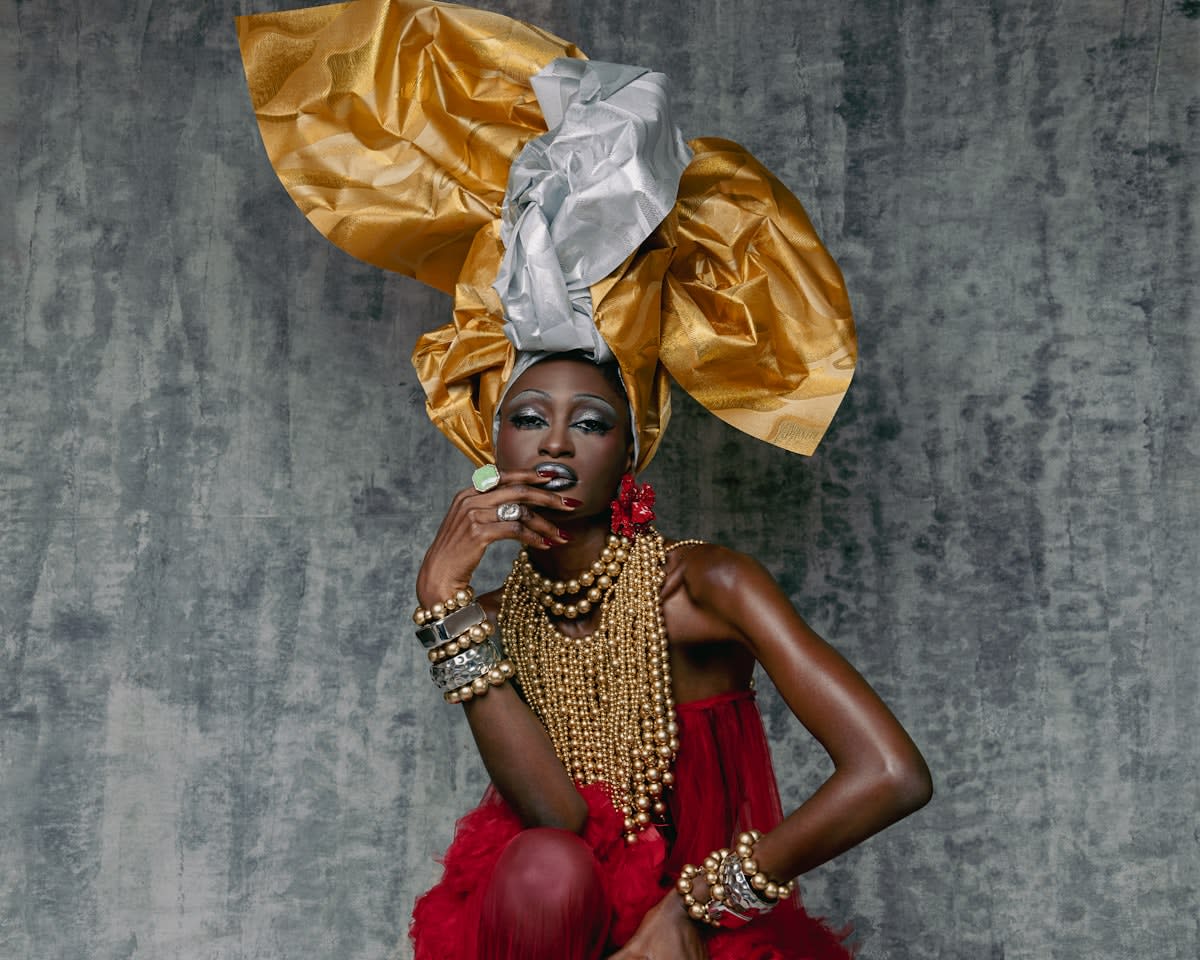
The specifics of the attire spoke volumes about the new luxury hierarchy. Boity Thulo’s ivory champagne winged bodice was explicitly designed as a tribute to her ancestors, transforming a social event into a ritual of remembrance. Similarly, designer Gert Johan Coetzee showcased a version of 'refined elegance' that balanced the equestrian traditions of the South African countryside with an avant-garde edge. These pieces function as wearable art, prioritizing a spiritual and familial connection over mere brand recognition.
"The style on show highlighted both local creativity and individuality, blending traditional elements with modern silhouettes to create a sophisticated interpretation of Country Allure."— Bizcommunity Analysis
The Global Echo: From North Africa to Paris
This regional shift is echoing in the global capitals of fashion. The 'Azzedine Alaïa et L’Afrique' exhibition recently opened at the Fondation Azzedine Alaïa, revealing how the late couturier drew constant, though often subtle, inspiration from his African birthplace. Alaïa’s use of raffia, intricate embroidery, and the adaptation of long, striped shirts typically worn by men in North Africa demonstrates that Ancestral Modernism has always been a silent engine of high fashion.
Alaïa’s philosophy—that color itself is a tool for sculpting—mirrors the current trend of using cultural palettes to define form rather than following Western tailoring norms. By bottling the essence of whitewashed walls and courtyard water, Alaïa proved that luxury is fundamentally about the evocation of place and memory. This is the same impulse driving today's West and South African designers who are reclaiming their narratives.
The urgency of this movement is evident in the Fall/Winter 2026 Paris Couture Week, running from July 6 to 9. The lineup has expanded to 30 houses, up from 27 in the previous season, reflecting a growing appetite for diverse perspectives. The inclusion of designers like Manish Malhotra alongside the traditional houses signals a broader openness to non-European craft as the pinnacle of luxury. The 'center' of fashion is no longer a single city, but a network of ancestral nodes.
Drivers of Brand Desirability (2026)
Executive Insight
+18.4%
YTD Growth
The Systemic Shift: Why Now?
Why is this happening in the summer of 2026? The convergence of economic instability in traditional assets (like gold) and a psychological exhaustion with the 'conspicuous consumption' of the 2010s has created a vacuum. Luxury consumers are seeking a sense of permanence that a logo cannot provide. Ancestry provides that permanence. By anchoring luxury in lineage, the wearer claims a status that cannot be bought, only inherited or meticulously researched.
Ancestral Modernism is therefore not a return to the past, but a strategic deployment of the past to navigate the future. It is the synthesis of the 'Country Allure' seen in Durban and the 'Sculpted Color' of Alaïa. It represents a world where the most expensive thing you can wear is not a diamond, but a story that is uniquely yours. The industry is no longer selling products; it is facilitating identity reclamation.