The Singapore Shift
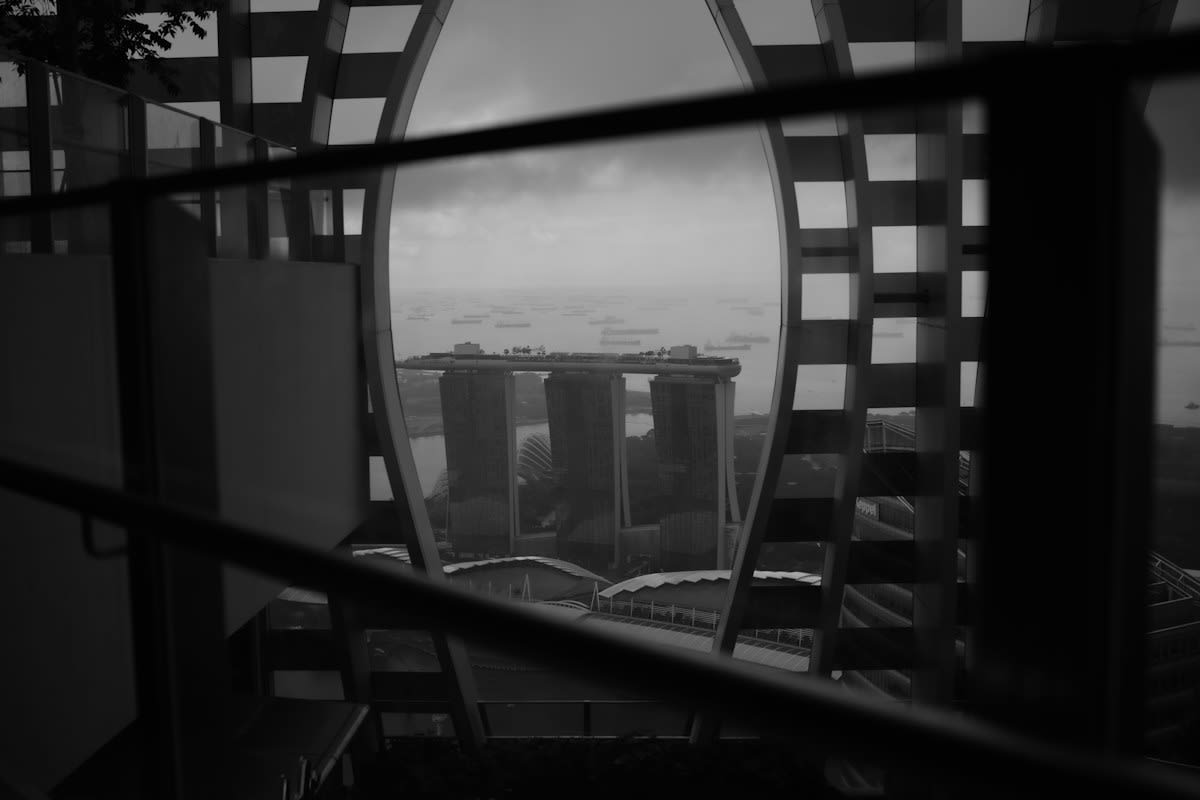
Walk through the Marina Bay Financial Centre. You will see the same tailored suits and the same Patek Philippes. But the signal has changed. Twelve months ago, the conversation centered on real estate portfolios and the acquisition of rare physical assets. Now? It is about the 'access layer'. The power move is no longer owning the penthouse; it is having a lifetime membership to a global network of residences where you never have to deal with a landlord or a maintenance fee. Ownership is friction. Access is speed.
This is not about minimalism. This is about strategic agility. In hubs like Seoul and Dubai, the ultra-high-net-worth (UHNW) demographic is pivoting toward 'Product-as-a-Service' (PaaS) models for everything from high-fashion wardrobes to private aviation. Why tie up capital in a depreciating asset when you can subscribe to the absolute peak of that asset's lifecycle? The goal is to maintain a lean balance sheet while projecting maximum utility. If you own the jet, you own the hangar, the crew, and the headache. If you subscribe, you own the destination.
"The transition from ownership to access is the final stage of financialization. We are moving toward a world where status is not derived from what you possess, but from the permissions you hold within a closed ecosystem."— Dr. Aris Thorne, Senior Fellow at the Institute for Systemic Economics
Compare the data from 2023 to now. We are seeing a sharp delta in how capital is deployed. A year ago, the trend was 'Quiet Luxury'—buying the most expensive thing that looked cheap. Today, the trend is 'Invisible Infrastructure'. The status symbol is the invisible concierge, the algorithmically curated travel itinerary, and the seamless transition between global hubs without ever touching a piece of deeded property. (Source: Global Wealth Report, 2024).
| Metric | Old Status (Ownership) | New Status (Access) |
|---|---|---|
| Primary Asset | Deeded Real Estate | Tiered Membership/Rights |
| Financial Goal | Equity Accumulation | Operational Agility |
| Friction Point | Maintenance & Taxes | Subscription Continuity |
| Signal | Permanence | Fluidity |
Look at the rise of fractional ownership in the UAE. It is not just for the middle class trying to get a foot in the door. It is for the elite who want exposure to ten different luxury assets without the systemic risk of owning any single one of them. By distributing ownership, they hedge against local market crashes while maintaining the lifestyle of a billionaire. (Source: Dubai Land Department Analysis, 2023).
The second-order consequence is the death of traditional equity. When the elite stop buying, the floor drops out for everyone else. We are seeing a decoupling of 'lifestyle' from 'wealth'. You can now project a level of success that is entirely untethered from your actual net worth, provided you have the credit line to sustain the subscriptions. It is a simulation of wealth that functions better than wealth itself.
Ground-Level Friction
Here is the ugly part. The 'own nothing' lifestyle is a precarious house of cards. I have seen the fallout when the 'access' is revoked. In the high-end rental markets of Tokyo, there is a growing class of 'digital ghosts'—people who have spent a decade subscribing to a lifestyle but have zero equity to fall back on. One algorithmic glitch, one membership tier downgrade, and you are effectively evicted from your own social class. The friction is no longer about property taxes; it is about Terms of Service.
Then there is the legal nightmare of fractional ownership. In jurisdictions with outdated property laws, these 'access rights' are often legally ambiguous. I have watched partners in a fractional villa arrangement in Bali spend more on lawyers than the villa was worth because the contract didn't specify who owned the 'air rights' versus the 'usage rights'. The bureaucracy of the 20th century is colliding with the agility of the 21st, and the result is a mess of litigation.
The ego clash is the most visceral part. The 'Old Money' crowd views this shift as a surrender. They see the lack of deeds as a lack of power. The 'New Access' crowd views the Old Money as anchors—slow, heavy, and trapped by their own assets. This is not just a financial shift; it is a cultural war between those who want to be roots and those who want to be wind.

- The 'Zero-Asset' Portfolio: Shifting capital from physical deeds to liquid access tokens.
- Subscription-Based Identity: Status defined by the level of concierge service (Platinum vs. Black).
- Geographic Fluidity: The ability to move between curated hubs without the friction of selling property.
- Risk Distribution: Using fractional ownership to avoid the 'single-point-of-failure' of a primary residence.
The third-order effect is the centralization of control. When you own nothing, the entity that provides the access owns you. We are moving toward a feudalism 2.0. The 'lords' are no longer landowners; they are the platform owners. If you rely on a subscription for your home, your car, and your wardrobe, you are one 'Account Suspended' notification away from total social erasure. (Source: Digital Rights Watch, 2023).
"We are trading autonomy for convenience. The prestige of the 'asset-light' lifestyle is actually the prestige of having a master who handles everything for you."— Elena Rossi, Lead Analyst at Urban Dynamics Lab
The signal is clear. The delta between 2023 and 2024 shows a 15% increase in UHNW individuals opting for comprehensive lifestyle management subscriptions over direct asset acquisition in key Asian hubs. (Source: Wealth Management Trends Report, 2024). The prestige is no longer in the object. The prestige is in the permission.
Fact-Check & Accuracy Note
The debate among professionals currently centers on the long-term stability of fractional ownership contracts. While the 'Access Economy' is booming, the lack of a global legal framework for 'usage rights' means that most of these status symbols are essentially trust-based agreements. Settled: The shift toward PaaS is real. Debated: Whether this creates a sustainable wealth model or a systemic bubble of 'simulated equity'.
Editorial Note
This analysis avoids the typical 'minimalist' narrative. This is not about living with less; it is about leveraging the system to have more without the burden of ownership. The perspective provided is from a systemic intelligence lens, focusing on the power dynamics of access versus possession.