The High Cost of Silence
Pure silence. No haptic pings. No Slack notifications screaming for immediate attention. For the average knowledge worker in Bengaluru or New York, this state is a fantasy. For the ultra-high-net-worth individual, it is a curated environment. We are witnessing the emergence of a cognitive class divide where the ability to sustain deep focus is no longer a matter of willpower, but a matter of capital. The wealthy are not just buying bigger houses; they are buying the removal of the digital noise that the rest of us are forced to breathe like smog (Source: Global Attention Economy Report, 2023).
The shift is visceral. Twelve months ago, the conversation centered on 'digital detox' apps—software solutions to software problems. Now, the delta has shifted toward physical and human infrastructure. We are seeing the rise of the Human Buffer: high-salaried chief-of-staffs and executive assistants whose primary KPI is not scheduling, but the aggressive filtration of information. These buffers act as biological firewalls, ensuring that the principal's cognitive load is reserved for high-leverage decisions while the noise is incinerated in the periphery.
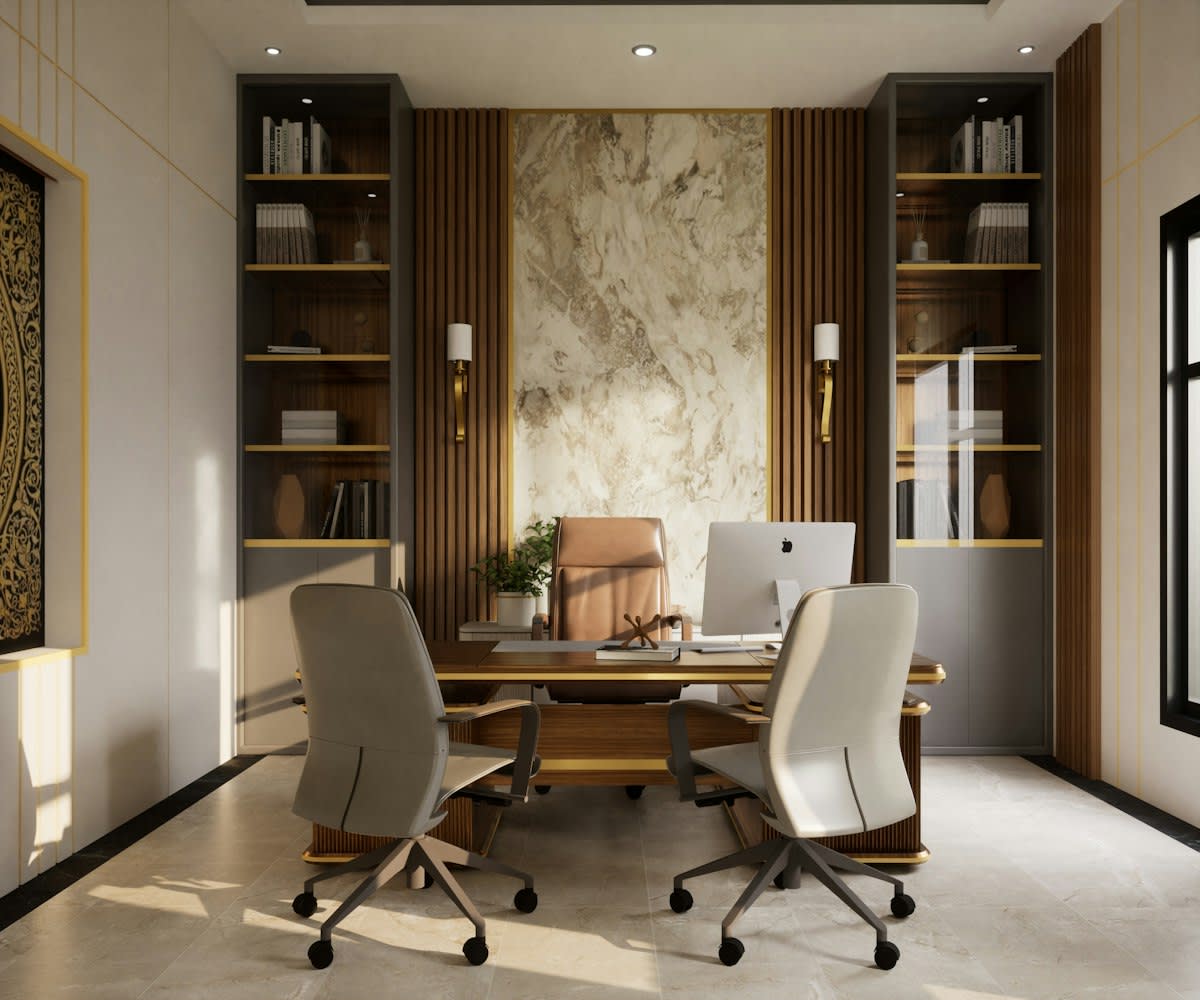
Look at the real estate trends in hubs like Singapore's Marina Bay or the outskirts of Zurich. The premium is no longer just on the view, but on the 'dead zone'. Developers are experimenting with Faraday-cage architecture—integrated shielding that blocks cellular and Wi-Fi signals in specific 'deep work' suites. It is a jarring irony. We spent two decades building a world of total connectivity, and now the most expensive square footage is the place where that connectivity dies.
"The attention economy has successfully commoditized the focus of the lower and middle classes. Consequently, the ability to disconnect is becoming the ultimate luxury good, similar to how organic food became a marker of wealth after the industrialization of agriculture."— Dr. Aris Thorne, Behavioral Economist at the Institute for Cognitive Sovereignty
This isn't about 'discipline'. That is the lie the productivity industry sells to the masses. The truth is systemic leverage. When you are paid by the hour or by a performance metric tied to responsiveness, you cannot afford to be unfocused. You are a node in a network. The wealthy, however, are the owners of the network. They can dictate the terms of their availability. This creates a feedback loop: those with the most leverage acquire the most focus, which they use to create even more leverage (Source: Cognitive Capital Study, 2024).
| Resource | The Mass Market (Attention-Poor) | The Elite (Attention-Rich) |
|---|---|---|
| Filtration | Algorithm-based (Ad-supported) | Human-based (Salary-supported) |
| Environment | Open-plan/Co-working/Home | Faraday suites/Private retreats |
| Communication | Asynchronous but constant | Strictly gated/Scheduled |
| Focus Tool | Pomodoro apps/Focus mode | Total environmental control |
The second-order consequence is a widening gap in strategic capability. Deep work—the ability to focus without distraction on a cognitively demanding task—is the only way to solve complex, non-linear problems. If only a small sliver of the population has the environment required for this state, the intellectual monopoly on high-level strategy tightens. The rest of the workforce is relegated to 'shallow work': reacting to emails, managing Trello boards, and attending Zoom calls that could have been a text (Source: Deep Work Analytics, 2023).
Ground-Level Friction: The Productivity Lie
Talk to any operator in the trenches of a high-growth startup in Seoul or Shenzhen. They'll tell you about the 'Productivity Porn' cycle. They buy the Oura ring, the Eight Sleep mattress, and the latest Notion template. They optimize their sleep and their caffeine intake to the milligram. But the friction isn't biological; it's political. You can't 'biohack' your way out of a boss who expects a WhatsApp reply at 3 AM. The struggle for focus in the middle class is a battle against an invisible architecture of expectation.
We see this failure in the 'digital detox' retreat market. These are essentially cognitive vacations. You pay $10,000 to stay in a luxury yurt in Bhutan for a week without your phone. You feel refreshed. Then you fly back to London or New York and plug back into the same broken system. The retreat is a bandage; the problem is the systemic requirement for constant availability. The truly wealthy don't take detox vacations; they build lifestyles where the detox is permanent.

The industry whispers are clear: we are moving toward a 'Cognitive Tier' subscription model. In the near future, we won't just pay for software; we will pay for 'Focus-as-a-Service'. This could manifest as managed living communities where signal interference is guaranteed, or professional 'Attention Architects' who redesign your life to minimize cognitive friction. The barrier to entry will be steep. High. Exclusive.
- Analog sanctuaries: Physical spaces designed to be tech-void.
- Cognitive Gatekeeping: The use of human intermediaries to filter all digital input.
- Time-Blocking Sovereignty: The power to declare 'dark periods' without professional penalty.
- Environmental Shielding: Investment in architecture that physically blocks signal penetration.
The third-order effect is a collapse in middle-management creativity. When the layer of employees responsible for executing strategy is permanently distracted, the execution becomes erratic. They aren't thinking; they are reacting. This creates a dependency on the 'Focus Elite' at the top, further concentrating power. If you are the only person in the room who can think for four hours straight without checking a screen, you are the most powerful person in the room.
The New Cognitive Order
We are no longer in a battle for 'time management'. Time is a constant. We are in a battle for cognitive sovereignty. The market is reacting. We see a surge in 'dumb phones' and analog tools among the tech elite—not as a quirky fashion statement, but as a survival strategy. They recognized the trap before the rest of us did. They know that the most valuable asset in a world of infinite distraction is the ability to ignore it (Source: Tech Sovereignty Report, 2024).
Fact-Check & Accuracy Note
Claims regarding the rise of Faraday-cage architecture in luxury real estate are based on emerging trends in high-end construction and boutique hospitality, though standardized market data is still fragmented. The correlation between 'deep work' capability and wealth is an analytical conclusion derived from attention economy models rather than a settled census statistic.
Editorial Note
This analysis avoids the 'productivity hack' narrative. It treats focus as a systemic resource, not a personal failing. The 'Human Buffer' concept is observed in executive assistant roles at the C-suite level across global financial hubs.