Brics states condemn Pahalgam terror attack
Source Entity
Latest News: Todays Latest News Headlines from India & World | Hindustan Times | Hindustan Times
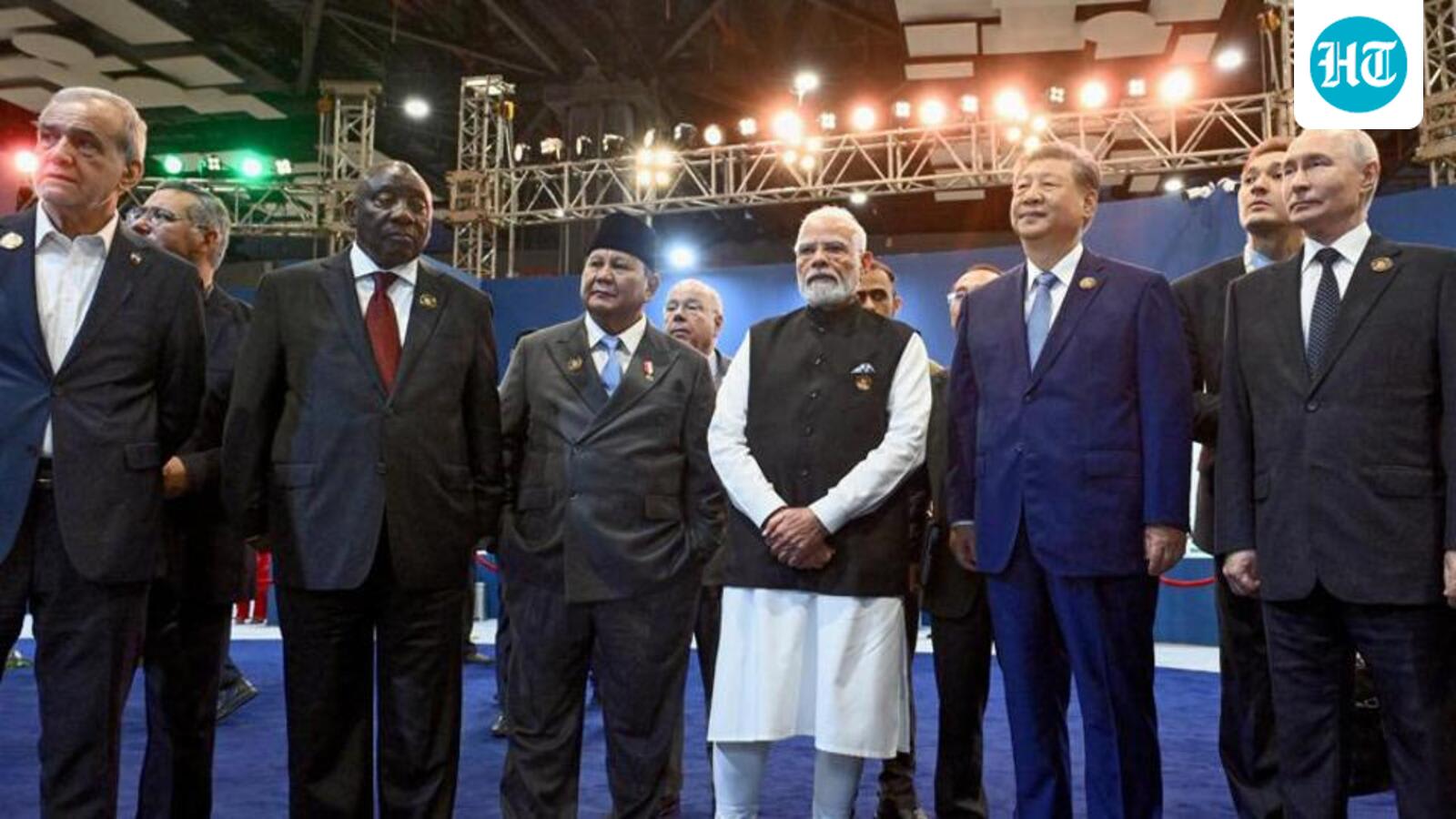
Iranian President Masoud Pezeshkian visited New Delhi for the 18th BRICS summit, highlighting escalating economic pressures from US and Israeli aggression. Prime Minister Narendra Modi urged for dialogue and diplomacy, emphasizing the critical need for secure energy supply chains and freedom of navigation.
The Geopolitical Stakes of the 18th BRICS Summit
Iranian President Masoud Pezeshkian’s arrival in New Delhi for the 18th BRICS summit marks a critical juncture in international relations. His presence, occurring amidst a period of heightened volatility in West Asia, underscores the growing importance of the BRICS bloc as a platform for nations seeking to navigate the pressures of Western-led economic sanctions. The timing of this summit is particularly sensitive, as the Iranian leadership characterizes the recent surge in punitive measures as a 'far more dangerous phase' of aggression.
The Intersection of Economic and National Security
During the Leaders' Session of the BRICS Business Forum, President Pezeshkian articulated a firm stance: economic security is inextricably linked to national and regional stability. By framing the 'extensive' sanctions imposed by the United States as an act of 'active aggression,' Iran is attempting to shift the narrative within the BRICS framework. This approach signals a strategic attempt to leverage the collective economic weight of the bloc to mitigate the impact of isolation, suggesting that member nations may need to develop more robust, alternative financial mechanisms to bypass traditional Western-dominated systems.
Modi’s Diplomatic Mediation
Prime Minister Narendra Modi’s meeting with President Pezeshkian highlights India’s delicate balancing act in global diplomacy. By calling for 'dialogue and diplomacy' to resolve the conflict with the United States, India is positioning itself as a neutral arbiter. This intervention is not merely humanitarian; it is deeply rooted in India’s national interest. The disruption of energy supply chains, particularly the bottleneck created in the Strait of Hormuz since the February 28 coalition actions, poses a direct threat to India’s energy security and economic stability.
Maritime Security and the Strait of Hormuz
Central to the discussions was the imperative of freedom of navigation. The Strait of Hormuz, a vital artery for global oil transport, has been in a 'chokehold' following the escalation of military tensions. Prime Minister Modi’s emphasis on the safety of seafarers and the security of sea lanes addresses the immediate concern of global energy markets. For Tehran, maintaining these routes is a matter of survival, yet the ongoing conflict makes these waters increasingly perilous for international shipping interests.
Future Implications and Regional Stability
Looking ahead, the rhetoric exchanged in New Delhi suggests that tensions are unlikely to dissipate in the short term. President Pezeshkian’s characterization of the U.S. and Israel as 'bullies' reflects a hardening of Iran’s foreign policy, which could lead to further regional entrenchment. As the BRICS summit concludes, the international community will be watching to see if the diplomatic overtures from leaders like Mr. Modi can provide a pathway to de-escalation or if the economic and military pressures will continue to drive a deeper wedge between Iran and the Western coalition.
Multiple Citing Sources
Verification Required?