Amid wars in sea lanes, PM Modi proposes emergency support network for seafarers
Source Entity
Divya A
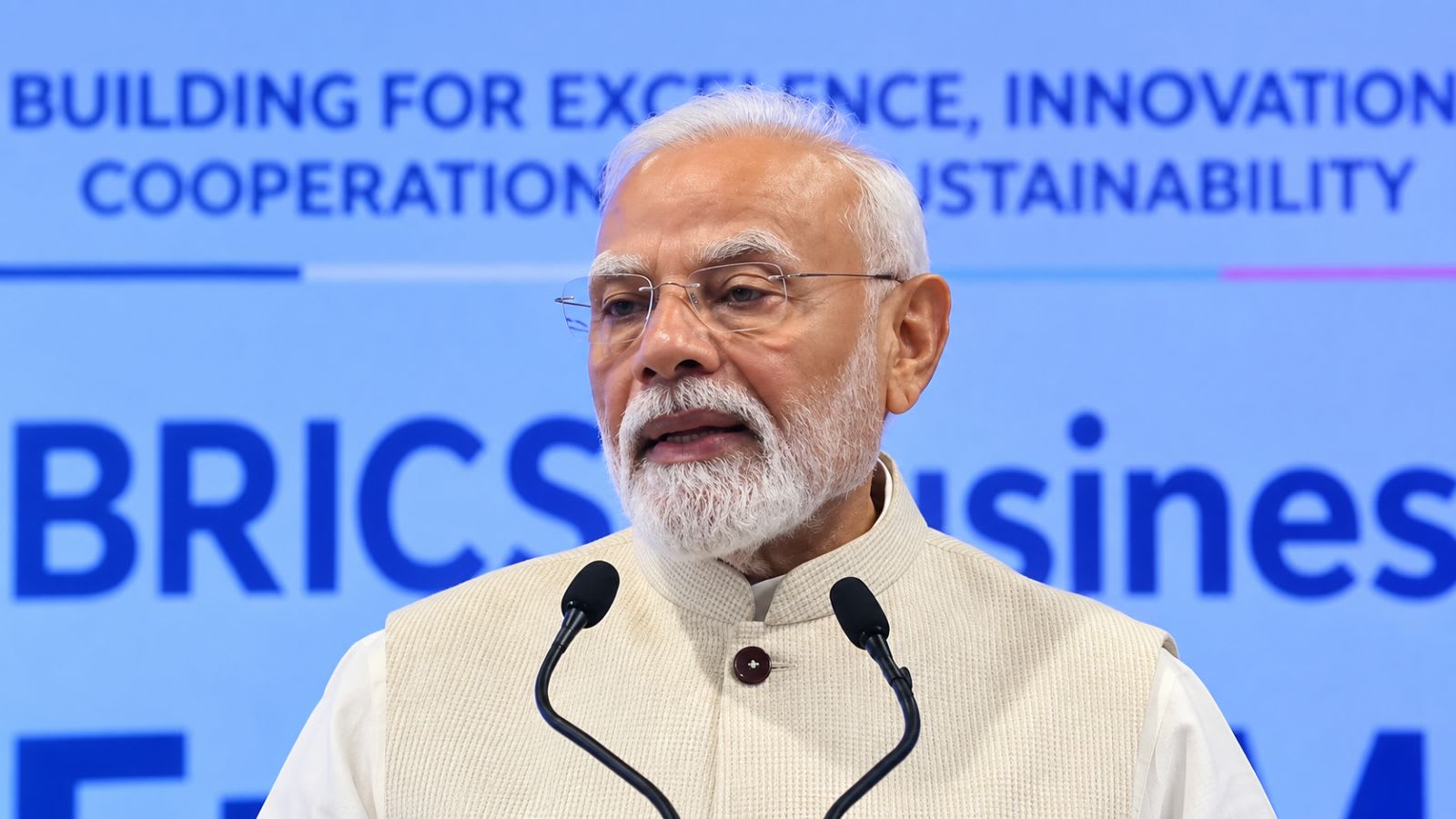
Iranian President Masoud Pezeshkian is in New Delhi for the 18th BRICS summit, where he criticized US-Israel aggression and intensifying economic sanctions. Prime Minister Modi held bilateral talks with Pezeshkian, emphasizing the necessity of diplomacy and securing critical energy supply chains like the Strait of Hormuz.
Tensions Escalate: Pezeshkian and the BRICS Summit
Iranian President Masoud Pezeshkian arrived in New Delhi on Friday, September 11, 2026, to participate in the 18th BRICS summit. His visit occurs against the backdrop of a volatile geopolitical climate, marked by a significant spike in regional tensions in West Asia. The summit serves as a critical platform for Iran to engage with international partners while navigating the fallout of recent confrontations with the United States and Israel.
The Economic Dimension of National Security
During the Leaders' Session of the BRICS Business Forum, President Pezeshkian articulated a firm stance on the intersection of economics and state security. He argued that economic security is intrinsically linked to national and regional stability. Pezeshkian highlighted that the long-standing sanctions against Iran have entered a 'far more dangerous phase' in recent months, which he explicitly attributed to active military aggression by the U.S.-Israel coalition, particularly following the events of February 28, 2026.
Diplomatic Engagements and the Call for Restraint
Prime Minister Narendra Modi’s meeting with President Pezeshkian underscores India's delicate balancing act in regional diplomacy. Recognizing the gravity of the situation, PM Modi advocated for the resolution of conflicts through 'dialogue and diplomacy.' This appeal is particularly vital given the disruption to global energy supply chains. As a major consumer of energy, India is deeply concerned about the stability of the Strait of Hormuz, a critical maritime chokepoint that has faced severe operational constraints due to the ongoing coalition activities.
Strategic Implications for the Strait of Hormuz
Prime Minister Modi’s emphasis on the 'freedom of navigation' highlights the broader implications of the current conflict. The Strait of Hormuz, often referred to as the world’s most important oil artery, has been in a 'chokehold' since the February military escalation. The disruption of this route poses a direct threat to global energy security, affecting not only India but the broader international market, making the diplomatic intervention of BRICS leaders a matter of global necessity.
Rhetoric and Future Outlook
President Pezeshkian’s rhetoric remains defiant, labeling the U.S. and Israel as 'bullies' and asserting that Iran will not be coerced. While he expressed optimism that his discussions with Prime Minister Modi would bolster Iran’s energy and commercial ties with India, the path forward remains fraught with uncertainty. As the BRICS summit progresses, the international community will be watching to see if these high-level discussions can translate into tangible de-escalation measures or if the 'dangerous phase' of economic and military pressure will continue to intensify in the coming months.
Multiple Citing Sources