Iran President Pezeshkian Honored With Shawl In New Delhi During High-Profile India Visit
Source Entity
Latest News: Todays Latest News Headlines from India & World | Hindustan Times | Hindustan Times
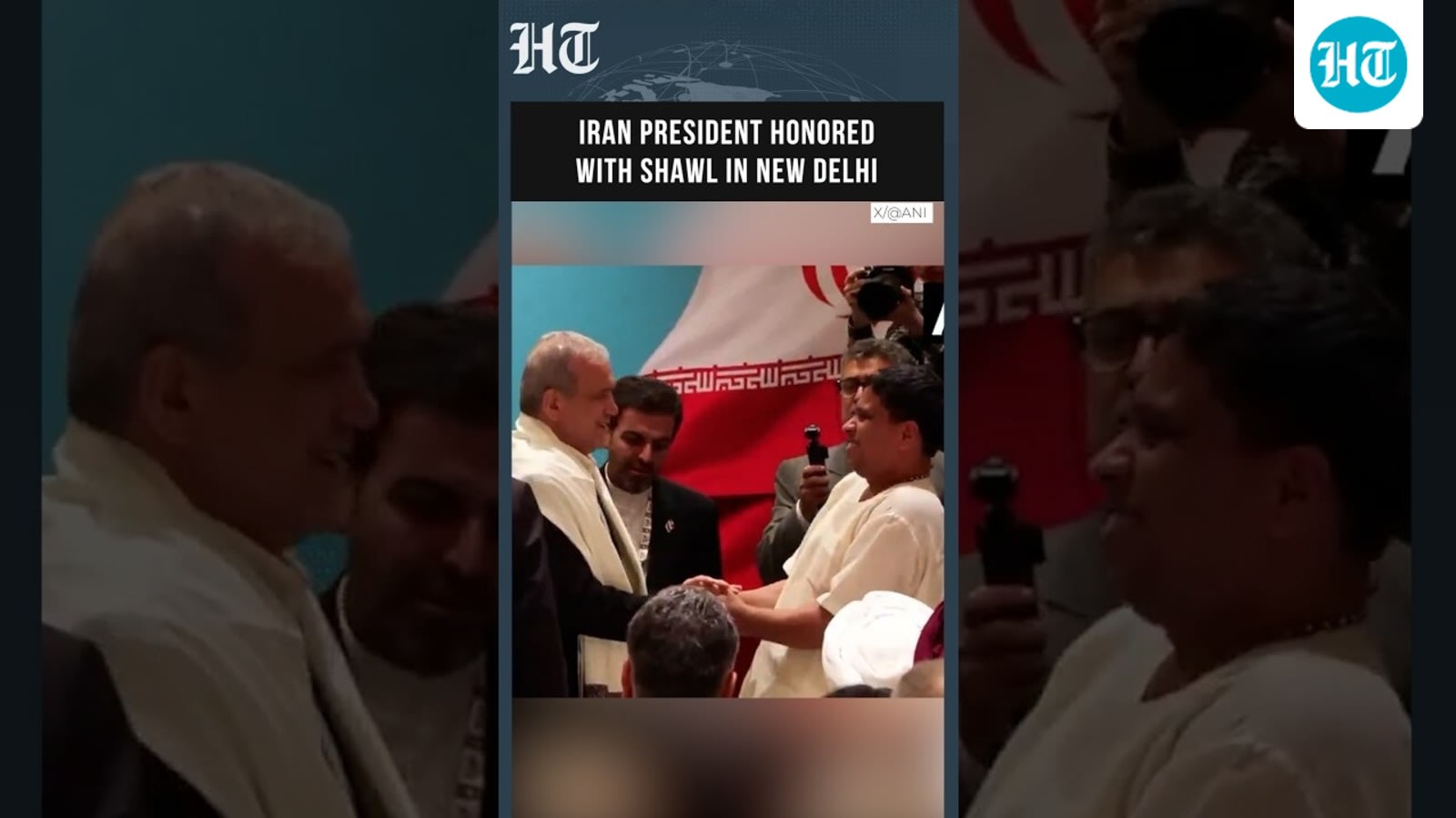
Iranian President Masoud Pezeshkian arrived in New Delhi for the BRICS summit, highlighting the severe impact of US and Israeli economic aggression. Prime Minister Modi urged for diplomatic resolutions to regional conflicts, emphasizing the critical need to secure energy supply chains and maritime routes.
Tensions Escalate: Iran’s Stance at the BRICS Summit
Iranian President Masoud Pezeshkian’s arrival in New Delhi for the 18th BRICS summit marks a pivotal moment in international diplomacy. His presence at the event serves as a high-profile platform to voice Iran's grievances regarding the intensifying economic and military pressures exerted by the United States and Israel. By explicitly labeling these actions as 'active aggression' that has entered a 'far more dangerous phase,' President Pezeshkian signals a hardening of Tehran's foreign policy stance amidst a deteriorating geopolitical landscape.
The Nexus of Economic and National Security
During the BRICS Business Forum, President Pezeshkian emphasized a fundamental tenet of his administration: that economic security is inextricably linked to national and regional stability. The 'extensive' sanctions imposed by the U.S. have historically challenged Iran's economic autonomy, but the President noted that recent months have seen these pressures reach a critical tipping point. This rhetoric highlights the existential threat the Iranian government perceives, framing economic strangulation as a precursor to broader military conflict.
Modi’s Call for Diplomatic De-escalation
In his bilateral meeting with President Pezeshkian, Prime Minister Narendra Modi advocated for a pivot toward 'dialogue and diplomacy' to address the ongoing conflict in West Asia. India, maintaining its traditional role as a neutral mediator, seeks to de-escalate tensions that threaten global stability. Mr. Modi’s appeal is not merely humanitarian but rooted in the pragmatic necessity of regional peace, particularly as the conflict with the United States continues to ripple through the global economy.
The Chokehold on Energy and Navigation
A central concern for India and the global community is the disruption of energy supply chains. Since the U.S.-Israel coalition’s actions on February 28, the Strait of Hormuz has become a significant geopolitical flashpoint. PM Modi highlighted the urgent need to ensure freedom of navigation, as this vital maritime route remains under a virtual chokehold. The stability of these sea lanes is essential for the flow of energy resources, and their continued obstruction poses a direct risk to global energy markets.
Future Implications and Strategic Alliances
As the BRICS summit progresses, the interactions between leaders like Modi and Pezeshkian underscore the group's evolving role in navigating a multipolar world order. While Iran seeks to bolster its commercial and energy ties with India to mitigate the impact of sanctions, the broader conflict with the U.S. and Israel remains a formidable barrier. The coming months will likely see Iran attempting to leverage its BRICS partnerships to circumvent economic isolation, while India will continue to balance its strategic interests with the necessity of maintaining open lines of communication with all parties involved.
Multiple Citing Sources
Verification Required?