DeepSeek v4.1 Flash
Source Entity
Hacker News
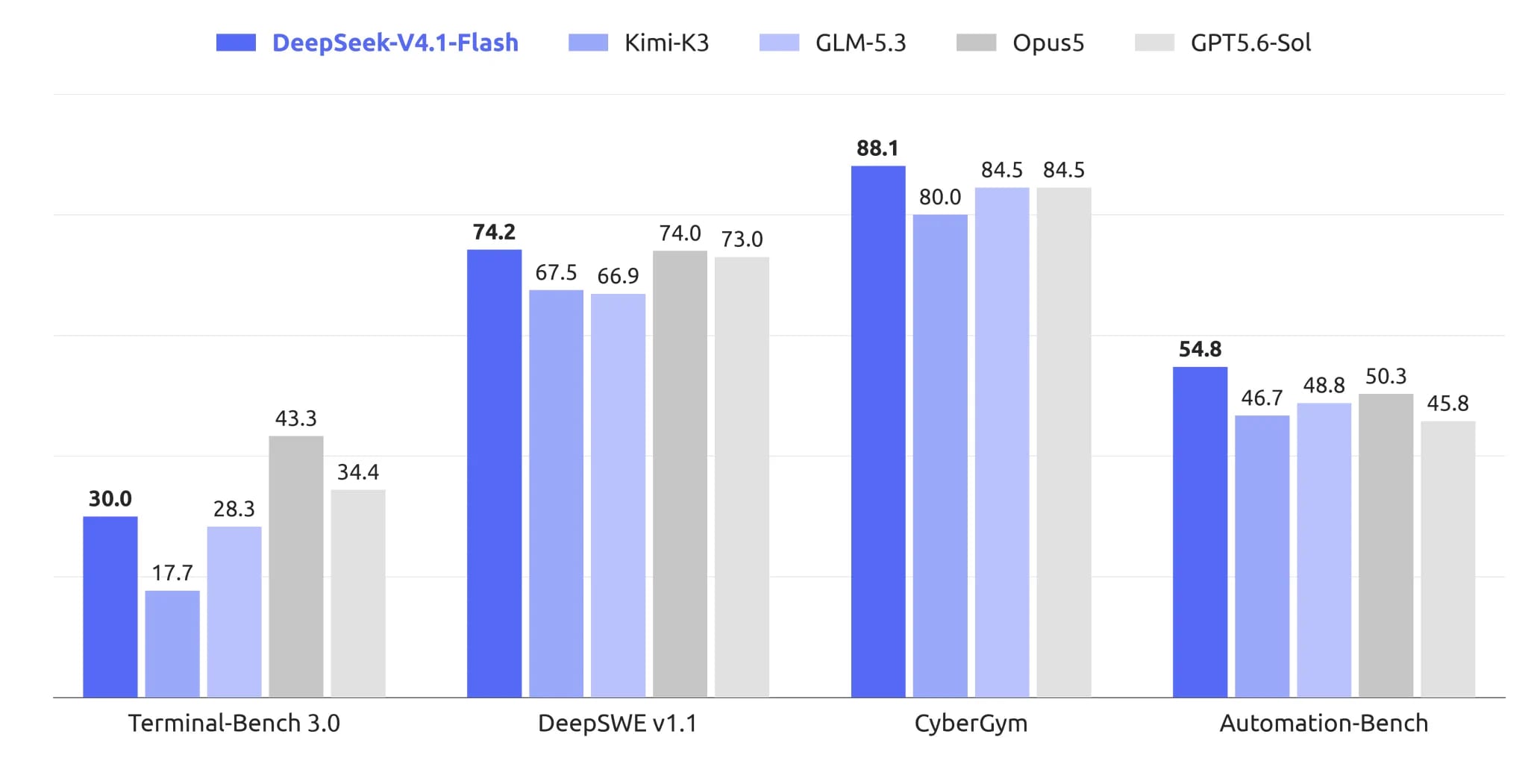
DeepSeek has officially launched the V4.1-Flash model featuring native multimodal capabilities. This update streamlines the API by replacing older legacy models with a more efficient, unified architecture.
The Evolution of DeepSeek: Introducing V4.1-Flash
DeepSeek has officially transitioned its API ecosystem to the new V4.1-Flash model, marking a significant milestone in its rapid development cycle. This update introduces native multimodal support, a critical advancement for developers requiring high-performance integration of text and visual data processing within a single, streamlined pipeline.
Streamlining the Model Ecosystem
The deployment of V4.1-Flash necessitates the retirement of the previous V4-Flash and V4-Flash-Vision-Exp iterations. By consolidating these legacy models into a single, more capable version, DeepSeek is optimizing its infrastructure for better performance and consistency. To minimize disruption for developers, existing calls to the older model endpoints will be temporarily routed to V4.1-Flash, ensuring a smooth transition during the deprecation phase.
The Shift Toward Native Multimodality
Modern large language model development is increasingly moving toward 'native' multimodality, where the model is trained to process multiple data types—text, images, and potentially audio or video—within the same latent space. Unlike older architectures that relied on disparate 'vision adapters' or external encoders, the move to V4.1-Flash suggests DeepSeek is prioritizing tighter integration, which typically results in lower latency and higher accuracy when interpreting complex, multi-modal prompts.
API Optimization and Developer Impact
For the developer community, this update is more than just a version bump; it represents a focus on efficiency. By setting the model to 'deepseek-flash', users can now leverage the latest improvements in model weight optimization and inference speed. The temporary routing mechanism demonstrates a commitment to backward compatibility, allowing teams to update their codebases without immediate service interruption.
Broader Implications for AI Infrastructure
This release reflects a broader trend in the AI industry: the rapid iteration and replacement of 'Flash' or 'Turbo' tier models. As competitive pressures in the LLM market intensify, companies are forced to deliver frequent performance updates that balance model depth with computational cost. DeepSeek’s move to simplify its API structure suggests a strategic shift toward maintaining a lean, high-velocity development cycle.
Future Trends in Model Deployment
Looking ahead, we can expect that the success of V4.1-Flash will dictate future architectural decisions for DeepSeek’s larger parameter models. The industry is currently moving away from fragmented model versions toward unified endpoints that handle diverse tasks natively. This strategy not only lowers the barrier to entry for developers but also allows the company to focus its computational resources on training and refining a smaller number of highly efficient models.