For the global elite, the definition of luxury has undergone a violent shift. It is no longer about the acquisition of rare objects or the display of visible wealth. Instead, the most coveted commodity is now the absence of everything—specifically, the absence of cognitive friction. When you operate at a level where every minute is monetized and every interaction is a negotiation, the ultimate luxury is a space where you are known, understood, and entirely left alone. This isn't merely about privacy; it is about the strategic engineering of an environment that allows the mind to turn off completely (Source: Veranda, 2026).
Absolute solitude is not a passive state; it is a highly managed product. To achieve it, the wealthiest 1% are moving away from traditional villas—which often require the logistical headache of staffing and management—and toward 'friction-free' luxury models. These models, implemented in ultra-exclusive settings like Clayoquot Wilderness Resort in British Columbia, Triple Creek Ranch in Montana, and Singita Castleton in South Africa, prioritize a seamless experience where the guest never has to sign a check or coordinate a detail (Source: Veranda, 2026). The goal is the total elimination of the 'administrative burden' of living.
Prerequisites for Absolute Solitude
Before attempting to curate a space of absolute solitude, you must understand that this is an investment in longevity and mental recovery, not just a vacation. You will need access to a network of providers who understand the 'invisible service' ethos—the ability to anticipate needs before they are articulated. Furthermore, a shift in mindset is required: you must value the 'sense of belonging and access' provided by a professional luxury structure over the perceived independence of a private estate (Source: Veranda, 2026).
- Access to friction-free luxury resorts or private clubs that manage all logistics internally.
- A commitment to the 'Longevity' framework, prioritizing biological and psychological recovery over social visibility.
- A vetted circle of service providers capable of executing 'ghost service' (invisible but omnipresent support).
- Proximity to natural green spaces, which are clinically linked to psychological relaxation (Source: MDPI, 2026).
The Implementation Process: Step-by-Step
Creating absolute solitude requires a layered approach. You cannot simply fly to a remote location; you must build a buffer between yourself and the demands of the outside world. This involves a sequence of filtering mechanisms that ensure only the most essential information reaches you, while all logistical friction is absorbed by a third party.
- Audit your cognitive friction: Identify every single micro-decision you make during a typical day (e.g., budgeting, scheduling, coordinating transport). The objective is to outsource 100% of these to a friction-free provider (Source: Veranda, 2026).
- Select a 'Friction-Free' Environment: Choose locations that offer a 'hotel within a hotel' or private club structure. This provides a layer of exclusivity that filters out the general luxury population, ensuring you are surrounded only by like-minded peers (Source: Veranda, 2026).
- Integrate Natural-Based Recovery: Ensure the environment includes direct contact with local green spaces, such as meadows or forests. Research indicates that these sensory experiences are primary drivers for psychological relaxation (Source: MDPI, 2026).
- Establish a 'Ghost Service' Protocol: Set parameters where service is provided without direct interaction. This includes the 'no-check' model where financial transactions are invisible and handled post-stay or via a corporate account (Source: Veranda, 2026).
- Layer the Community Paradox: Balance absolute solitude with curated access. Use private clubs to ensure a match with people you can connect with instantly, preventing the loneliness that often accompanies total isolation (Source: Veranda, 2026).
This process effectively transforms the environment into a cognitive sanctuary. By removing the need to 'think about a budget' or 'coordinate logistics,' the guest can move from a state of constant management to a state of pure existence. This is why the world's wealthiest are paying millions—not for the thread count of the sheets, but for the ability to turn their minds off completely (Source: Veranda, 2026).
"The reason why private clubs are growing is not just for elite access, it is because people are craving community. Clubs ensure a more likely match with like-minded people you can instantly connect with."— Jack Ezon, Luxury Industry Expert
The transition from 'exclusive' to 'friction-free' is a subtle but critical distinction. Traditional exclusivity is about who is kept out. Friction-free luxury is about what is removed from the experience of those who are let in. It is the difference between having a private jet and having a private jet journey with multiple stops and ultra-exclusive accommodations that require zero planning from the passenger (Source: Galerie, 2026).
The Practitioner's Perspective: The Ghost Service Debate
On the ground, those of us designing these experiences deal with a constant tension: the 'Ghost Service' threshold. In the luxury hospitality sector, we debate how to provide 24/7 high-touch service without the guest ever actually seeing a human being. If a guest sees a staff member too often, the illusion of solitude is broken. If the service is too invisible, the guest feels neglected. The real friction occurs when a guest has to ask for something; the gold standard is to provide the item before the guest even realizes they want it. We are essentially engineering a world where the guest is the center of a perfectly functioning machine that remains entirely hidden from view.
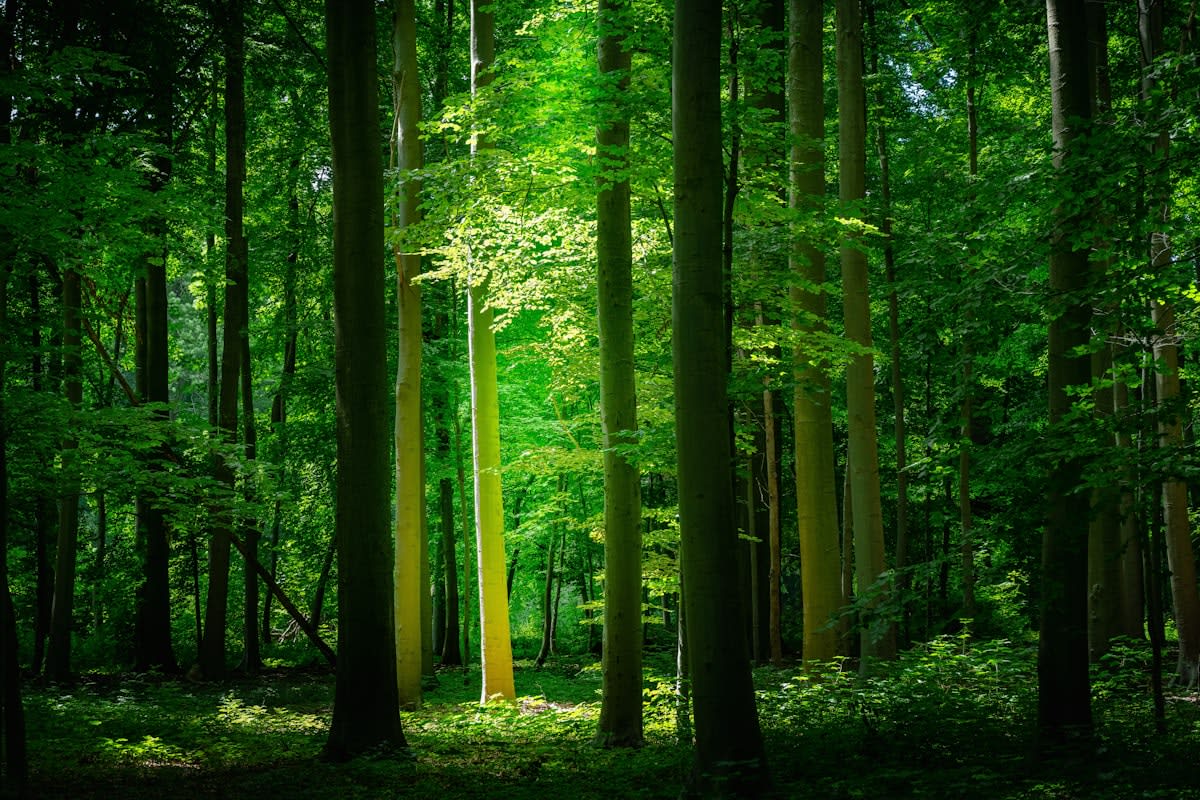
This shift toward longevity as the new luxury means that the environment must now serve a biological purpose. We are seeing a move toward natural-based approaches to psychological relaxation. For example, integrating meadow-like green spaces isn't just an aesthetic choice; it's a clinical one designed to induce a specific state of mental calm (Source: MDPI, 2026). The solitude is no longer just a luxury; it is a healthcare intervention.
| Feature | Traditional Luxury (The Villa Model) | Absolute Solitude (The Friction-Free Model) |
|---|---|---|
| Management | Guest manages staff and logistics | Resort/Club absorbs all logistics |
| Financials | Explicit payments and budgeting | Invisible, 'no-check' transactions |
| Social Layer | Broad exclusivity/Social climbing | Curated peer-matching via private clubs |
| Primary Goal | Status and Ownership | Longevity and Cognitive Recovery |
Common Pitfalls in Curating Solitude
The most common mistake I see is the 'Isolation Trap.' Practitioners often confuse absolute solitude with total isolation. Total isolation, devoid of any curated community or sensory stimulation, can lead to psychological distress. As noted in neurological research, extreme sensory deprivation can even trigger hallucinations (Source: Wikipedia/Oliver Sacks). The goal is not to remove all stimuli, but to remove stressful stimuli while retaining restorative stimuli, such as nature and like-minded human connection.
Another pitfall is the 'Over-Automation' error. Replacing human intuition with AI or automated systems often increases friction because the guest must now interact with a machine to get what they need. True friction-free luxury requires a human who is trained to be invisible, not a tablet that requires a touch-screen command. The luxury is in the human intuition that operates behind the scenes (Source: Veranda, 2026).
Fact-Check & Accuracy Note
Key claims regarding the 'friction-free' model and the specific resorts (Clayoquot, Triple Creek, Singita Castleton) are sourced from Veranda's 2026 travel trends report. Data on the psychological benefits of green spaces is attributed to the 2026 MDPI scoping review. The distinction between isolation and solitude is informed by the neurological observations of Oliver Sacks regarding sensory deprivation.