
The Friction Problem: Why We Stop Connecting
We have mistakenly equated social connection with events. For many, the only way to see a friend is to schedule a dinner three weeks in advance, coordinate calendars across time zones, and commit to a four-hour block of high-intensity interaction. This is a high-stakes model. When the perceived effort of organizing the encounter outweighs the immediate emotional reward, we simply stop asking. We are not lacking in a desire for company; we are suffering from an optimization crisis. By treating friendship like a corporate project, we have stripped away the spontaneous, low-pressure interactions that actually sustain human bonds.
From a practitioner's perspective, I see this friction manifest as invitation anxiety. In my work coaching professionals on social reintegration, the most common hurdle isn't shyness—it's the fear of a high-stakes rejection. If you ask someone for a formal dinner and they say no, it feels like a rejection of your personhood. If you ask someone to join you for a ten-minute walk to the coffee shop because you are already going, a 'no' is just a scheduling conflict. The debate among sociologists today isn't about whether we are lonely, but whether our current urban and digital architectures make low-stakes interaction physically and psychologically impossible.
The Core Thesis
The goal of the Low-Stakes Protocol is to move social interaction from the category of 'Event' (high effort, high expectation) to the category of 'Ambient' (low effort, low expectation).
Prerequisites: What You'll Need
Before implementing the protocol, you must dismantle the 'Perfect Host' myth. You are not organizing a gala; you are inviting someone into a slice of your existing life. The protocol requires a shift in mindset where the primary value is the shared presence, not the quality of the activity. If the activity is too exciting or too expensive, the stakes rise, and the friction returns.
- A 'Low-Stakes List': A directory of 5-10 people you like but haven't seen in 3+ months.
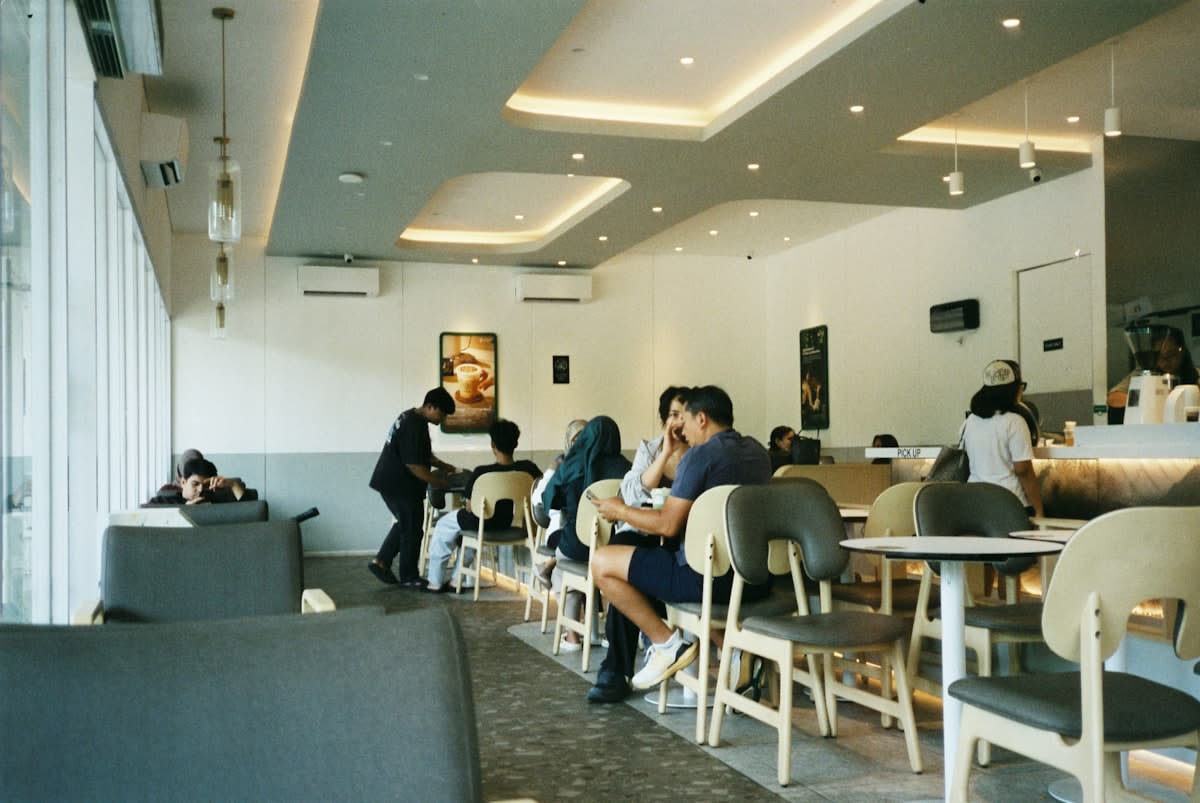
- A 'Third Place': A physical location (cafe, library, park, gym) that is not home or work.
- The '15-Minute Rule': A commitment to keep initial invitations time-capped to reduce the other person's perceived cost.
- Radical Acceptance: The understanding that a 'no' is almost always about the other person's bandwidth, not your value.
The Execution Framework: Step-by-Step
The protocol functions by lowering the barrier to entry. We want to create a 'yes' that requires zero mental effort from the recipient. This is how we rebuild social capital—not through grand gestures, but through a high frequency of tiny, successful interactions.
- Audit your Third Places: Identify a location you already visit weekly. Whether it is a bakery in Mexico City, a pub in London, or a community center in Tokyo, find a spot where 'regulars' exist. This removes the friction of choosing a venue.
- The 'Incidental Invitation': Instead of asking 'Do you want to hang out?', use the phrase 'I am already doing X, do you want to join?'. Example: 'I'm heading to the bookstore at 4 PM on Tuesday; you're welcome to tag along.' This signals that your happiness is not dependent on their presence, which removes the pressure.
- Cap the Time Investment: Explicitly mention a time limit. 'I have a hard stop at 5 PM, but I'd love to grab a quick coffee.' A defined end-point makes the invitation feel safe and manageable for an overwhelmed person.
- The Micro-Interaction Loop: Once the low-stakes meet happens, do not immediately jump to a high-stakes event. Repeat the low-stakes interaction 2-3 times. Build a rhythm of reliability before increasing the complexity of the plan.
- Scale to Medium-Stakes: Only after the 'ambient' connection is established do you move to 'Event' territory—like a dinner party or a day trip. You are now inviting them into a relationship that has already been proven to be low-friction.
"Loneliness is not just a feeling; it is a health risk. Social isolation can be as damaging to health as smoking 15 cigarettes a day."— Dr. Vivek Murthy, US Surgeon General
The biological imperative for connection is non-negotiable. According to the World Health Organization (2023), social isolation is linked to a significantly higher risk of cardiovascular disease and all-cause mortality. When we treat sociality as an optional luxury rather than a health requirement, we fail. The Low-Stakes Protocol treats social connection like hygiene—something small, frequent, and necessary for survival, rather than a rare treat.

Common Pitfalls and How to Avoid Them
The most frequent failure point is the 'Networking Trap.' This happens when a practitioner begins to treat the protocol as a game of optimization or a way to 'collect' contacts. The moment you start tracking your 'hit rate' or treating interactions as transactions, you introduce a subtle energy of insincerity. People can smell a strategy from a mile away. The protocol is about creating space for connection, not engineering a specific outcome.
Another common error is the 'Consistency Collapse.' Many people try the protocol for one week, get three 'no' responses, and conclude that they are unlovable or that the world has grown cold. In reality, you are simply encountering the 'bandwidth wall.' Most people are operating at 100% cognitive capacity. A 'no' is rarely a rejection of you; it is a reflection of their current exhaustion. The secret to the protocol is not the invitation itself, but the willingness to send the next one.
Editorial Note: The Scaling Danger
Avoid the urge to 'upgrade' the invitation too quickly. If you've had two great 15-minute coffees, don't immediately suggest a weekend getaway. Keep the friction low until the trust is high.
Fact-Check & Accuracy Note
Key claims regarding the health impacts of loneliness are sourced from the US Surgeon General's 2023 Advisory on Loneliness and Isolation and the World Health Organization's reports on social determinants of health. The 'Third Place' concept is derived from the sociological work of Ray Oldenburg. The specific 'Low-Stakes Protocol' steps are a synthesis of behavioral design and social capital theory.