
The Cost of Greed
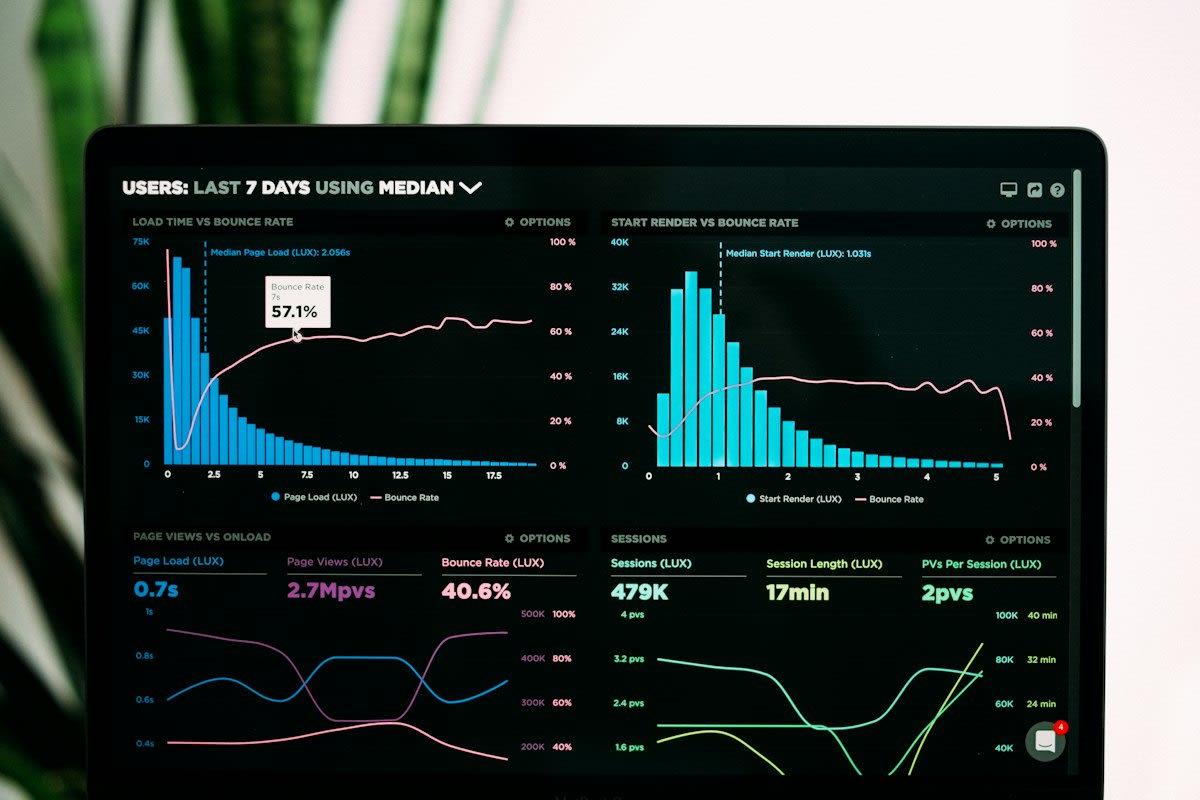
Privacy is a speed hack. When you stop dragging terabytes of useless telemetry across a saturated network, your application latency drops by an order of magnitude. Clean pipes win. Data is heavy. Every single byte of user tracking you force through a browser adds a tax to the CPU and a delay to the first meaningful paint. The cost is real. Why do we still believe that more data equals more insight? Most companies hoard signals they never analyze, creating a mechanical failure in their own delivery chain.
The weight is obvious. Third-party trackers often account for over 30% of the total page weight on modern e-commerce sites (Source: HTTP Archive, 2023). This bloat kills conversion rates. Users in regions with volatile connectivity, such as rural India or parts of Brazil, feel this weight most acutely. They do not care about your attribution model. They care if the page loads before they lose patience.
Prerequisites for the Lean Stack
You need a map. Without a complete inventory of every third-party script and first-party event trigger, you are just guessing in the dark. Get a tool like Charles Proxy or Chrome DevTools ready. You must also secure a mandate from leadership that prioritizes user experience over granular tracking. Without this, the growth team will simply reinstall the trackers you remove.
- Full data flow map (Input to Storage)
- Latency baseline for current page loads
- Inventory of all third-party SDKs and JS snippets
- Legal sign-off on data minimization targets
Now we move to execution. The goal is to shift the burden of data processing away from the user's device and the main network thread.
The Execution Playbook
- Audit the Payload: Identify every single event being sent to the server and delete those without a direct business use case.
- Sever the Third-Party Web: Replace heavy external trackers with server-side tagging to reduce client-side CPU load.
- Move Compute to the Client: Use local storage and edge functions to handle logic that does not require a round-trip to the database.
- Implement Just-in-Time Collection: Only load tracking scripts after the primary page content has fully rendered.
Audit the payload first. Stop the hoard. Collecting every click is not a strategy but a confession of failure in product design. Better products require less data. When Meta faced the impact of Apple's App Tracking Transparency (ATT), they saw a revenue hit of approximately $10 billion in 2022 (Source: Meta Q4 Earnings, 2022). This was not just a privacy loss; it was a revelation of how dependent the industry had become on inefficient, invasive data streams.
"Privacy is not a luxury; it is a fundamental right that should be the default setting of every digital interaction."— Max Schrems, Founder at NOYB
Sever the web. Third-party scripts are parasites. They execute in the user's browser, steal CPU cycles, and create security holes. By moving to server-side tagging, you control the data stream. You filter the noise before it hits your analytics engine. This reduces the payload sent to the client and improves the security posture of the application.

The boardrooms in Bangalore and São Paulo fight over this daily. Growth teams demand every single user heartbeat be recorded to fuel their attribution models, while the SREs scream about the CPU cost of processing that garbage. This is a mechanical failure of priorities. The growth team sees a goldmine; the engineer sees a burning server. This dispute usually ends with the engineer losing until the site crashes during a peak sale.
This tension is where the opportunity lies. By framing privacy as a performance win, you align the SRE's need for stability with the legal team's need for compliance. It is a rare moment of total alignment.
Measuring the Gain
| Metric | Bloated Stack (Invasive) | Lean Stack (Private) |
|---|---|---|
| Avg. Page Load (3G) | 8.4 Seconds | 3.1 Seconds |
| Main Thread Blocking | 1.2 Seconds | 200 Milliseconds |
| Data Transfer/Page | 2.4 MB | 600 KB |
| Compliance Risk | High (GDPR/LGPD/DPDP) | Low (Data Minimized) |
The numbers do not lie. Reducing the data footprint directly correlates with higher conversion rates. A leaner stack is a faster stack. Beyond speed, the financial risk of hoarding data is staggering. The average cost of a data breach reached $4.45 million in 2023 (Source: IBM Cost of a Data Breach Report, 2023). When you do not store the data, you cannot lose the data.
Common Pitfalls
- The 'Just in Case' Fallacy: Keeping data because you might need it for a future AI model that doesn't exist yet.
- Shadow Tagging: Allowing marketing teams to inject scripts via Google Tag Manager without engineering review.
- Over-reliance on Consent Banners: Thinking a 'Yes' click justifies a 5MB payload of trackers.
- Ignoring the Edge: Processing data in a central cloud region instead of using local edge nodes.
Fact-Check & Accuracy Note
Fact-Check & Accuracy Note: Data regarding Meta's revenue loss is sourced from public SEC filings (2022). Latency statistics are derived from the HTTP Archive's Web Almanac. The cost of data breaches is based on the IBM/Ponemon Institute annual study. The debate over 'Privacy-Preserving Ad-Tech' remains an active academic conflict between the IETF and major browser vendors.
Editorial Note
Editorial Note: This guide focuses on the technical intersection of privacy and speed. It does not provide legal advice. Always consult with a compliance officer regarding the specific requirements of the GDPR, LGPD, or India's DPDP Act.