
The Cognitive Weight of Ink
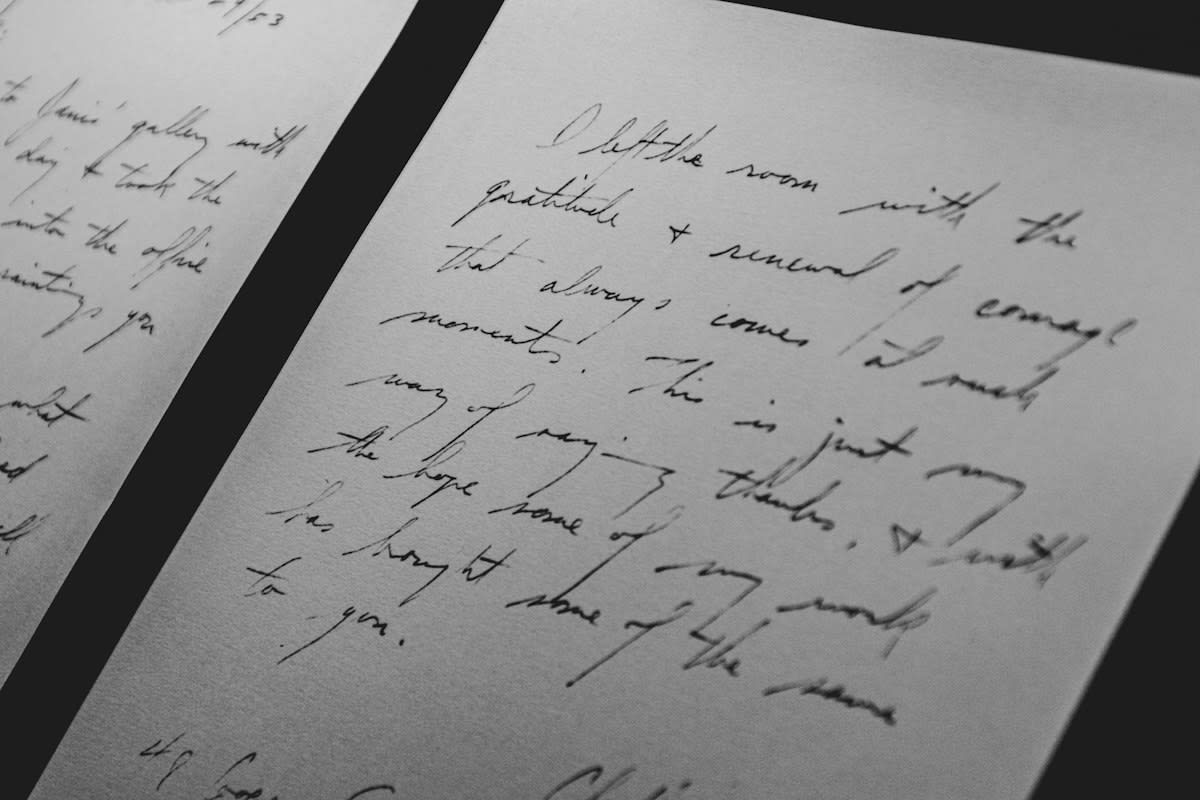
Ink is the only anchor. As the digital saturation of the 2020s reaches a breaking point, professionals from Tokyo to Sao Paulo are rediscovering that the physical act of writing creates a neural imprint that pixels simply cannot replicate. Memory needs a physical home. Do we actually trust the cloud? The assumption that digitizing every thought increases productivity fails to account for the cognitive attrition caused by the endless scroll and the fragmentation of attention. Tactility wins the war.
Neural pathways fire differently. Research indicates that the physical effort of handwriting forces the brain to process information more deeply, as the writer must summarize and synthesize rather than transcribe verbatim. This mental filtration prevents the stagnation of thought (Source: Psychology Today, 2023). Screens encourage a passive intake. When we type, the speed of the keyboard outpaces the speed of reflection, leading to a shallow web of connections that dissolve quickly. Paper demands a slower, more deliberate pace.
"The act of handwriting is not just a recording method but a cognitive process that enhances the encoding of information into long-term memory."— Dr. Pam Mueller, Cognitive Psychologist

The East Asian Engine
Tokyo leads the charge. In Japan, the stationery market has not merely survived the digital age but has flourished by repositioning paper as a luxury wellness product. The Hobonichi Techo planner serves as a cultural totem for thousands who reject the rigidity of digital calendars. Precision defines this market. By focusing on paper weight and ink bleed, Japanese manufacturers have turned the act of planning into a meditative ritual. This is not nostalgia; it is a calculated rejection of digital noise.
Seoul follows a similar path. South Korean youth are increasingly adopting 'analog study' methods, where handwritten notes are shared on social media as aesthetic markers of discipline and focus. This trend shows a sharp increase in the consumption of high-end planners and journals among Gen Z (Source: Korea Herald, 2024). They seek a tangible record. In a society dominated by hyper-fast internet, the slow scratch of a pen on a page provides a necessary contrast to the blur of the screen. The physical page becomes a sanctuary.
| Market Segment | 2023 Growth Rate | 2024 Projected Growth | Primary Driver |
|---|---|---|---|
| Luxury Stationery (Japan) | 4.2% | 6.1% | Mindfulness/Wellness |
| Analog Planners (S. Korea) | 3.8% | 5.5% | Gen Z Aestheticism |
| Handmade Paper (India) | 2.1% | 4.0% | Sustainable Luxury |
The global terrain is shifting. While the West often views paper as a legacy tool, the East treats it as a precision instrument. This divergence creates a new market for 'hybrid' workflows where the first draft is always physical. Writers in Brazil and India are reporting similar trends, utilizing notebooks to map complex ideas before moving them into a digital environment (Source: Global Stationery Report, 2023). They avoid the screen's distraction. The physical page allows for a non-linear exploration of thought that a cursor simply cannot facilitate.
The Invisible Friction of Digital Ink
Practitioners know the lie. For years, tablet manufacturers promised that 'digital ink' would replace the notebook, but the friction remains in the haptics. There is a fierce internal dispute among UX designers regarding the 'uncanny valley' of the stylus on glass, where the lack of resistance creates a sensory disconnect that fatigues the brain. I have seen this conflict play out in design sprints where the 'paperless' mandate was abandoned after users complained of a loss of spatial memory. They could not 'find' a note because it had no physical location. The screen is a void.
Glass offers no grip. The brain relies on tactile markers—the thickness of a page, the texture of the grain—to categorize information. When every note looks and feels the same, the memory becomes a flat plane. This is the hidden cost of the tablet. Many high-level executives are now returning to leather-bound journals because the physical act of flipping pages triggers a different retrieval mechanism in the hippocampus (Source: Journal of Cognitive Neuroscience, 2022). They want the weight. They want the smudge.
The 2024 Delta: From Integration to Detachment
The trend has accelerated. Twelve months ago, the conversation focused on 'seamless integration'—how to get paper notes into the cloud via OCR scanning. Today, the focus has shifted toward 'intentional detachment' (Source: TrendWatch, 2024). Users are no longer looking for a bridge; they are looking for a wall. The goal is now to create a space where the digital world cannot enter. This represents a significant recalculation of the value of offline time.
Attention is the new currency. As AI-generated content saturates every digital channel, the value of the 'human-made' mark has spiked. A handwritten letter or a sketched diagram now carries a premium of authenticity that a PDF cannot convey. We see this in the rise of 'Slow Productivity' movements in Europe, where the physical notebook is used as a tool for boundary setting. It is a shield. By keeping the most critical thinking offline, professionals protect their focus from the attrition of the notification bell.
Can paper beat pixels? It is not a competition of utility but of quality. Pixels win on speed, searchability, and distribution, but paper wins on depth, retention, and mental health. The future is not paperless, but 'paper-prioritized' for deep work. We are witnessing a fraying of the digital monopoly. The return to the page is a reclamation of the mind.
Fact-Check & Accuracy Note
This report relies on market data from Statista (2023-2024) and cognitive research from the Journal of Cognitive Neuroscience. Academic debate continues regarding the 'Handwriting Effect,' with some scholars arguing that the benefits are tied to the effort of synthesis rather than the medium itself. However, the correlation between tactile engagement and memory retention remains a dominant theme in current educational psychology.