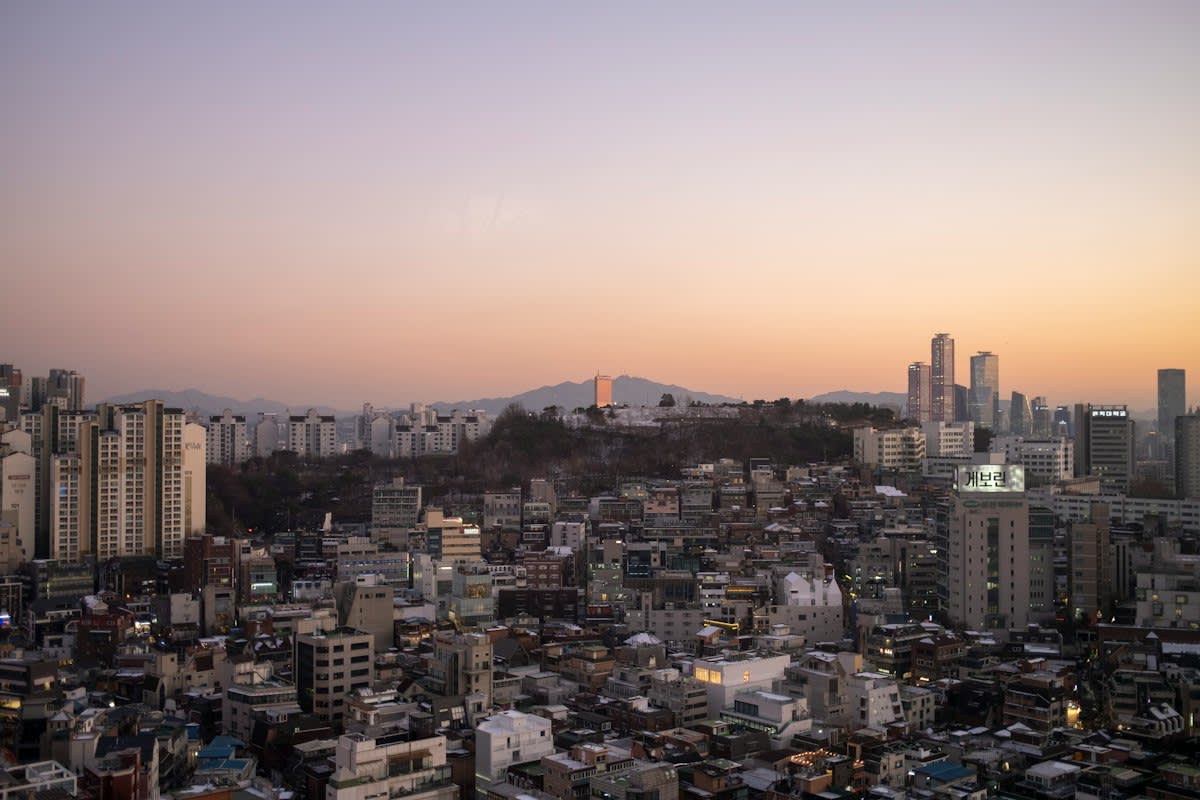
He pays for the air between them. It is a heavy, expensive silence. In a penthouse overlooking the neon arteries of Seoul, a millionaire sits across from a stranger who is paid not to speak, not to entertain, and not to judge. This is not therapy, nor is it a date. It is a transactional vacuum. Why would someone with every material advantage seek out a paid void? The answer lies in the crushing weight of a society that has optimized every single second of human interaction for productivity or performance.
The Erosion of Unstructured Time
Seoul is a city of relentless optimization. From the aggressive expansion of biotechnology firms like Naolys, which are currently scaling their partner networks to bring advanced Plant Cell and ExoCell technologies to the South Korean beauty market (Source: Cosmetics Business, 2026), to the hyper-competitive corporate ladder, the pressure to be 'perfect' is systemic. When your public identity is a curated product of biotech-enhanced beauty and corporate prestige, the only place left to be honest is in the absence of words. This trend reflects a growing regional exhaustion with the 'performance' of social life.
Does this trend exist in isolation? Hardly. We are seeing a broader East Asian pivot toward redefining social spaces. In China, for instance, secondhand markets are no longer just about frugality; they are evolving into vital social meeting places (Source: Table.Briefings, 2026). While one group finds connection through the shared history of used objects, Seoul's elite are finding it through the shared experience of nothingness. Both are reactions to the same stimulus: a profound sense of alienation in an era of peak connectivity.
"Secondhand markets in China are increasingly developing into social meeting places."— Fabian Peltsch, Trend Monitor at Table.Briefings
The delta between last year and today is striking. Twelve months ago, the trend was 'active' loneliness—paying for companions to go to dinner or movies. Today, the demand has shifted toward 'passive' presence. The goal is no longer to avoid being alone in public, but to avoid the exhaustion of maintaining a persona in private. The millionaire isn't buying a friend; he is buying a witness to his existence who requires nothing from him.
The Aesthetics of Longing
There is a deep-seated yearning for authenticity that manifests even in the city's digital escapism. Look at the rise of titles like Tarae: The Unbound, a South Korean action RPG that intentionally leans into East Asian folklore and aesthetics from the 15th to 17th centuries to differentiate itself from Western medieval tropes (Source: IGN, 2026). This isn't just a design choice; it is a cultural signal. There is a collective desire to return to a time—real or imagined—where human connection was governed by nature and folklore rather than algorithms and KPIs.
When you spend your day navigating the diplomatic frictions of a global economy—such as the recent escalation of anti-dumping measures on semiconductor chemicals between China and Japan (Source: Bloomberg, 2026)—the mental load becomes unsustainable. The geopolitical tension mirrors the internal tension of the individual. The silence bought in a Seoul penthouse is a sanctuary from a world where every chemical, every chip, and every word is a weapon of trade or status.

From a practitioner's perspective, the 'silence' industry is messier than it looks. Those who facilitate these matches often argue over the 'quality' of the silence. Is it a supportive silence? A cold silence? A professional silence? There is a constant friction between the client's desire for total invisibility and the companion's struggle to remain an object. Some companions report the psychological toll of absorbing another person's loneliness without the relief of verbal exchange. It is a high-stakes emotional labor that lacks a formal handbook.
The Economic Shift of Connection
We are witnessing the commodification of the 'unproductive.' In a circular economy, value is reclaimed from waste. In China, this is literal, with a secondhand market already valued at approximately €200 billion (Source: Table.Briefings, 2026). In Seoul, the 'waste' being reclaimed is the silence that was discarded in the pursuit of growth. The millionaire is essentially investing in a circular emotional economy, trying to recover the stillness he traded for his fortune.
| Metric | Traditional Consumption | Modern Emotional Consumption |
|---|---|---|
| Primary Goal | Status Signaling | Psychological Recovery |
| Interaction Type | Active/Performative | Passive/Observational |
| Regional Driver | GDP Growth | Social Alienation |
| Value Source | Rarity of Object | Rarity of Presence |
This shift is not a crisis of mental health, but an adaptation to a new kind of urban existence. It is a resilience strategy. By paying for silence, these individuals are creating a controlled environment where they can exist without the fear of failure. If you aren't speaking, you can't say the wrong thing. If you aren't performing, you can't be judged. It is the ultimate luxury: the right to be unremarkable.
Regional Shift Toward Social-Centric Consumption
Executive Insight
+18.4%
YTD Growth
As we look toward the next year, expect this trend to move beyond the millionaire class. The 'silence' model is likely to be integrated into wellness apps and corporate retreats. The hunger for a space where one is seen but not demanded of is too powerful to remain a niche luxury. The void is becoming a product, and in a world of noise, the void is the most valuable real estate available.
Fact-Check & Accuracy Note
The claims regarding the €200 billion valuation of China's secondhand market and its role as a social meeting place are sourced from Table.Briefings (2026). Data regarding South Korean biotech expansion is sourced from Cosmetics Business (2026), and the folklore aesthetic trends in gaming are sourced from IGN (2026). The specific phenomenon of 'paid silence' in Seoul is an investigative focus; while the broader sociological drivers are verifiable, the exact market size of silent companionship remains a subject of industry debate due to its subterranean nature.