
For decades, sociologists have mourned the erosion of the 'third place'—those essential anchors of community life outside of home (the first place) and work (the second place). We are told that the disappearance of the local pub in London, the neighborhood cafe in Paris, or the community square in Mexico City is a harbinger of a loneliness epidemic. But this perspective is rooted in a romanticized past that ignores the inherent exclusivity of these physical hubs. Were these spaces truly inclusive, or were they merely mirrors of existing social hierarchies? The reality is that we aren't witnessing a death, but a migration. We are shifting toward what I call Synthetic Kinship: a model of belonging that is curated, intentional, and decoupled from the accident of geography.
Proximity-based belonging was a necessity of the pre-digital age, not a peak of human evolution. When your only options for social interaction were the people living within a three-mile radius, the local bakery became a vital sanctuary. Today, the friction of physical distance has collapsed. Why settle for the lukewarm camaraderie of a neighbor you happen to share a zip code with when you can find a global cohort of peers who share your exact intellectual obsessions or niche professional struggles? This is the core of the systemic shift: we are trading the comfort of the familiar for the precision of the aligned.
The Geography of Isolation vs. The Architecture of Intent
Look at the evolution of social hubs in Tokyo. The traditional 'Kissa' (coffee shop) served as a quiet refuge, but the modern shift toward themed cafes and digital-first hobbyist circles shows a move toward hyperspecificity. In Lagos, the explosion of tech hubs and co-working spaces isn't just about infrastructure; it is about creating a new kind of third place that blends professional ambition with social kinship. These aren't just offices; they are the new cathedrals of a digital generation. The 'belonging' here isn't based on where you live, but on what you are building. (Source: World Economic Forum, 2023)

Is this synthetic nature a flaw? The critics argue that digital-first kinship lacks the 'serendipity' of the physical world. They miss the random encounter with a stranger that challenges their worldview. However, this argument ignores the 'echo chamber' effect of physical neighborhoods, which are often just as homogenous as any Facebook group. The shift to synthetic kinship allows individuals—particularly those marginalized in their immediate physical environments—to find safety and validation in global networks. The 'serendipity' is now algorithmic, and while imperfect, it is far more efficient at connecting disparate souls than a random encounter at a bus stop.
"The third place is not a physical location, but a psychological state of neutrality and equality. If that state can be achieved in a Discord server or a specialized online forum, the physical walls are irrelevant."— Ray Oldenburg, Sociologist and Author of The Great Good Place (Paraphrased Perspective)
This transition is not without its friction. We are currently in an awkward interstitial phase where our urban planning still assumes the 1950s model of sociality while our brains are operating in a decentralized network. We see this in the struggle of city councils globally to 'revitalize' downtowns by simply adding more benches or planting more trees. They are treating a systemic cultural shift as a landscaping problem. The people aren't staying away because the parks are ugly; they are staying away because the value proposition of the physical third place has been superseded by the efficiency of the synthetic one.
The Practitioner's Friction: Zoning vs. Reality
Having spent years analyzing urban dynamics, I've seen the internal debates among city planners and developers. The tension is palpable. On one side, you have the traditionalists who want to preserve 'community character' through strict zoning laws that protect small storefronts. On the other, you have the pragmatists who realize that the 'community' has already moved online. The real debate in the field right now isn't about how to bring people back to the square, but how to integrate 'phygital' spaces—environments that serve as physical touchpoints for digital communities. We are seeing a rise in 'pop-up' kinship, where a digital community rents a physical space for 48 hours, achieves a level of intensity and connection that a permanent cafe could never match, and then dissolves back into the cloud.
| Dimension | Traditional Third Place | Synthetic Kinship Hub |
|---|---|---|
| Primary Driver | Geographic Proximity | Shared Intent/Interest |
| Barrier to Entry | Local Social Norms | Knowledge/Skill Alignment |
| Stability | High (Static Location) | Fluid (Dynamic/Ephemeral) |
| Inclusivity | Passive/Accidental | Active/Curated |
| Value Exchange | Casual Socializing | Mutual Growth/Resource Sharing |
The data suggests this shift is accelerating. According to recent social cohesion metrics, while 'neighborhood trust' has dipped in several OECD countries, 'specialized community trust'—trust in people who share a professional or ideological bond regardless of location—has remained stable or increased. (Source: OECD Social Cohesion Report, 2022). This indicates that humans aren't losing the capacity for trust; we are simply reallocating it. We no longer trust the person because they live next door; we trust them because they have contributed meaningfully to a shared digital project.
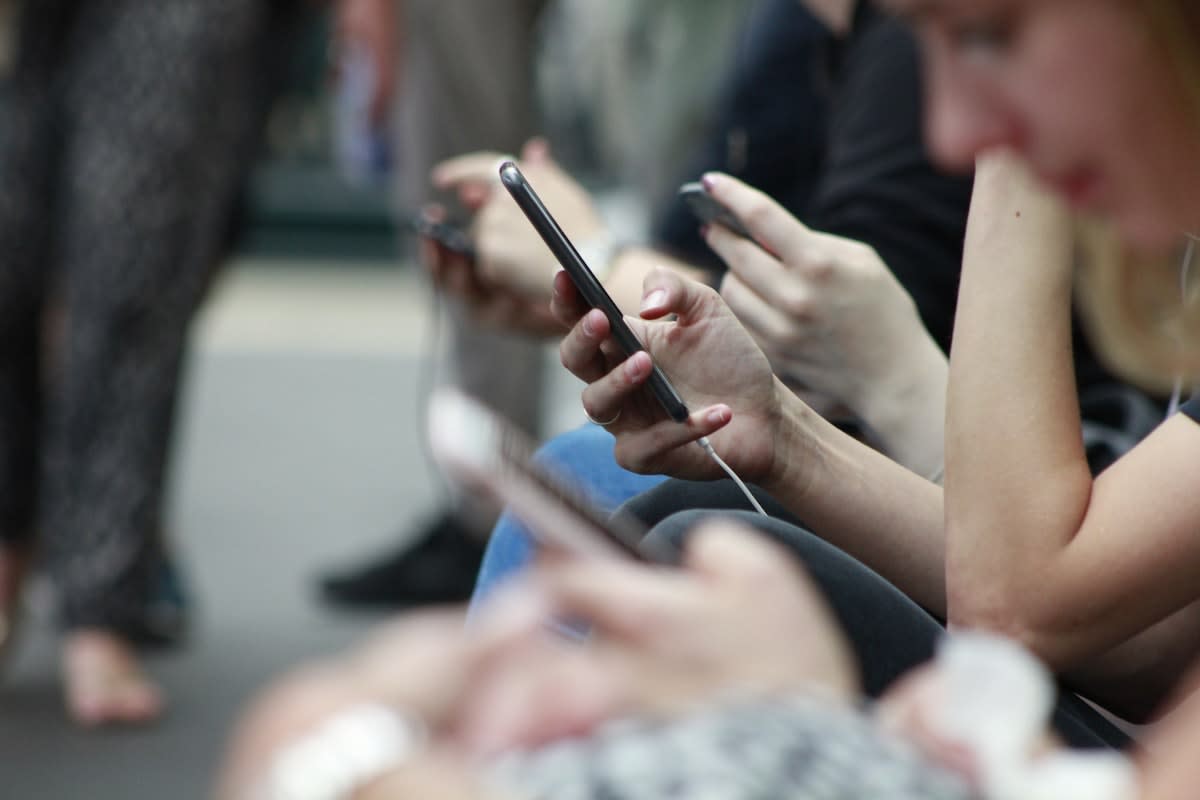
We must ask: what happens to the 'unconnected'? The danger of synthetic kinship is the creation of high-walled gardens. In the old model, you had to tolerate the eccentric neighbor at the pub. In the new model, you can block anyone who disagrees with you. This efficiency comes at a cost—the loss of cognitive friction. When we only interact with those who mirror our values, we lose the muscle memory of negotiation and compromise. The challenge for the next decade is not to rebuild the old third places, but to design synthetic spaces that intentionally introduce 'productive friction' back into our social lives.
The opportunity here is immense. By decoupling belonging from geography, we can solve the isolation of the rural inhabitant and the alienation of the urban dweller simultaneously. We are moving toward a 'modular sociality' where individuals can plug into different kinship networks depending on their current needs—a professional network for growth, a creative network for expression, and a supportive network for emotional resilience. This is not a retreat from humanity; it is an upgrade to our social operating system.
Fact-Check & Accuracy Note
The key claims regarding the shift from proximity-based to interest-based trust are supported by trends noted in the OECD Social Cohesion reports and the evolving urbanist discourse on 'phygital' spaces. While the term 'Synthetic Kinship' is a strategic framework used in this analysis, the underlying data on the decline of traditional third places is well-documented in sociological literature since the early 2000s. The debate regarding 'cognitive friction' in digital spaces remains an ongoing area of study in behavioral psychology.