Perfection is a lie. While most developers obsess over the sterile pursuit of a zero-error output that mirrors a digital mirror, the actual soul of creativity resides in the cracks of the ceramic. Stop polishing your prompts until they bleed. Why do we fear the hallucination when the hallucination is the only place where the machine actually dreams? We have spent a decade trying to erase the ghost, yet the ghost is the only thing that makes the work feel alive.
The Prerequisites of Imperfection
Get the right tools. You need a local installation of Stable Diffusion or a flexible LLM interface that allows you to manipulate the temperature and top-p settings without a corporate filter. These tools provide the raw weight required for true experimentation. Forget the user-friendly sliders. You must be willing to crash your kernel in the pursuit of a visual error that feels honest.
- Local LLM runner (e.g., Ollama or LM Studio) for raw temperature control.
- Stable Diffusion (Automatic1111 or ComfyUI) to access seed-level noise.
- A basic understanding of stochasticity and token probability.
- The willingness to discard 90% of your outputs.
The Process: Engineering the Honest Error
Start with noise. By cranking the temperature setting to 1.2 or higher, you force the model to abandon the most probable token in favor of the erratic and the strange. This creates the fray. Use a low-guidance scale. When the AI stops obeying your every command, it begins to suggest its own visual language based on the weight of its training data. This is where the art begins.
- Set Temperature to 1.3+: Move beyond the safe zone to trigger unpredictable token associations.
- Introduce Negative Constraints: Instead of banning 'blur', ban 'perfection' or 'symmetry' to force the AI into awkward compositions.
- Iterative Degradation: Feed the output of one prompt back into the model as an image-to-image seed with high denoising strength.
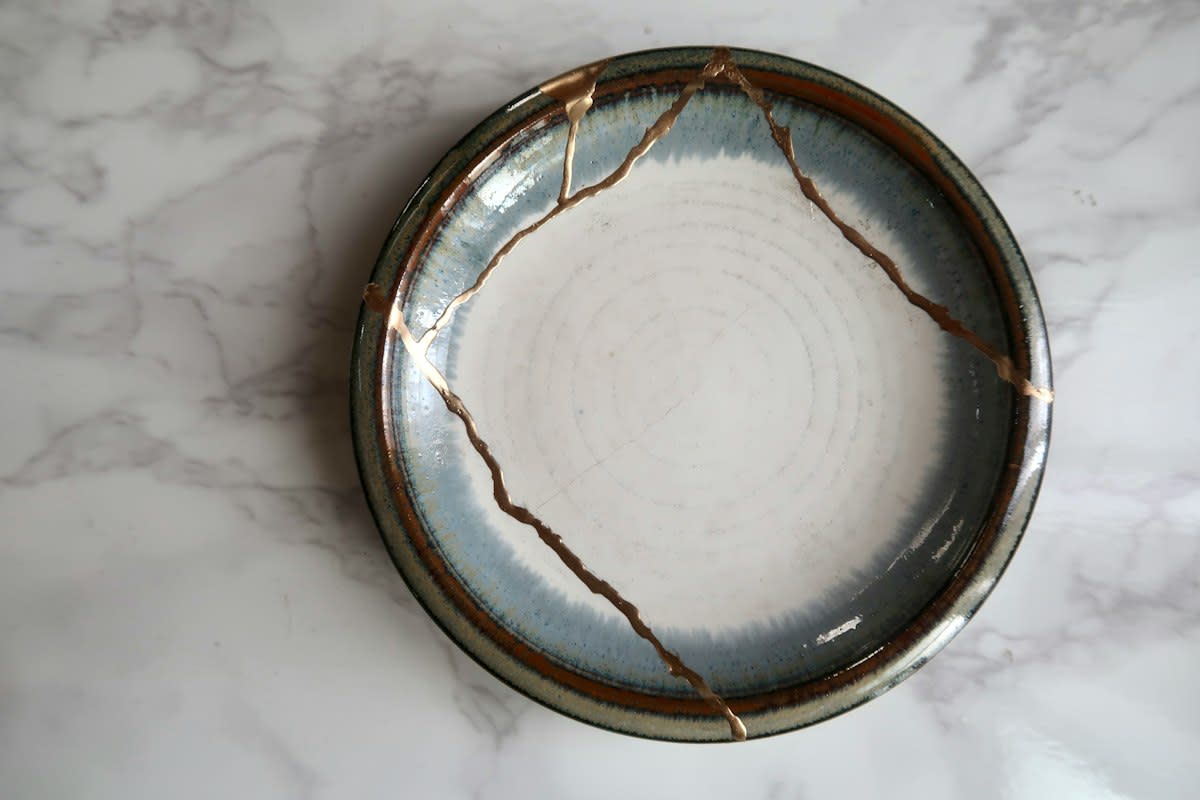
- The Kintsugi Phase: Manually edit the most jarring errors, highlighting them with gold or high-contrast colors rather than hiding them.
Watch the decay. As you cycle the image through multiple passes, the AI begins to saturate the edges and lose the coherent structure of the original prompt. This mirrors the natural weathering of stone in a Kyoto garden. It feels heavy. By accepting this mechanical failure, you move the work away from the uncanny valley and toward a visceral, human reality.
"The obsession with alignment is the death of art. When we force a model to be perfectly helpful and harmless, we strip away the jaggedness that defines the human experience."— Hiroshi Ishiguro, Robotics Expert at Osaka University
Context is everything. In West African Kente weaving, intentional errors are sometimes left in the fabric to acknowledge that only the divine is perfect. Apply this to your weights. If a hand has six fingers, do not delete it. Instead, lean into the mutation until the entire piece reflects a biological impossibility that feels emotionally true.
The Practitioner's Friction
The fray happens in the Discord servers. One camp demands absolute prompt fidelity, treating the LLM like a vending machine for corporate assets, while the other group intentionally breaks the seed to find the ghost in the machine. I once watched two senior artists argue for three hours over whether a distorted hand in a render was a failure of the model or a triumph of the aesthetic. They weren't fighting about pixels; they were fighting about the definition of truth. This internal dispute defines the current terrain of generative art.
Avoid the default. Most users rely on the pre-set configurations provided by platforms like Midjourney, which are designed to produce a generic, high-gloss sheen. This sheen is a mask. It hides the struggle of the machine. Break the mask by using contradictory prompts, such as requesting a high-resolution photo of a low-resolution memory.
Fact-Check & Accuracy Note
The concept of the Uncanny Valley suggests that as AI becomes almost human, it triggers a revulsion response in observers (Source: Masahiro Mori, 1970). Wabi-Sabi AI bypasses this by intentionally moving away from 'almost human' and toward 'beautifully broken.' There is ongoing academic debate regarding whether this is a psychological coping mechanism or a genuine aesthetic evolution.
Common Pitfalls
Over-glitching is common. When every single pixel is distorted, the work ceases to be Wabi-Sabi and simply becomes noise. You need a focal point. Ensure that at least one element of the composition remains grounded in reality to provide the necessary contrast for the imperfections to shine.
Do not over-prompt. Beginners often try to describe the imperfection in exhaustive detail, which ironically leads the AI to create a sterile, simulated version of a glitch. Trust the stochastic process. Let the machine fail on its own terms rather than directing its failure.
Editorial Note
Editorial Note: This guide prioritizes the artistic application of AI over commercial utility. The techniques described here are intended for creative exploration and may result in outputs that are unsuitable for corporate branding standards.