
The Mirage of the Logo
For decades, the global shorthand for success was the logo. A visible brand acted as a social passport, granting immediate entry into specific strata of power and prestige. However, we are witnessing a fundamental decoupling of wealth from visibility. The modern elite are no longer interested in signaling their status to the masses; instead, they are pivoting toward markers that are only legible to those already within the circle. This is not merely a fashion trend—it is a systemic migration toward invisible assets.
Data from BoF Insights and McKinsey's 'Face to Face With Luxury Clients' report confirms this shift. In both the US and China, emotional connection has surpassed traditional markers like craft, heritage, and trends as the primary driver of brand desirability. Why the change? Because when luxury is ubiquitous, the only remaining scarcity is meaning. The desire for identity and self-expression has replaced the desire for simple recognition. We are moving from a period of 'buying to be seen' to a period of 'buying to feel' and 'buying to belong' to a curated, intellectualized identity.
"The era of buying luxury purely for status and visibility is giving way to something more personal, centred on identity, connection and self-expression."— The Business of Fashion
This psychological pivot manifests differently across borders. While the emotional core is universal, the expression in China diverges from that in the US, suggesting that 'invisible wealth' is not a monolith but a localized set of codes. The goal is no longer to project an image of wealth, but to project an image of taste, knowledge, and emotional intelligence. In this new economy, the loudest person in the room is often the one with the least actual power.
The Architecture of Invisibility
If the most profound form of wealth is that which cannot be seen, then the ultimate status symbol is no longer a product, but a structure. Consider the case of Bernard Arnault, the head of LVMH. While his empire produces the world's most visible luxury goods, his personal wealth management is a study in opacity. A recent decision by the Paris Administrative Court highlighted a complex shareholding structure centered around a Belgian company called Pilinvest. This 'pyramid' allows for a significant reduction in tax liability, including a contested 22.5 million euro tax adjustment.
This is the apex of invisible wealth: the ability to navigate global legal and financial systems to shield assets from the gaze of the state and the public. The 'status' here is not the handbag sold in a boutique, but the Belgian holding company that owns the boutique. It is a shift from the aesthetics of wealth to the engineering of wealth. The real power lies in the structure, not the symbol.
| Marker | Traditional Status (Visible) | Invisible Wealth (Systemic) |
|---|---|---|
| Financial Signal | Luxury Logos & High-End Cars | Offshore Structures & Holding Companies |
| Cultural Signal | Trend Adoption | Curated Knowledge & Rare Literature |
| Value Driver | Brand Recognition | Emotional Connection & Meaning |
| Retail Focus | Transactional Ownership | Experiential Access |
| Utility | Social Signaling | Systemic Efficiency & Precision |
This structural invisibility extends beyond tax avoidance into the realm of intellectual capital. As AI-generated content—or 'AI slop'—saturates the digital landscape, the ability to engage with slow, deep, and physical media has become a new marker of class. Fashion brands like Coach and Dior are now leveraging literature in their campaigns, positioning books as status symbols of knowledge and taste. In an age of visual overload, the most exclusive luxury is the attention span required to read a book.

From Possession to Experience
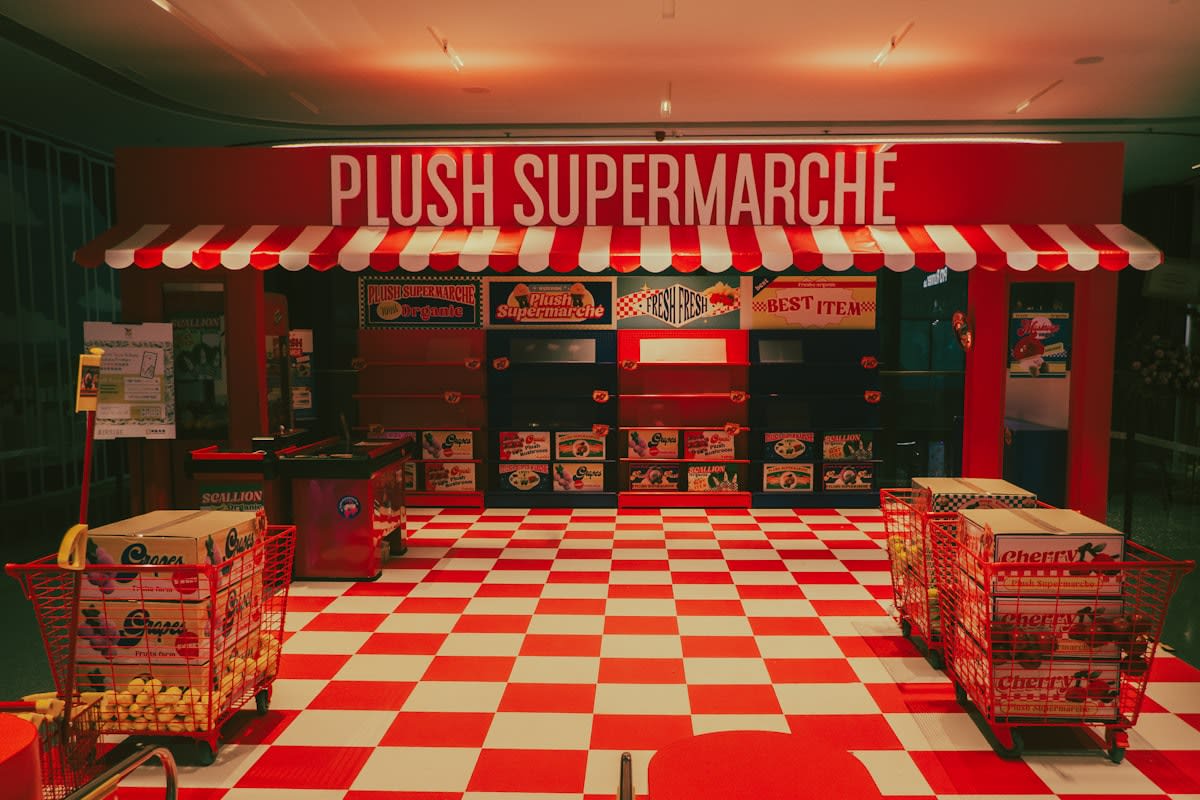
The retail landscape is mirroring this shift. While e-commerce continues to grow, a surprising 84 per cent of retail spending still occurs in-store, according to CBRE Retail. However, the purpose of the visit has changed. Retail destinations like Westfield are pivoting toward 'experiential retail,' moving away from traditional transactional spaces. Driven largely by Gen Z, the focus is now on cultural programming and live experiences.
Why visit a mall if you can buy everything online? Because the value has shifted from the object to the experience. The 'status' is no longer the bag you carry out of the store, but the fact that you were present for the experience. This is a transition from the economy of ownership to the economy of access. Wealth is now measured by the quality of one's experiences and the depth of their connections, rather than the volume of their possessions.
Wealth as Precision
Perhaps the most stark example of invisible wealth is the application of precision technology to basic survival and production. In Africa, a 'quiet revolution' is occurring underfoot through precision agriculture. Here, wealth is not expressed through luxury, but through the deployment of GPS, satellite imagery, soil sensors, and AI to optimize crop yields. This is a functional form of wealth where efficiency equals power.
The stakes are existential. In Egypt, where the Nile provides over 90% of freshwater, precision irrigation is a national necessity, not a luxury. With agriculture representing roughly 15% of GDP and employing over 60% of the workforce, the ability to reduce the 40% of global crop yields lost annually to pests and diseases is the ultimate asset. Variable rate technology (VRT) allows farmers to apply fertilizer with clinical precision, transforming the soil itself into a high-performance asset.
This represents the final stage of the shift: wealth as the mastery of systems. Whether it is a Belgian tax structure, a curated library of rare books, or a satellite-linked irrigation system in the Nile Delta, the common thread is a move away from the superficial. The world is trading the 'loud' symbols of the 20th century for the 'invisible' efficiencies of the 21st.
The Pendulum Swing
Of course, no systemic shift happens in a straight line. We are already seeing a reactive swing. Recent fashion trends indicate a return to 'loud' prints and personality-driven styles—heritage chevron bikinis and multi-colored striped pants from brands like La Veste. This is a direct reaction to the 'quiet luxury' movement that dominated previous years.
But is this a reversal of the trend toward invisible wealth, or merely a stylistic correction? It is the latter. The return of loud prints is a form of self-expression, not a return to status-seeking. The distinction is critical: one is about personality, the other is about signaling hierarchy. The underlying movement toward meaning, systemic efficiency, and intellectual capital remains intact.
The global elite have realized that visibility is a liability. In an era of extreme transparency and social volatility, the most secure and prestigious form of wealth is the kind that doesn't need to be announced. The logo is not dead, but it has been demoted from a symbol of power to a mere accessory of fashion.