Agility’s new humanoid robot will stop, squat to avoid harming human coworkers
Source Entity
Jeremy Hsu
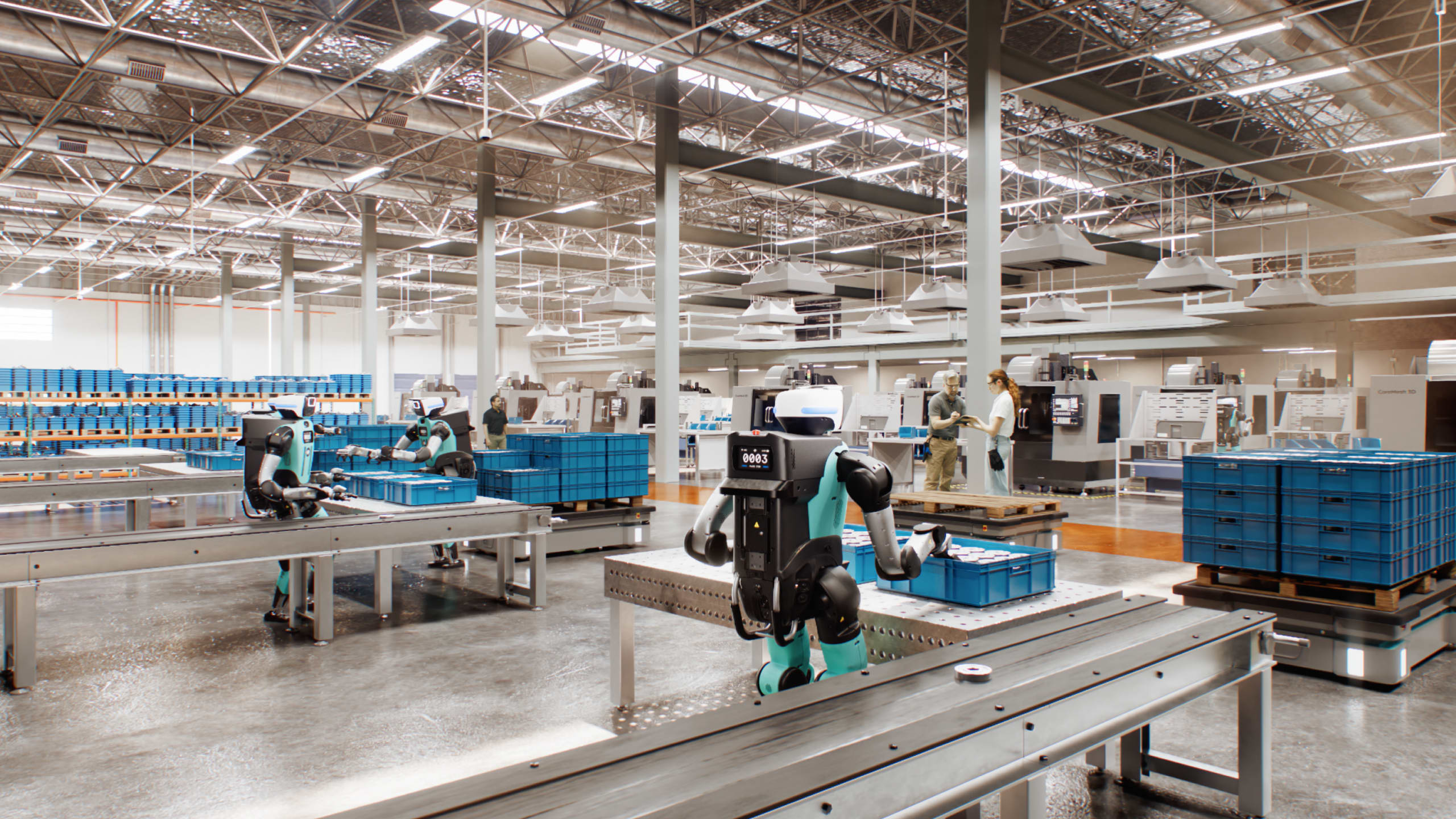
Agility Robotics has unveiled its new Digit 5 humanoid robot, designed to work safely alongside humans without the need for physical barriers. This innovation marks a significant shift in industrial automation, potentially transforming warehouse and factory safety standards.
The Evolution of Human-Robot Collaboration
For decades, industrial robotics has been defined by the 'cage' paradigm. Traditional automated systems, while highly efficient, posed significant physical risks to human workers, necessitating the use of heavy safety barriers and isolated work cells. The recent announcement from Agility Robotics, regarding their new Digit 5 humanoid, signals a transformative departure from this historical constraint. By engineering a robot capable of intuitive, safe interaction with human coworkers, Agility is addressing one of the most persistent safety challenges in modern manufacturing.
Engineering Safety Through Autonomous Mitigation
The technological core of the Digit 5 lies in its complex safe motion system. Unlike legacy robots that follow rigid, pre-programmed paths regardless of their environment, the Digit 5 is designed to perceive and react to its human counterparts. When the robot detects a person at a distance, it can autonomously calculate a mitigation strategy—whether that involves altering its trajectory to avoid a collision or coming to a complete stop to allow a human to pass. This level of situational awareness is critical for the integration of humanoids into dynamic, unpredictable workspaces.
The Squat Protocol: A New Standard in Interaction
One of the most notable features of the Digit 5 is its ability to assume a seated or 'squat' position when a human enters its immediate proximity. This behavior serves as a physical communication signal, clearly indicating to the human worker that the robot is yielding the space. By prioritizing human comfort and safety through these non-verbal cues, Agility Robotics is effectively humanizing the industrial workspace, bridging the gap between cold mechanical efficiency and the intuitive social intelligence required for effective collaboration.
Implications for Industrial Efficiency
The removal of physical barriers and safety cages represents a major leap forward for operational flexibility. In traditional warehouse and automotive factory settings, floor space is a premium commodity; the necessity of safety cells often leads to fragmented workflows and inefficient space utilization. With the Digit 5's capability to safely navigate shared environments, companies can potentially reconfigure their production lines to be more fluid and compact, thereby increasing throughput and lowering the overhead costs associated with safety infrastructure.
Preparing for a Public-Market Debut
This announcement is strategically timed ahead of Agility Robotics' expected public-market debut later this year. By demonstrating that they have 'cracked the code' on safe humanoid-human integration, the company is positioning itself as a leader in the next generation of industrial automation. As the market for humanoid robots matures, investors will likely focus on how effectively these machines can be deployed in real-world environments without requiring extensive facility modifications. The success of the Digit 5 could set a new industry benchmark for safety-critical robotics.
Future Trends and Concluding Thoughts
Looking ahead, the successful deployment of robots that can safely work alongside humans will likely accelerate the adoption of automation in sectors that were previously too complex or unpredictable for legacy systems. As these robots become more capable of navigating human-centric environments, we can expect a shift toward more collaborative manufacturing models. The work being done by Agility Robotics is not just an incremental improvement; it is a foundational change in the relationship between human labor and robotic assistance, paving the way for a future where technology and humans operate in a unified, safe, and highly efficient ecosystem.
Multiple Citing Sources