Don’t make statements that BJP can exploit, Akhilesh Yadav tells Samajwadi Party leaders
Source Entity
India Latest News: Top National Headlines Today & Breaking News | The Hindu
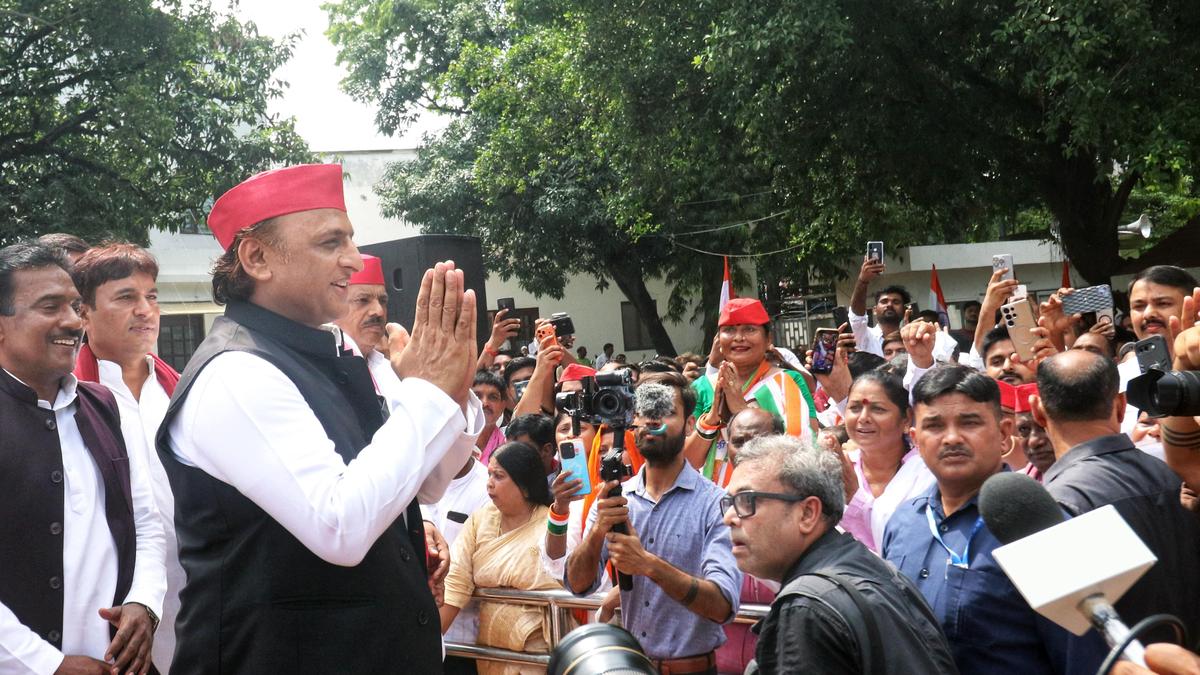
Samajwadi Party chief Akhilesh Yadav has instructed his party leaders to avoid making statements that could be exploited by the BJP. This follows controversy over Shivpal Singh Yadav's claim regarding a future ministerial appointment for Azam Khan.
Strategic Discipline in the Samajwadi Party
On August 15, 2026, during an Independence Day event at the Samajwadi Party (SP) headquarters, party president Akhilesh Yadav issued a stern directive to his cadre. He explicitly cautioned against making unauthorized or controversial statements that could be leveraged by the Bharatiya Janata Party (BJP) for political gain. This move underscores a shift toward centralized communication strategies aimed at minimizing internal friction that could negatively impact the party's public image.
The Catalyst: Controversial Ministerial Projections
The primary driver for this directive was a recent statement made by senior SP leader Shivpal Singh Yadav, who publicly speculated that Azam Khan would serve as the state’s Home Minister if the Samajwadi Party were to return to power. By projecting specific cabinet positions before an election, the leadership risks alienating moderate voters and providing opponents with ammunition to critique the party's future governance priorities.
BJP's Counter-Narrative and Political Fallout
The BJP was quick to capitalize on these comments, with Uttar Pradesh Chief Minister Yogi Adityanath leading the criticism. By framing the SP's rhetoric as an indication that the party intends to "trigger riots again" in Uttar Pradesh, the ruling party successfully shifted the public discourse from policy to security. This highlights the volatile political environment in the state, where inflammatory remarks are frequently repurposed to reinforce the BJP's narrative of law and order.
Implementing Controlled Communication
To curb such vulnerabilities, Akhilesh Yadav announced a plan to provide party leaders with official pamphlets containing approved talking points. This centralized control of the narrative is a clear attempt to enforce message discipline. By restricting leaders to authorized materials, the SP aims to prevent off-the-cuff remarks from being distorted by political rivals, thereby stabilizing the party's campaign platform heading into future electoral cycles.
Broader Implications for Uttar Pradesh Politics
The incident serves as a microcosm of the intense rivalry between the SP and the BJP in Uttar Pradesh. In a state where political messaging is often scrutinized for its impact on communal and social dynamics, the ability to maintain a disciplined communication front is paramount. The friction caused by Shivpal Singh Yadav’s remarks illustrates the difficulty of managing diverse voices within a large political organization while attempting to present a unified front to a skeptical electorate.
Conclusion: The Path Forward
Ultimately, Akhilesh Yadav's mandate reflects a tactical necessity to protect the party's electoral prospects from self-inflicted damage. Whether this move toward a standardized communication script will effectively neutralize the BJP’s exploitation of SP rhetoric remains to be seen. As the political landscape in Uttar Pradesh continues to polarize, the success of the Samajwadi Party will likely hinge on its ability to enforce this discipline without stifling the internal democratic processes that characterize its organizational structure.
Verification Required?