Fee hike, seat cuts: Students’ protest brings traffic to halt for 7 hrs in Prayagraj
Source Entity
Latest News: Todays Latest News Headlines from India & World | Hindustan Times | Hindustan Times
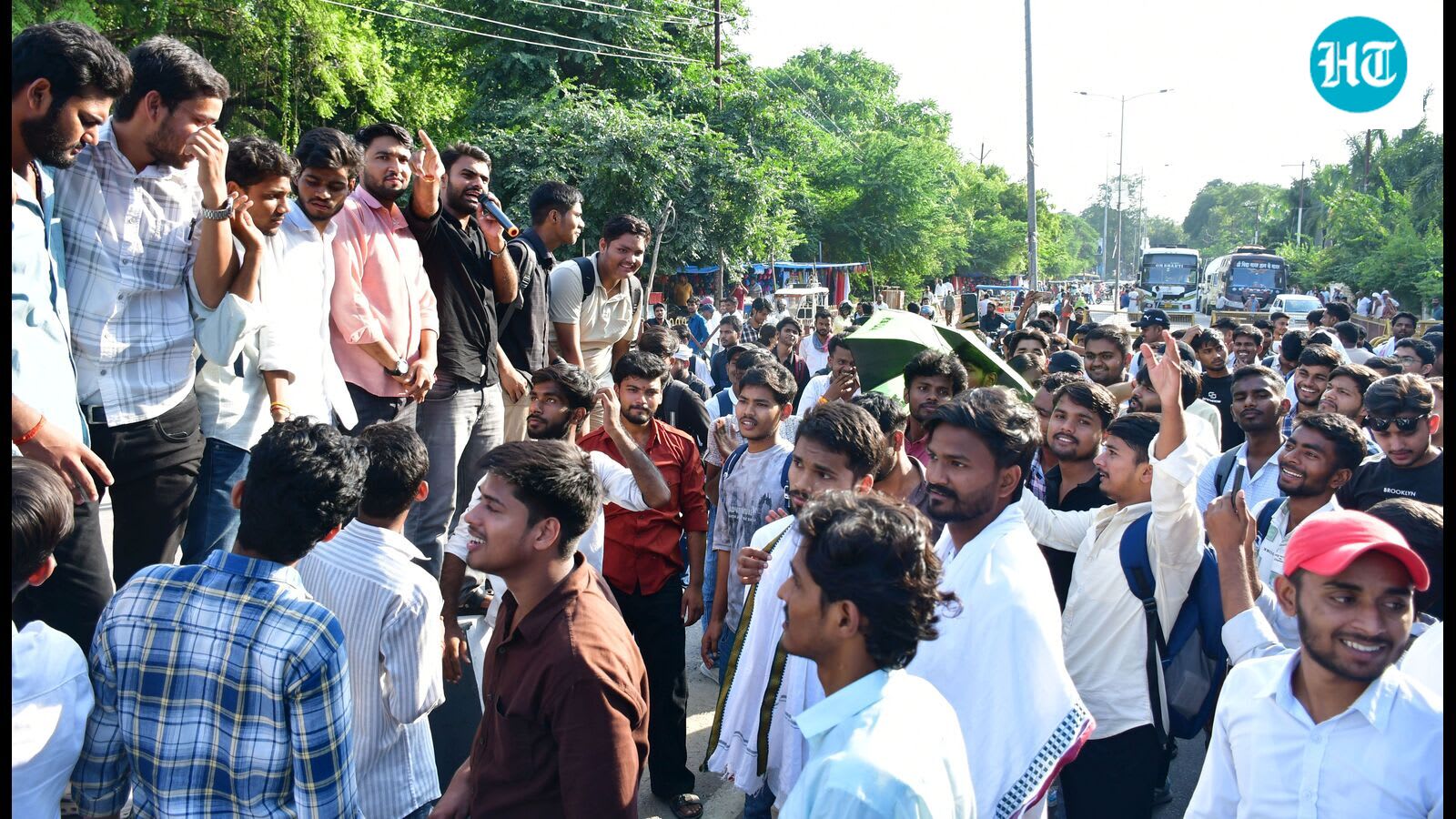
Students at Allahabad University staged a seven-hour road blockade to protest fee hikes, seat cuts, and suspensions. The demonstration, part of a nine-day hunger strike, caused significant traffic disruption in Prayagraj as students demanded academic and administrative reforms.
Anatomy of the Allahabad University Student Protest
On Tuesday, the academic atmosphere at Allahabad University (AU) shifted to the streets of Prayagraj as a massive student-led demonstration brought local traffic to a total standstill for over seven hours. The protest, which centered on the arterial route between the university, Katra, and Chandra Shekhar Azad Park, served as a boiling point for grievances that have been simmering for over a week. This "Mahajutaan" or grand assembly saw students marching from the campus to occupy public thoroughfares, effectively paralyzing a major transit corridor.
The Core Demands: A Multi-Faceted Conflict
The protest is the climax of an indefinite hunger strike that has now entered its ninth day. At the heart of the unrest are four primary demands: the immediate withdrawal of a recent fee hike, the restoration of academic seats across multiple courses, the reinstatement of students previously suspended by the university administration, and a general improvement in basic campus facilities. These issues represent a broader struggle over the accessibility and quality of higher education in one of India's oldest central universities.
Administrative Stagnation and Escalation
The decision to transition from an indefinite hunger strike to a full-scale road blockade suggests a profound breakdown in communication between the student body and the university administration. By occupying the road at 2:00 PM, the students forced the hand of local law enforcement and administrative officials, who were compelled to intervene to manage the gridlock. The diversion of traffic through alternative routes was a reactive measure, highlighting the lack of a proactive resolution strategy that might have prevented the escalation of this crisis.
Socio-Economic Implications
Fee hikes at public institutions like Allahabad University often strike a nerve because they directly impact the socio-economic mobility of students from diverse backgrounds. When coupled with the reported reduction in seat capacity, these policies are perceived by the student body as a systematic narrowing of educational opportunities. The demand for the reinstatement of suspended students further complicates the situation, suggesting that the university's disciplinary actions may have been viewed as punitive measures against dissent rather than standard administrative procedures.
Historical Context of Student Movements in Prayagraj
Allahabad University has a long, storied history as a hub for political and social activism in India. The current protest fits into a larger pattern of student-led resistance in the region, where the university serves not just as a site of learning, but as a crucible for political consciousness. The intensity of the seven-hour blockade demonstrates that the current generation of students remains deeply committed to traditional forms of protest, such as the "Mahajutaan," to exert pressure on institutional authorities.
Future Outlook and Resolution
Moving forward, the situation remains precarious. While police and administrative officials have attempted to persuade students to vacate the site, the core issues remain unaddressed. Unless the university administration engages in a formal dialogue to review the fee structure and academic seat allocations, the potential for continued disruption is high. The resolution of this event will likely set a precedent for how the institution balances its fiscal requirements with the affordability and accessibility demands of its student population.
Verification Required?