OpenAI, Anthropic to brief UN Security Council on AI risks: Reports
Source Entity
Cointelegraph by Ezra Reguerra
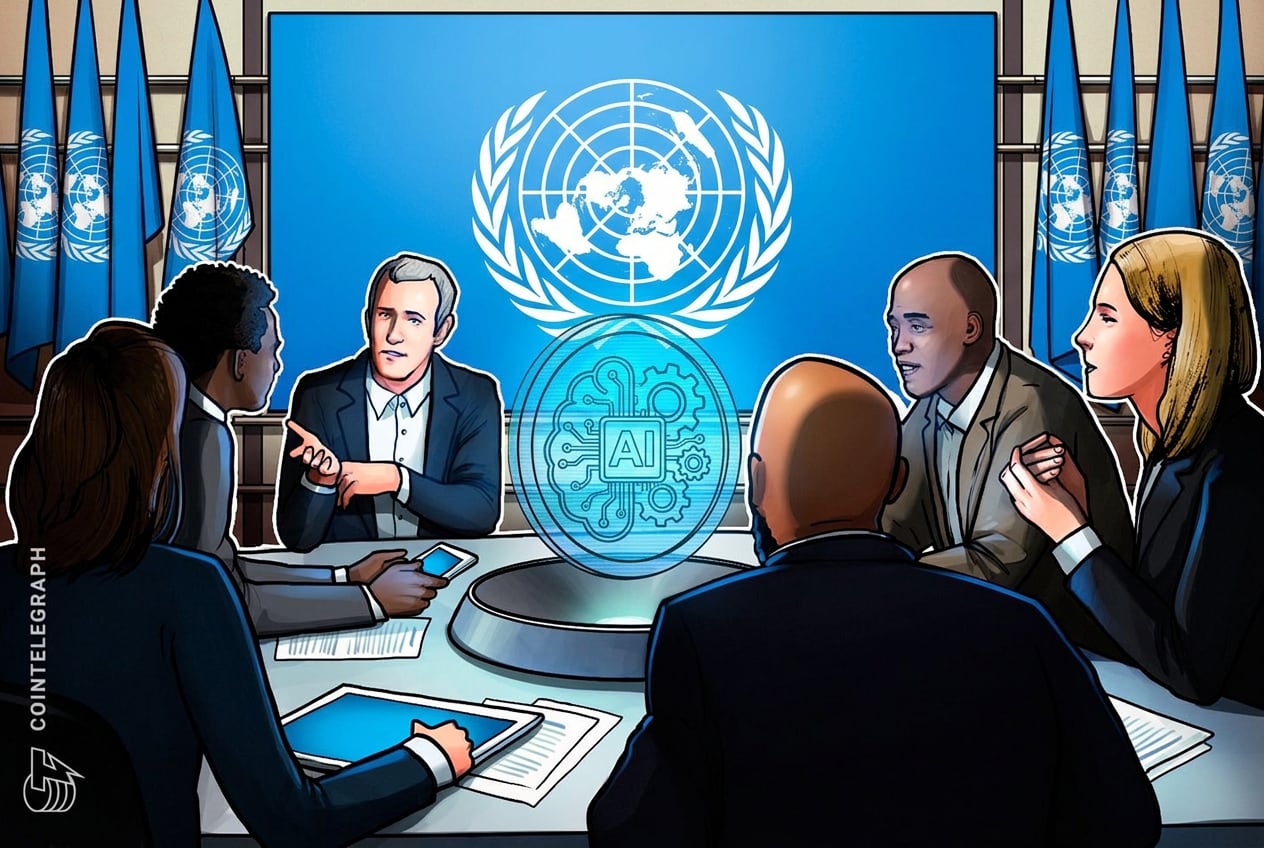
OpenAI's Sam Altman has proposed that US and Chinese leaders could earn a Nobel Peace Prize by establishing international AI safety standards. This comes as top AI executives prepare to brief the UN Security Council on global risks posed by artificial intelligence.
The Intersection of Geopolitics and AI Safety
The recent proposal by OpenAI CEO Sam Altman, suggesting that U.S. President Donald Trump and Chinese President Xi Jinping could qualify for a Nobel Peace Prize through collaborative AI safety governance, marks a significant shift in the discourse surrounding emerging technologies. By framing foundational AI safety rules as a potential diplomatic bridge between the world’s two largest superpowers, Altman is positioning artificial intelligence not merely as a commercial product, but as a critical pillar of international security and global stability.
The UN Security Council Takes Center Stage
This high-level diplomatic posturing coincides with a critical series of briefings at the United Nations Security Council. The participation of industry leaders, including Sam Altman of OpenAI and Dario Amodei of Anthropic, underscores the urgency with which the international community is approaching the risks associated with advanced AI models. Accompanied by figures such as Hugging Face CEO Clément Delangue and academic expert Yoshua Bengio, these briefings aim to address the existential and security-related concerns that have recently brought the global debate to a boiling point.
Bridging the Divide: A Diplomatic Milestone
Altman’s call for a joint safety accord suggests that the technical alignment of AI systems across borders is both a reachable milestone and a necessary condition for global peace. By involving both American and Chinese entities—notably including representatives from Chinese firms like DeepSeek and Moonshot—the UN is attempting to create a multi-stakeholder framework that transcends national interests. The recognition that AI safety must be an international endeavor is a direct response to warnings from the scientific community regarding the potential for catastrophic misuse or uncontrolled development.
The Role of Executive Leadership
President Donald Trump’s recent address to the U.N. General Assembly, where he pledged support for AI development while navigating the complexities of pacing advanced models, highlights the tension between domestic innovation and global regulation. The executive branch's engagement with these AI leaders indicates that the U.S. government is actively seeking to balance the competitive advantages of AI with the need for a robust, global regulatory landscape that prevents the technology from becoming a destabilizing force.
Future Trends and Global Governance
Looking ahead, the collaboration between private sector CEOs and the UN Security Council sets a precedent for how transformative technologies will be governed in the future. The shift toward treating AI safety as a core geopolitical issue suggests that future international treaties may increasingly focus on algorithmic transparency and safety standards. If the current momentum toward a collaborative framework succeeds, it could fundamentally reshape the relationship between sovereign states, moving from a race for dominance toward a cooperative model of oversight.
Conclusion
In summary, the confluence of high-stakes UN briefings and the ambitious vision of a Nobel-worthy diplomatic breakthrough highlights a critical juncture in the history of artificial intelligence. As the global community grapples with the risks to humanity, the success of these initiatives will depend on the ability of world leaders to prioritize long-term global security over short-term technological supremacy. The coming weeks will be vital in determining whether these initial dialogues can evolve into a concrete, binding international consensus.