AMD is acquiring AI company World Labs in a deal worth more than $8 billion
Source Entity
Jay Peters
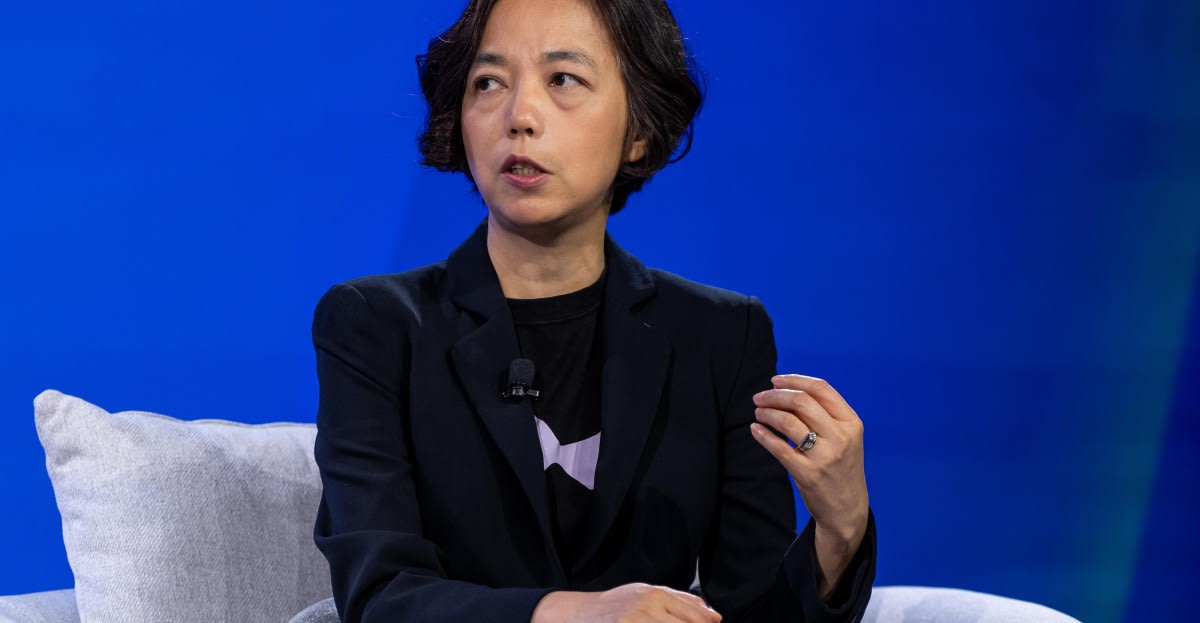
AMD has announced an $8.2 billion acquisition of World Labs, an AI research startup co-founded by pioneer Dr. Fei-Fei Li. The deal aims to integrate advanced AI model research with AMD's hardware development, with Li joining the company as Chief Scientist.
AMD’s Strategic Expansion: The World Labs Acquisition
In a monumental move to secure its position in the rapidly evolving artificial intelligence landscape, AMD has announced the acquisition of World Labs, an AI research organization, in an all-stock transaction valued at approximately $8.2 billion. This acquisition marks a significant shift for AMD, signaling an aggressive push to integrate high-level research capabilities directly into its silicon development roadmap. By bringing World Labs under its corporate umbrella, AMD is not merely purchasing intellectual property, but is effectively absorbing one of the most promising teams in the field of deep learning.
The Role of Dr. Fei-Fei Li
A centerpiece of this deal is the appointment of Dr. Fei-Fei Li, a renowned AI pioneer and Stanford computer science professor, as AMD’s new Executive Vice President and Chief Scientist. Dr. Li’s transition to this leadership role, reporting directly to CEO Lisa Su, suggests that AMD is prioritizing the synergy between software-driven AI models and hardware architecture. Given her history of academic excellence and her recent work at World Labs, her leadership is expected to bridge the gap between theoretical model research and the practical constraints of compute systems.
Advancing the 'World Generation' Frontier
World Labs, which only launched in 2024, achieved a billion-dollar valuation in just months, underscoring the explosive demand for their technology. The startup’s flagship product, 'Marble,' is a world generation model capable of synthesizing interactive 3D environments from text prompts. This technology represents a leap forward in how AI understands and reconstructs physical reality. By acquiring this expertise, AMD gains a competitive advantage in optimizing hardware specifically for the 'frontier workloads' that power such complex, high-dimensional AI applications.
Synergy Between Hardware and Research
The rationale behind this deal is rooted in the necessity for 'close collaboration across model research, systems and compute.' As the AI industry matures, the traditional separation between chip design and AI model development is becoming a bottleneck. AMD’s move acknowledges that the next generation of AI performance will not just come from raw clock speeds, but from a holistic design philosophy where the chip is built to anticipate the needs of the most advanced neural networks currently in development.
Future Implications and Market Trends
This acquisition did not occur in a vacuum; AMD and World Labs had already established an inference optimization-and-training partnership last year, with Dr. Li appearing at AMD’s CES presentation. This long-standing relationship indicates a calculated, long-term strategy rather than a reactive purchase. As the deal is expected to close by the end of the year, industry analysts will be watching closely to see how AMD integrates World Labs’ research into its future GPU architectures, potentially altering the competitive dynamics against rivals like NVIDIA who are also heavily invested in vertical integration.
Conclusion
Ultimately, the $8.2 billion acquisition of World Labs represents a bold commitment by AMD to lead the next era of AI. By internalizing top-tier research talent and focusing on the intersection of physical reality modeling and hardware optimization, AMD is positioning itself to be the primary engine for the future of interactive, AI-driven environments.
Multiple Citing Sources