Young readers reflect a country’s future, says Home Minister Amit Shah
Source Entity
India Latest News: Top National Headlines Today & Breaking News | The Hindu
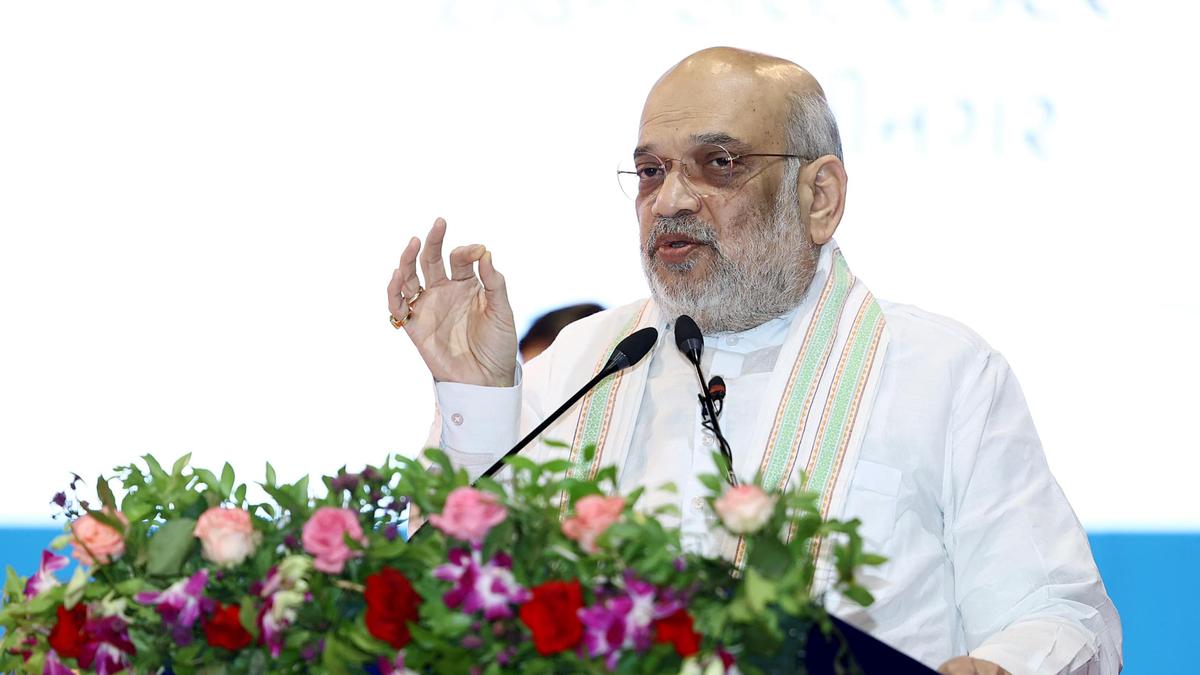
“The future of a country can be assessed by seeing how crowded its libraries are and whether young people are there says,” Home Minister Amit Shah
Intellectual Infrastructure: Analyzing Amit Shah's Vision for Youth Readership
In a recent statement, Home Minister Amit Shah posited a compelling correlation between the vibrancy of a nation's libraries and its future trajectory. By asserting that the future of a country can be assessed by the presence and engagement of young people within libraries, Shah elevates the act of reading from a personal academic pursuit to a critical metric of national health. This perspective suggests that the intellectual curiosity and disciplined study of the youth are the true precursors to a country's long-term progress and stability.
The Library as a Symbol of Democratic Access
Historically, libraries have served as the great equalizers of society, providing marginalized populations with access to the same wealth of knowledge as the elite. When the Home Minister highlights "crowded libraries," he is not merely talking about the physical occupancy of a building, but rather the democratization of information. In the context of India's vast socio-economic diversity, the accessibility of libraries ensures that a young person's potential is not limited by their financial status, but is instead expanded by their willingness to learn. This focus on public intellectual spaces suggests a governance philosophy that values meritocracy fueled by self-education.
Combatting the Digital Superficiality
Shah's emphasis on libraries comes at a pivotal moment in the digital age. With the proliferation of short-form content and social media algorithms, the depth of engagement with complex texts has declined globally. By specifically mentioning the need for young people to be present in libraries, the statement advocates for "deep work" and sustained concentration. The implication is that a nation whose youth can engage with long-form literature and historical archives will possess a more nuanced understanding of governance, ethics, and sociology than a population reliant on fragmented digital snippets.
The Intersection of Literacy and National Security
It is noteworthy that these comments come from the Home Minister, whose primary portfolio involves internal security and law and order. This suggests a strategic understanding that national security is not solely about policing or border control, but also about the intellectual fortification of the citizenry. An informed and reading youth population is generally more resilient against misinformation, radicalization, and external propaganda. By fostering a culture of reading, the state effectively invests in a cognitive defense mechanism that protects the social fabric of the country from the inside out.
Future Implications for Educational Policy
Looking forward, this rhetoric likely signals a potential shift or reinforcement in government priorities regarding educational infrastructure. We can anticipate a renewed push toward the modernization of public libraries and the integration of reading programs into youth development schemes. If the government views library attendance as a KPI (Key Performance Indicator) for the nation's future, there may be increased funding for digital library integration, the curation of diverse reading materials, and the creation of community-led reading hubs in rural areas to ensure that the "crowds" Shah envisions are inclusive of all demographics.
Summary of Analysis
Ultimately, Home Minister Amit Shah's statement serves as a reminder that the tangible indicators of a nation's future are often found in its quietest spaces. By linking the habit of reading among the youth to the destiny of the country, he frames intellectual curiosity as a patriotic virtue. The analysis reveals that this is not just a comment on literacy, but a broader commentary on the necessity of critical thinking, equal access to knowledge, and the intellectual resilience required to lead a nation in an increasingly complex global landscape.
Verification Required?