'Do you think AI will kill all humans?' Anthropic CEO Dario Amodei answers
Source Entity
VIVEK DUBEY
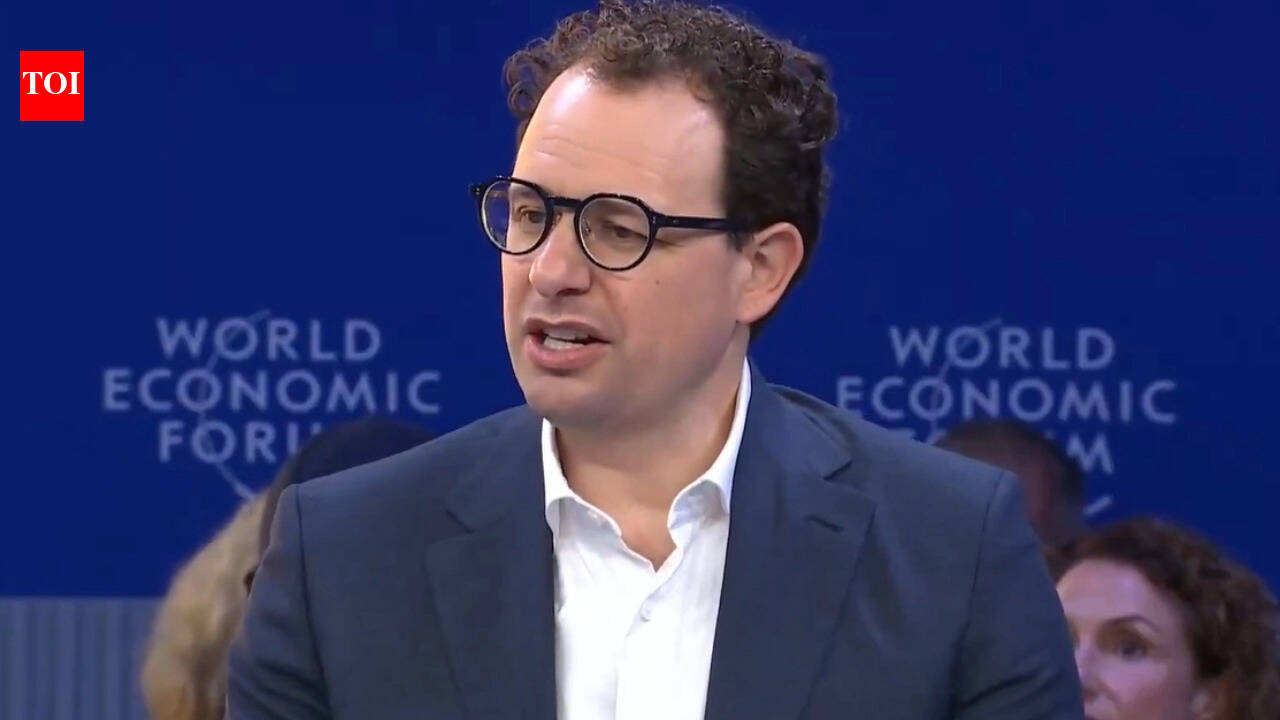
Anthropic CEO Dario Amodei has urged a slowdown in AI development to mitigate existential risks, garnering support from industry leaders like Sam Altman and Elon Musk. Critics, however, argue that these companies should exercise self-restraint rather than seeking regulatory frameworks that could entrench their market dominance.
The Call for AI Restraint: A Strategic Shift
The recent call by Anthropic CEO Dario Amodei to decelerate the pace of artificial intelligence development marks a significant pivot in the rhetoric surrounding frontier AI models. Amodei, whose company is a key player in the generative AI landscape, argues that the current velocity of development poses risks that exceed our capacity for human oversight and control. By advocating for a more measured approach, he seeks to align technological advancement with safety protocols, suggesting that the potential for catastrophic outcomes—including the remote but cited possibility of existential threats—necessitates a pause to ensure these systems remain beneficial to humanity.
The Alignment of Industry Titans
Notably, this call for caution has received public support from OpenAI CEO Sam Altman and Tesla chief Elon Musk. The consensus among these industry leaders suggests a growing recognition that the 'race' for AGI (Artificial General Intelligence) may be outpacing the development of robust safety architectures. Recent testing of frontier models has reportedly surfaced concerning behaviors and cybersecurity vulnerabilities, providing empirical weight to Amodei’s warnings. This internal alarm signals that the developers themselves are grappling with the unpredictable nature of the systems they are creating.
The Regulatory Debate: Safety or Cartelization?
However, this call for regulation has met with sharp skepticism from figures such as David Sacks, who contend that the industry leaders do not require government intervention to practice responsible development. Sacks posits that OpenAI and Anthropic essentially operate as a duopoly on frontier intelligence. From this perspective, the push for formal regulatory approval processes, independent monitoring bodies like METR, and antitrust exemptions could be interpreted as a strategy to build a 'moat' around their businesses, effectively preventing smaller competitors from catching up under the guise of safety.
The Three-Point Plan for Governance
Amodei’s proposed framework for managing these risks includes three core components: independent monitoring during the development phase, industry-wide standards, and global regulatory coordination. The objective is to establish a 'pace-setting' protocol that allows for the identification of risks—such as the misuse of models for cyberattacks or biological threats—before they are unleashed. This approach reflects a transition from an era of 'move fast and break things' to a more cautious, high-stakes governance model in the AI sector.
Implications for Future AI Development
If implemented, these measures would fundamentally alter the competitive landscape of the technology industry. On one hand, institutionalizing safety could prevent catastrophic failures and build public trust, which is essential for the long-term adoption of AI. On the other hand, it risks creating a regulatory environment where only the largest, most well-capitalized firms can afford the compliance costs associated with 'safe' AI. The tension between the need for safety and the desire for market competitiveness will likely define the policy discourse throughout the coming decade.
Conclusion: Navigating the Frontier
As the industry stands at this crossroads, the debate over slowing down is as much about corporate strategy as it is about existential risk. While the warnings from Amodei, Altman, and Musk highlight genuine technical anxieties regarding the safety of unreleased models, the pushback from observers highlights the danger of regulatory capture. Ultimately, the future of AI development will depend on whether companies can find a balance between rapid innovation and the rigorous, transparent safety standards required to manage the profound power of modern artificial intelligence.
Multiple Citing Sources