Apple’s failed self-driving car program left a legacy of powerful AI chips
Source Entity
Terrence O’Brien
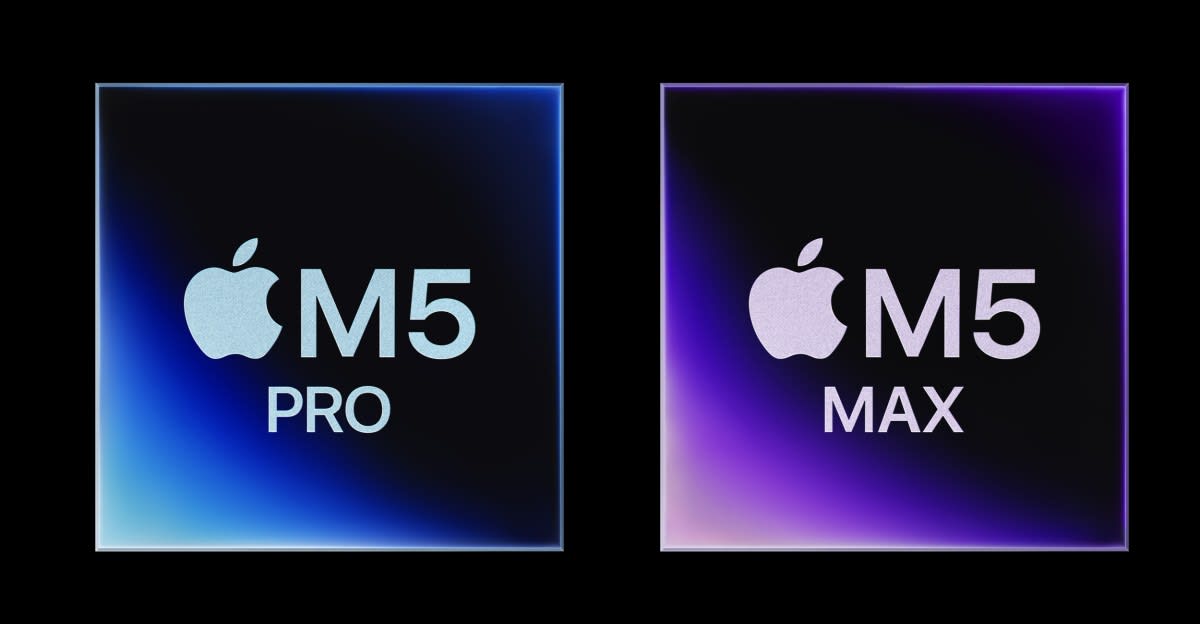
Apple's self-driving car program never really got off the ground, but it may have been what made the company's chips the powerful AI performers they are. Early in the development of the self-driving platform, Apple realized that it would need powerful on-device AI processing. While the car processor was never finished, as Mark Gurman details […]
The Productive Failure: How Project Titan Shaped Apple's AI Future
For years, Apple pursued one of the most ambitious and secretive projects in its history: the development of a fully autonomous electric vehicle. While the program—widely known as Project Titan—was ultimately shuttered without ever producing a commercial car, its legacy is far from a total loss. As detailed by Mark Gurman, the project served as an unplanned incubator for the high-performance AI silicon that now defines Apple's competitive edge in the hardware market. The quest for autonomy forced Apple to solve extreme computational problems, the solutions to which have now trickled down into the iPhones, iPads, and Macs we use today.
The Computational Demands of Autonomy
To achieve Level 4 or Level 5 autonomy, a vehicle must process an overwhelming amount of data in real-time, utilizing a suite of cameras, LiDAR, and radar sensors. This requires immense on-device processing power to ensure safety and near-instantaneous decision-making. Apple realized early in the development process that offloading this data to the cloud was not a viable option due to latency and reliability concerns. Consequently, the team focused on creating a specialized processor capable of handling massive AI workloads locally. This shift in focus moved the project's center of gravity from automotive engineering to semiconductor innovation, pushing the boundaries of what Apple's silicon teams could achieve.
From the Dashboard to the Pocket
While the specific car processor never reached production, the architectural breakthroughs achieved during its development were integrated into Apple's broader silicon strategy. The Neural Engine (NPU), which is now a cornerstone of the A-series and M-series chips, owes much of its evolution to the rigorous demands of the self-driving program. The ability to execute billions of operations per second with high energy efficiency—a necessity for a car's battery life—became a blueprint for optimizing AI tasks on mobile devices. Features like advanced image processing, real-time language translation, and sophisticated Siri responses are direct beneficiaries of this "car-grade" AI research.
Strategic Implications in the AI Arms Race
In the current landscape of Generative AI and Large Language Models (LLMs), the ability to run models on-device rather than in the cloud is a massive strategic advantage. By leveraging the legacy of Project Titan, Apple is better positioned to implement "Apple Intelligence" across its ecosystem. While competitors often rely heavily on server-side processing, Apple's commitment to on-device AI—born from the necessity of autonomous driving—allows for greater user privacy and lower latency. This transition highlights a classic Apple trait: the ability to pivot a failed product goal into a foundational technological pillar.
Historical Context and Industry Trends
Looking back at the trajectory of the autonomous vehicle industry, Apple's struggle mirrors that of many tech giants who underestimated the complexity of automotive safety and regulation. However, unlike other firms that simply wrote off their R&D costs, Apple successfully harvested the intellectual property. The trend of "vertical integration"—where a company controls both the hardware and the software—was accelerated by the car project. The drive to create a bespoke OS for a car forced Apple to refine its kernel and memory management, further streamlining the synergy between its hardware and software layers.
Conclusion: The Silver Lining of Project Titan
In summary, the cancellation of Apple's self-driving car is not a story of failure, but one of strategic redistribution. The immense resources poured into the project acted as a high-pressure laboratory for AI chip development. By transforming the requirements of an autonomous vehicle into the capabilities of a consumer chip, Apple has ensured that its devices remain the most powerful AI performers in the handheld market. The ghost of the Apple Car now lives on in every Neural Engine, proving that in the world of high-tech R&D, a dead-end product can still pave the way to a breakthrough.