An encounter with Arpita Singh
Source Entity
Latest News: Todays Latest News Headlines from India & World | Hindustan Times
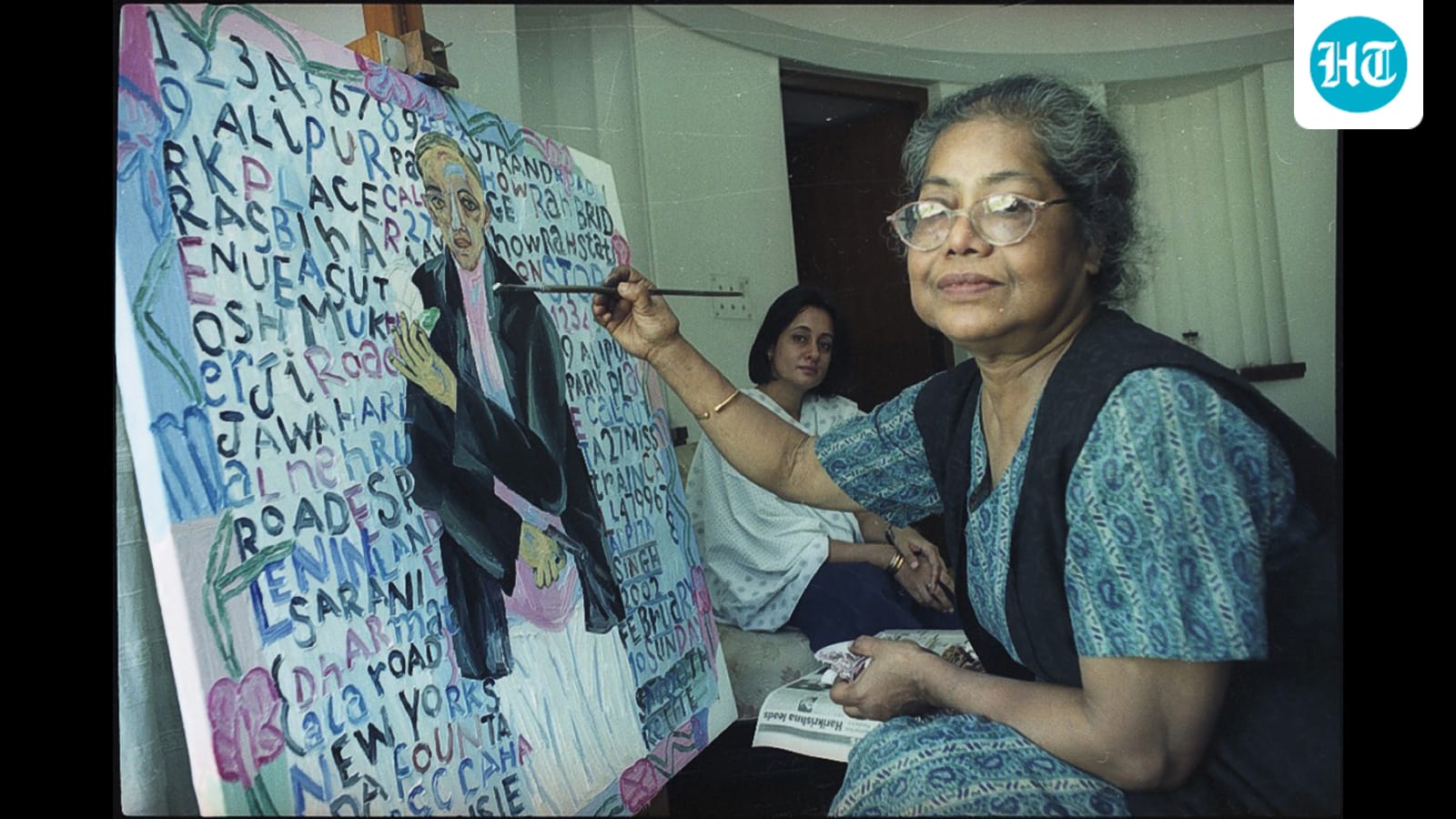
Arpita Singh's artistic retrospective offers a profound look into her unique ability to blend personal memory with India's turbulent political history. Her work serves as a social cartography, transforming the chaos of the streets into powerful, subversive, and reflective visual narratives.
The Artistic Cartography of Arpita Singh
Arpita Singh’s recent retrospective serves as a significant cultural milestone, offering viewers a window into a world shaped by intimate personal surroundings and the broader, often volatile, political landscape of India. By synthesizing her studio environment with the visceral reality of Delhi’s streets, Singh establishes herself not merely as an observer, but as a dedicated archivist of the Indian experience. Her work functions as a form of social cartography, meticulously mapping the intersection between individual consciousness and collective national trauma.
Blending Tradition with Subversion
What distinguishes Singh’s oeuvre is her masterful integration of distinctly Indian art traditions with a subversive, yet playful, visual language. This stylistic duality allows her to address heavy, systemic issues without losing the human element that makes her work so resonant. By layering imagery in a way that feels both chaotic and carefully curated, she invites the audience to stop, observe, and engage in the kind of deep critical thinking that is often lost in the speed of modern life.
The Intersection of Personal and Political
At the heart of her retrospective is an exploration of how the private sphere is constantly encroached upon by public upheaval. A prime example of this synthesis is her 1993 work, My Mother. In this piece, the juxtaposition of a solitary, white-clad mother figure against a backdrop of rioting and violence creates a jarring, powerful tension. This configuration forces the viewer to confront the fragility of domestic peace when faced with the encroaching forces of societal instability.
The Artist as Archivist
Singh’s role as an archivist of memory is perhaps her most enduring contribution to Indian art. By choosing to turn memories—both personal and communal—into tangible action through her canvas, she ensures that the history of the streets is preserved. Her work acts as a repository for the sights, sounds, and shadows of Delhi, documenting events that might otherwise fade from public discourse. In this sense, her art serves a dual purpose: it is both a record of the past and a commentary on the present.
Empowerment Through Imagery
Ultimately, the retrospective highlights the empowering nature of Singh’s imagery. Despite the often grim subject matter of riots and violence, there is a pervasive sense of resilience within her brushstrokes. By refusing to remain a bystander, Singh empowers her viewers to do the same, encouraging a society that pauses to look and think deeply about its own trajectory. Her legacy, as captured in this exhibit, is one of profound empathy and unrelenting truth-telling.
Verification Required?