Article 371(J) Act will be implemented fully, says Priyank Kharge
Source Entity
India Latest News: Top National Headlines Today & Breaking News | The Hindu
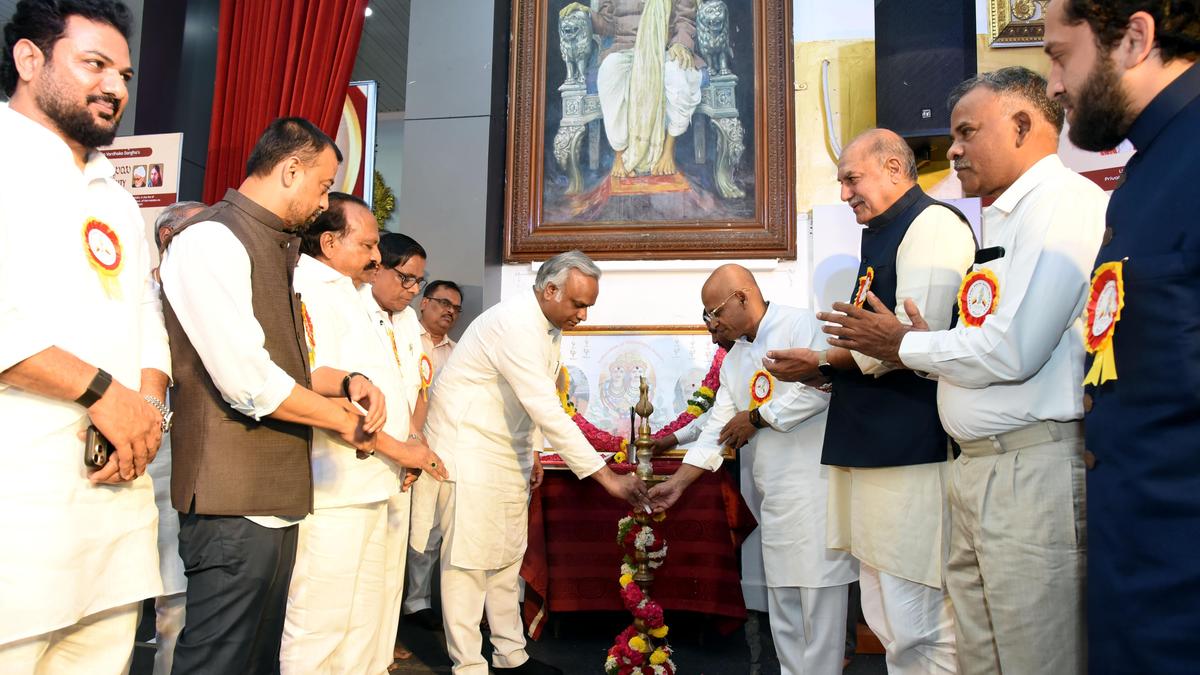
The Union government is exploring a new Article 371K to grant Ladakh special constitutional safeguards and legislative powers. Meanwhile, the Karnataka government has reaffirmed its commitment to fully implementing Article 371(J) to ensure development in the Kalyana Karnataka region.
The Expanding Scope of Article 371
The Indian Constitution is currently witnessing a significant discourse regarding the expansion of special provisions under Article 371. The Union government’s proposal to introduce a new 'Article 371K' for Ladakh represents a strategic move to address local aspirations for self-governance. This follows an in-principle understanding between the Ministry of Home Affairs and key stakeholders, specifically the Apex Body, Leh (ABL) and the Kargil Democratic Alliance (KDA). The objective is to establish a directly elected Union Territory-level body endowed with substantial legislative, executive, financial, and planning powers, effectively granting the region a unique administrative structure.
Historical Context and Evolution
Historically, Article 371 and its subsequent sub-articles (371A through 371J) were designed to provide special protections to specific states or regions, often to address historical imbalances, protect cultural identities, or foster development in marginalized areas. While these provisions are now synonymous with regional safeguards—particularly in the Northeast—their original legislative intent was more nuanced. The potential introduction of Article 371K signifies an evolution of this constitutional instrument, moving from a mechanism for state-level integration to a tool for empowering specific territories within the Union.
The Case of Ladakh: A New Constitutional Frontier
If implemented, Article 371K would be distinct from existing provisions because it specifically targets a Union Territory that transitioned from a former state. By providing constitutional backing for an elected body with broad powers, the government seeks to balance central administration with local autonomy. This is a critical development for Ladakh, which has sought greater protection for its land, employment, and demographic identity following the reorganization of Jammu and Kashmir. The framework aims to provide a robust legal architecture that ensures the local population remains central to the region's development trajectory.
Implementation in Kalyana Karnataka
Parallel to the developments in the North, the state of Karnataka serves as a reminder of the challenges inherent in the implementation of these provisions. Minister Priyank Kharge recently emphasized the state's commitment to the effective enforcement of Article 371(J), which governs the Kalyana Karnataka region. The government's pledge to rectify shortcomings and ensure that constitutional benefits reach the intended beneficiaries underscores the reality that a provision's legal existence is only as effective as its administrative execution.
Broader Implications and Future Trends
These concurrent events highlight a national trend where regional aspirations are increasingly being channeled through the framework of Article 371. The push for 371K in Ladakh and the rigorous oversight of 371(J) in Karnataka reflect a broader administrative strategy: using constitutional mechanisms to mitigate regional disparities. Moving forward, the success of these initiatives will likely depend on the government's ability to balance central oversight with the genuine decentralization of power, a task that requires both political will and careful legislative drafting to ensure that regional safeguards do not inadvertently create administrative gridlock.
Multiple Citing Sources
Verification Required?