'Govt can't subsidise everything': Niti VC's 'bees & honey' defence for UPI charges
Source Entity
SUBHADRA SRIVASTAVA
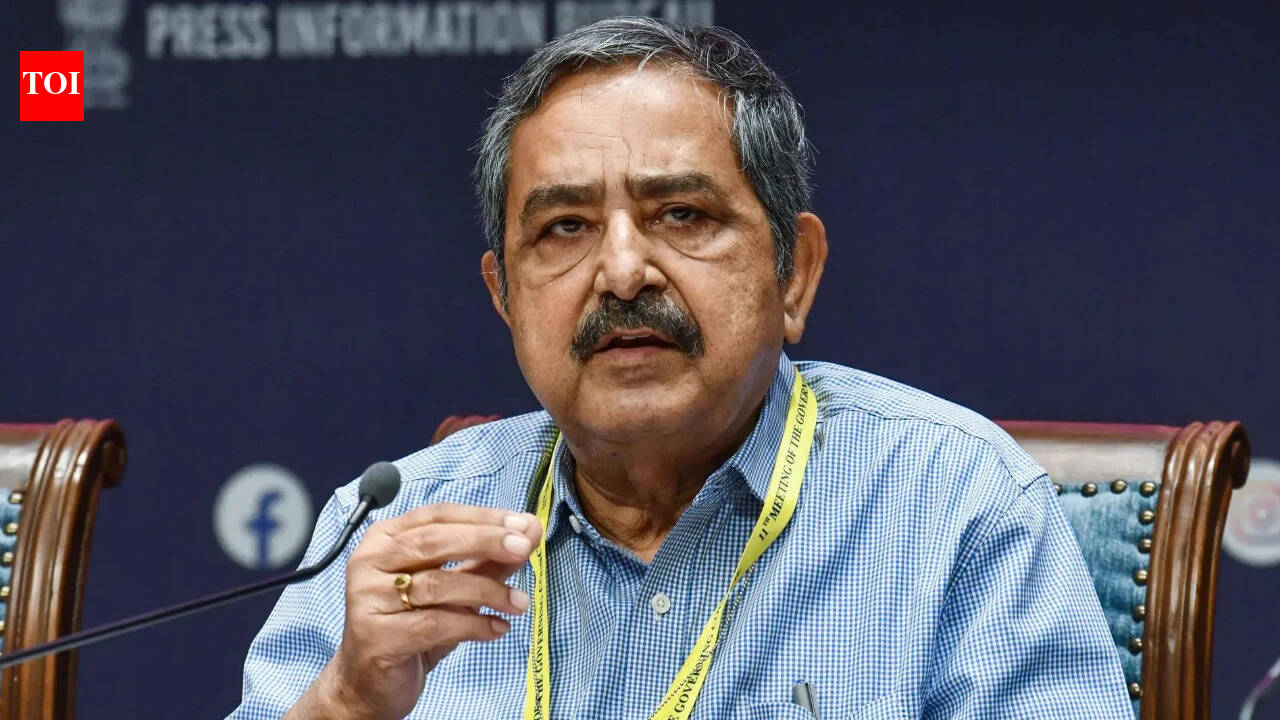
The NPCI has introduced a 0.4% merchant discount rate on UPI transactions exceeding ₹2,000 starting October 15, 2026. While the government maintains these charges won't impact consumers, critics like Ashneer Grover argue the costs will inevitably be passed on as a hidden tax.
The Shift in UPI Economics
The landscape of digital payments in India is undergoing a significant transition following the announcement by the National Payments Corporation of India (NPCI) regarding the introduction of a Merchant Discount Rate (MDR) on specific UPI transactions. Starting October 15, 2026, transactions exceeding ₹2,000 will attract a 0.4% MDR, capped at ₹300 per transaction. Additionally, specific sectors such as utility bills, fuel, insurance, and education will face a flat charge of ₹5. This policy shift marks a departure from the long-standing model of zero-cost UPI transactions that fueled the platform's massive adoption.
The Debate Over 'Consumer Impact'
While the government has explicitly stated that the new MDR structure is designed to be borne by merchants and will not directly impact consumers, the discourse remains polarized. Critics, most notably former BharatPe co-founder Ashneer Grover, have challenged this narrative. Grover argues that labeling these charges as purely merchant-borne is misleading, suggesting that the costs will ultimately be reflected in the final prices of goods and services. He contends that such levies should be transparently categorized as a 'tax' rather than a service fee, reflecting concerns that the end-consumer will eventually foot the bill through increased retail pricing.
Defining the Scope of Charges
To provide clarity amidst the confusion, it is essential to distinguish between what remains free and what is now subject to fees. UPI payments between individuals, including peer-to-peer transfers, remain entirely free of charge regardless of the amount. Furthermore, auto-debits and UPI mandates are excluded from these new MDR requirements. The charges are strictly targeted at commercial transactions, where merchants—ranging from large retailers and online platforms to restaurants—must now account for these processing costs.
Sector-Specific Implications
A variety of essential services have been categorized under a flat fee structure. Transactions involving insurance premiums, education fees, electricity and water bills, and fuel purchases at petrol stations will attract a fixed ₹5 charge. This tiered approach suggests an effort by the NPCI to standardize the cost of processing across high-frequency, low-value utility payments, while applying a percentage-based model for general retail transactions above the ₹2,000 threshold.
Future Trends and Economic Outlook
The introduction of MDR on UPI represents a strategic move to ensure the sustainability of the payments ecosystem. As the volume of digital transactions continues to grow, the infrastructure costs for banks and payment processors have mounted. By shifting toward a partial cost-recovery model, the NPCI aims to incentivize further investment in digital payment technology. However, the success of this model will depend on whether merchants choose to absorb these costs as a 'cost of doing business' or pass them on to consumers, a trend that will likely be closely monitored by both regulators and the public in the months following the October 15 implementation.
Multiple Citing Sources