Plea in Supreme Court challenges levy on UPI payments above ₹2,000
Source Entity
India Latest News: Top National Headlines Today & Breaking News | The Hindu
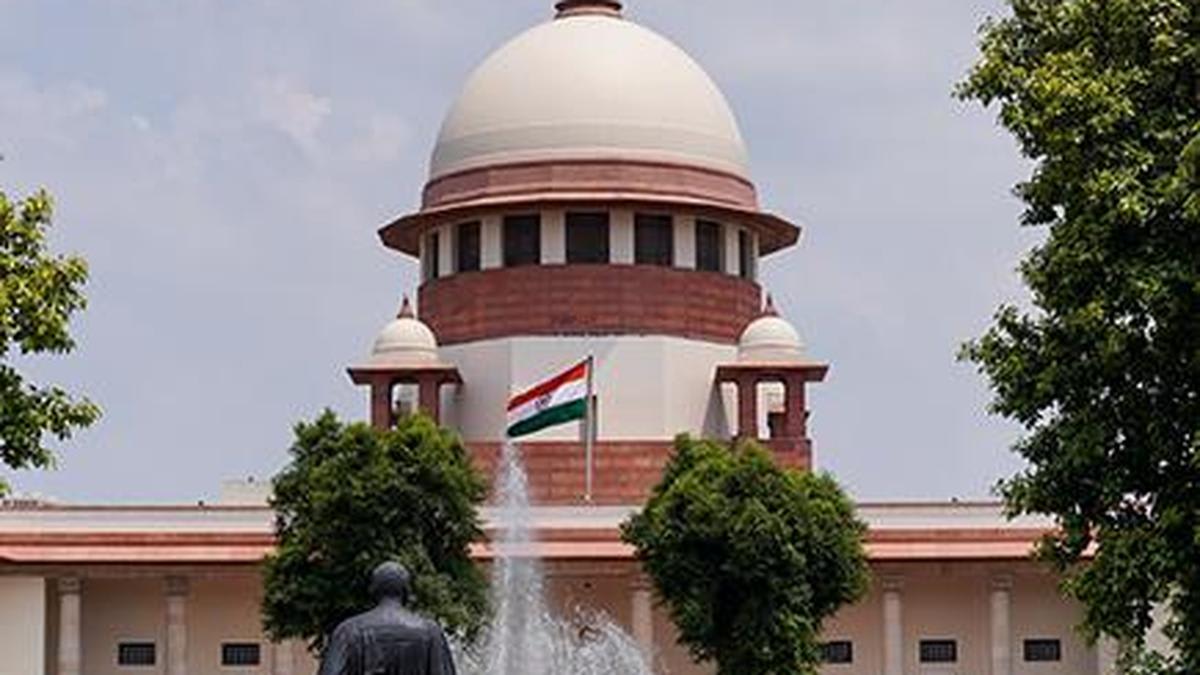
The NPCI has introduced a 0.4% merchant discount rate on UPI transactions over ₹2,000, effective October 15. While the government maintains this won't impact consumers, critics like Ashneer Grover argue it effectively functions as a tax that will eventually be passed down to the end user.
The UPI Merchant Fee Debate: Understanding the New MDR Structure
The landscape of digital payments in India is undergoing a significant shift with the National Payments Corporation of India (NPCI) announcing a new Merchant Discount Rate (MDR) structure for UPI transactions. Effective October 15, this policy introduces a 0.4% charge on UPI transactions exceeding ₹2,000, capped at ₹300. Additionally, a flat fee of ₹5 will be applied to specific categories, including utility bills, fuel, insurance premiums, and education fees.
The Government Stance vs. Market Skepticism
While the government maintains that these charges are levied on merchants to compensate banks and payment processors—and will not directly impact individual consumers—the narrative is far from settled. The government has explicitly clarified that peer-to-peer (P2P) transfers, such as sending money to friends or family, will remain entirely free of charge regardless of the amount. Furthermore, auto-debits and UPI mandates are excluded from these new MDR requirements, aiming to preserve the convenience of recurring payments.
Ashneer Grover’s Critique: Is it a Tax?
Former BharatPe co-founder Ashneer Grover has emerged as a vocal critic of this policy. In a recent interview, Grover argued that the classification of this levy is misleading, suggesting that any mandatory fee imposed on merchants will inevitably be passed down to the end consumer. By labeling the charge as a "tax" rather than a mere processing fee, Grover highlights the economic reality that merchants, especially smaller retailers, operating on thin margins may struggle to absorb these costs without adjusting their pricing strategies.
Economic Implications for Merchants
For larger retailers, online platforms, and restaurants, the MDR represents an operational cost that may be absorbed as part of doing business. However, the impact on smaller merchants remains a point of contention. The NPCI’s decision aims to provide financial sustainability to the infrastructure supporting UPI, which has scaled exponentially over the past few years. The balance between maintaining a free ecosystem for the masses and ensuring the viability of the banking infrastructure is the core challenge of this new policy.
Future Trends in Digital Payments
Looking ahead, the implementation of these charges on October 15, 2026, will serve as a litmus test for the resilience of the UPI ecosystem. If merchant adoption remains high despite the fees, it could signal a maturation of the digital payment sector where service fees are accepted as a standard cost of digital infrastructure. Conversely, if there is a significant pushback or a shift in consumer behavior toward other payment methods, regulators may need to revisit the structure to prevent a decline in digital penetration.
Conclusion
Ultimately, the debate surrounding the UPI MDR reflects a broader tension between the democratization of finance and the necessity of sustainable revenue models. While the government asserts that the consumer remains insulated, the market sentiment—captured by figures like Ashneer Grover—suggests that the indirect costs of digital transactions are becoming increasingly visible. As the October deadline approaches, all eyes will be on how merchants and payment aggregators navigate this new fiscal reality.
Multiple Citing Sources
Verification Required?