Aurora CFO says 30,000 driverless trucks by 2030 isn’t as far-fetched as it sounds
Source Entity
Kirsten Korosec
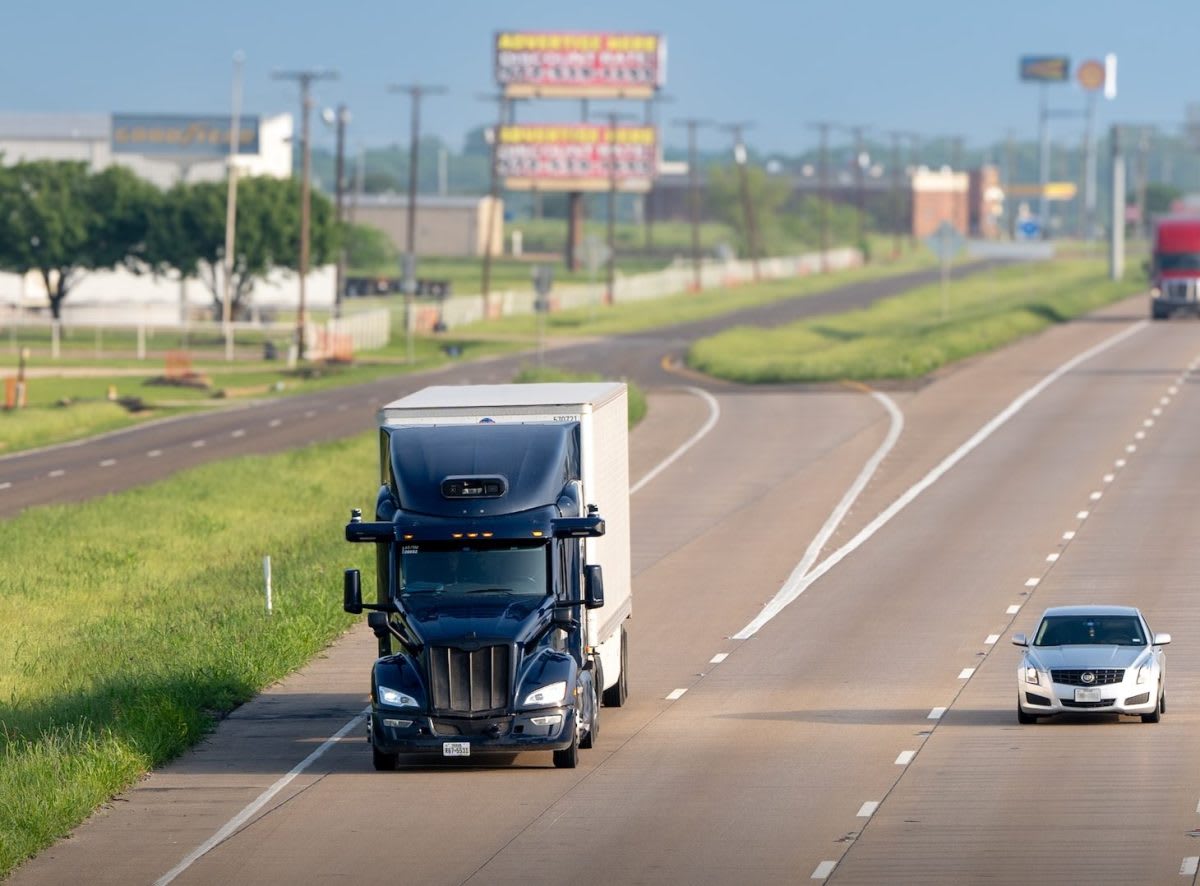
Aurora has announced an ambitious target to deploy 30,000 autonomous trucks by 2030, projecting $5 billion in annual revenue. CFO David Maday argues this goal is realistic given the scale of the broader trucking market and current manufacturing volumes.
The Roadmap to Autonomous Logistics: Aurora’s 2030 Vision
Autonomous vehicle technology firm Aurora has unveiled an ambitious growth strategy, projecting a fleet of 30,000 self-driving trucks on the road by the end of 2030. This target, which aims to generate $5 billion in annual revenue, marks a significant scaling milestone for the company. While the leap from an expected 200 trucks and $80 million in revenue by the end of 2026 to 30,000 units by 2030 appears steep, Aurora leadership maintains that the roadmap is grounded in market realities rather than mere aspiration.
Contextualizing the Scale of Production
To understand the magnitude of this goal, one must look at the total addressable market of the trucking industry. Aurora CFO David Maday emphasizes that the major truck manufacturers in the United States produce between 250,000 and 300,000 new trucks annually. In this context, 30,000 units represent only a fractional share of the total market. By positioning their technology as an additive layer to existing manufacturing pipelines, Aurora is effectively framing their expansion as a manageable percentage of total industry output rather than a radical market disruption.
Bridging the Gap: The 2026 to 2030 Transition
Aurora’s trajectory requires a massive acceleration in both technological deployment and commercial adoption. Starting from a modest base of 200 trucks in 2026, the company faces the challenge of scaling its proprietary autonomous hardware and software systems while simultaneously building the necessary infrastructure for maintenance and operations. The transition from a pilot-scale fleet to a commercial-scale operation will likely require significant advancements in reliability, regulatory compliance, and safety validation to gain widespread trust from logistics providers.
The Economic Case for Driverless Freight
The financial targets provided by Aurora suggest that the company expects a stable, high-margin revenue stream. By projecting $5 billion in annual revenue, the firm is signaling that it expects its autonomous units to operate with high utilization rates. The economics of long-haul trucking—which currently faces persistent driver shortages and rising labor costs—provide a strong tailwind for companies like Aurora. If the technology can prove its safety and cost-efficiency, the shift toward autonomous freight could become a necessity for logistics companies seeking to optimize their supply chains.
Future Trends and Industry Implications
Looking toward 2030, the success of Aurora’s plan will depend on how quickly the industry can resolve remaining technical and legal hurdles. If Aurora achieves its goal, it will likely trigger a ripple effect across the transportation sector, forcing competitors to accelerate their own autonomous vehicle development. The integration of 30,000 driverless trucks would fundamentally alter the landscape of domestic shipping, potentially reducing delivery costs and redefining the role of human operators in the long-haul trucking sector.
Conclusion
Aurora’s 2030 targets are audacious, yet they are anchored in the massive scale of the existing trucking industry. By framing their growth against the backdrop of annual manufacturing volumes, the company has provided a logical, if challenging, path toward commercial dominance. Whether the firm can successfully navigate the complexities of rapid scaling and technological refinement remains the central question for investors and the logistics industry alike.