Bank of America Q3 investment banking fees to drop, CEO warns
Source Entity
Yahoo Finance
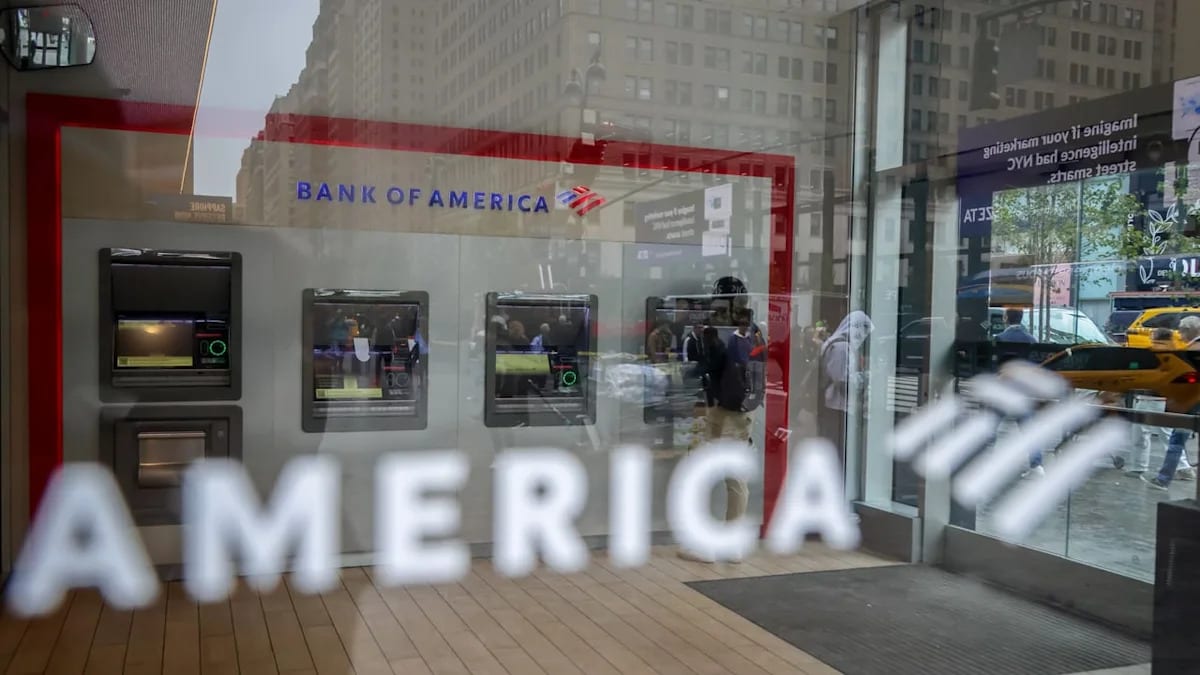
Bank of America CEO Brian Moynihan warned of a greater than 10% decline in Q3 investment banking fees, missing analyst expectations. The announcement caused the bank's stock to drop over 5% as investors reacted to the weaker-than-anticipated performance.
Bank of America Faces Q3 Revenue Headwinds
Bank of America CEO Brian Moynihan recently provided a sobering outlook for the financial giant, signaling that investment banking fees for the third quarter are projected to decline by more than 10% compared to the same period last year. Speaking at the Barclays 24th Annual Global Financial Services Conference, Moynihan highlighted a disconnect between the bank's internal expectations and those held by Wall Street analysts. While the broader market, as tracked by Dealogic, is experiencing a 10% downturn, Bank of America anticipates underperforming relative to its peers due to its specific market positioning.
The Impact of Market Positioning
Central to this decline is the bank's strategic footprint in the investment banking sector. Moynihan candidly admitted that the institution is not as well-positioned in the business segments that are currently seeing higher activity levels. This strategic gap has led to a projected fee revenue range of $1.6 billion to $1.8 billion, a significant shortfall when measured against the $2 billion consensus estimate compiled by Bloomberg. The market reaction was swift, with Bank of America's stock price retreating by more than 5% following the disclosure.
Trading Revenue Stability
Despite the significant drop in fee-based income, there is a silver lining in the bank's trading operations. Moynihan noted that trading revenue is expected to remain relatively stable, holding roughly even year-over-year. This indicates that while the advisory and underwriting side of the business is struggling to capture volume in the current economic environment, the bank’s market-making and trading desks continue to provide a necessary buffer against total revenue erosion.
Broader Implications for the Financial Sector
This announcement serves as a barometer for the health of the broader financial services industry. When a major Tier-1 bank like Bank of America struggles to meet fee expectations, it suggests that deal-making activity—such as mergers, acquisitions, and initial public offerings—remains suppressed. The reliance on specific business segments that are currently experiencing a lull highlights the cyclical nature of investment banking, where revenue is highly sensitive to market sentiment and macroeconomic conditions.
Future Outlook and Strategic Adjustments
Looking ahead, the bank must navigate the challenge of reconciling its current positioning with evolving market demands. Investors will likely look for signs of how Moynihan intends to pivot or reallocate resources to better capture activity in more vibrant segments of the market. As the financial services industry faces ongoing volatility, the ability of firms to maintain steady income through diversified revenue streams—like the noted stability in trading—will be critical in maintaining investor confidence in the coming quarters.