Benchmarking 15 "E-Waste" GPUs with Modern Workloads
Source Entity
Hacker News
<a href="https://news.ycombinator.com/item?id=48892638">Comments</a>
Evaluating the Longevity of Silicon: Benchmarking 'E-Waste' GPUs
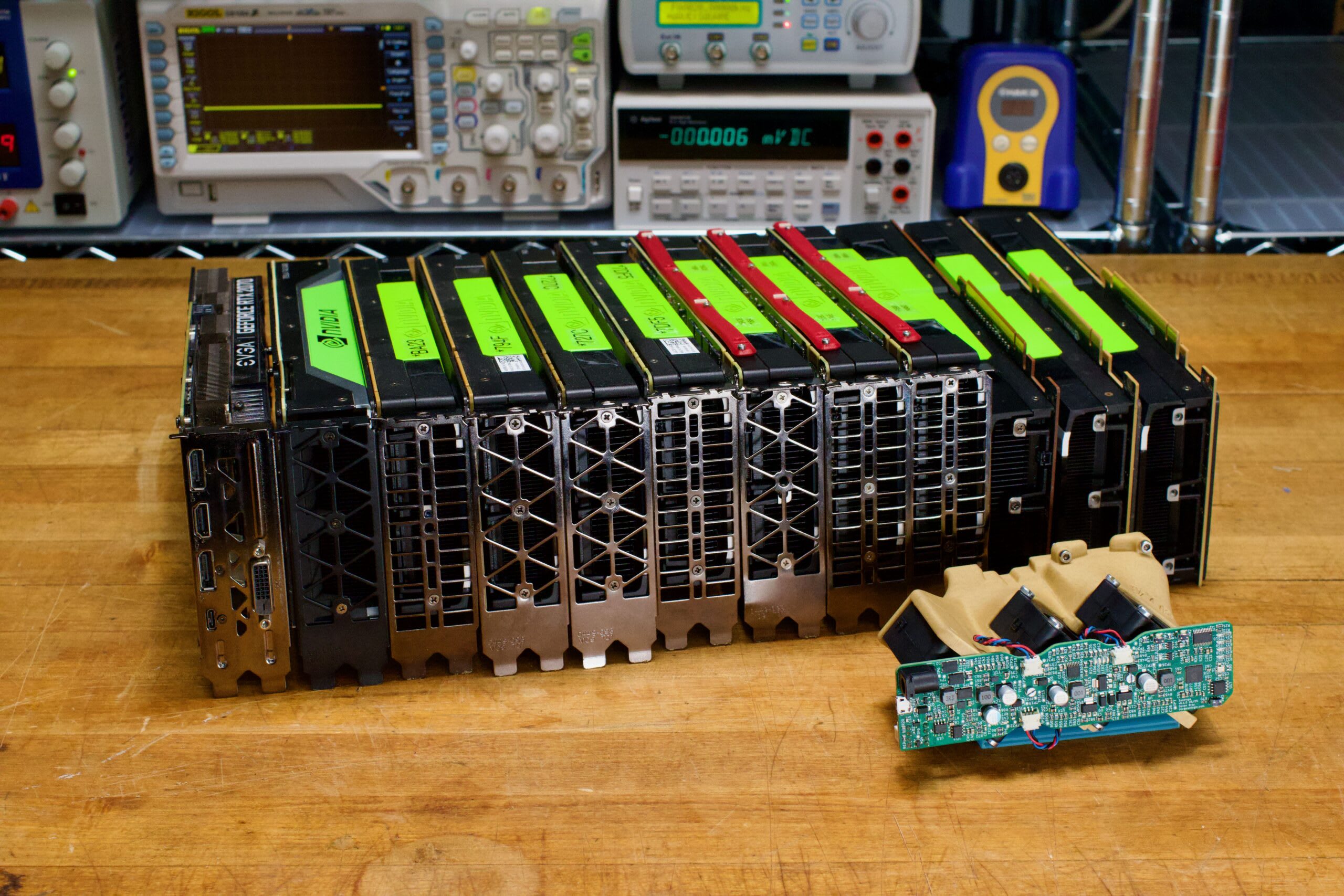
The recent initiative to benchmark 15 "e-waste" GPUs against modern workloads serves as a critical case study in hardware longevity and the accelerating cycle of planned obsolescence. In an era where the consumer electronics industry pushes for annual upgrade cycles, this experiment seeks to quantify the actual performance gap between legacy hardware and contemporary standards. By subjecting outdated graphics processing units—often discarded as electronic waste—to current software demands, the project highlights the tension between raw hardware capability and the software-driven requirements of modern computing.
The Architecture of Obsolescence
To understand why these GPUs are labeled as "e-waste," one must look at the evolution of GPU architectures. Hardware obsolescence is rarely about the physical failure of the silicon, but rather the lack of support for modern APIs (Application Programming Interfaces) such as DirectX 12 Ultimate or Vulkan. When a GPU loses driver support from manufacturers like NVIDIA or AMD, it enters a state of functional obsolescence. This benchmarking effort is significant because it tests whether the underlying compute power of these older chips can still be leveraged for modern tasks, despite the lack of official optimization or contemporary feature sets like hardware-accelerated ray tracing.
Modern Workloads vs. Legacy Hardware
Modern workloads—ranging from Large Language Models (LLMs) and AI-driven image generation to high-fidelity gaming engines like Unreal Engine 5—demand not only high clock speeds but also massive amounts of VRAM and specialized tensor cores. By testing 15 different legacy cards, the study provides a spectrum of performance decay. It allows analysts to identify the exact point where architectural limitations (such as memory bandwidth or the absence of FP16 precision) make a card truly unusable. This distinction is vital for distinguishing between "slow" hardware and "incompatible" hardware, providing a blueprint for how legacy systems might be repurposed for lighter, specialized tasks.
Environmental Implications and the E-Waste Crisis
Beyond the technical metrics, this event underscores a pressing environmental concern. The global accumulation of e-waste is one of the fastest-growing waste streams. When GPUs are discarded simply because they cannot run the latest AAA game at 60 FPS, a vast amount of rare earth metals and energy-intensive silicon is wasted. This project advocates for a more sustainable approach to technology by demonstrating that "e-waste" hardware may still possess significant utility for non-critical workloads, such as basic server hosting, lightweight computation, or educational purposes, thereby challenging the narrative that old hardware has zero value.
Future Trends in Hardware Sustainability
Looking forward, this benchmarking effort suggests a growing trend toward "retro-computing" for utility rather than nostalgia. As software becomes increasingly bloated, there is a counter-movement toward optimizing code to run on a wider array of hardware. We can predict a rise in community-driven driver projects (such as the Nouveau project for NVIDIA) that aim to extend the life of these GPUs. The ability to maintain performance on older silicon not only reduces costs for users in developing economies but also forces software developers to prioritize efficiency over raw power.
Conclusion
Ultimately, benchmarking 15 "e-waste" GPUs against modern workloads is more than a technical curiosity; it is a critique of the modern consumption model. By documenting the persistent capabilities of legacy silicon, the project proves that the line between "functional tool" and "electronic waste" is often drawn by marketing and software compatibility rather than physical limitation. This analysis encourages a shift toward hardware sustainability and a deeper understanding of the lifecycle of the silicon that powers our digital world.