Bengaluru’s proposed ₹25,000 parking fee: Will it push up real estate prices and rents?
Source Entity
Latest News: Todays Latest News Headlines from India & World | Hindustan Times | Hindustan Times
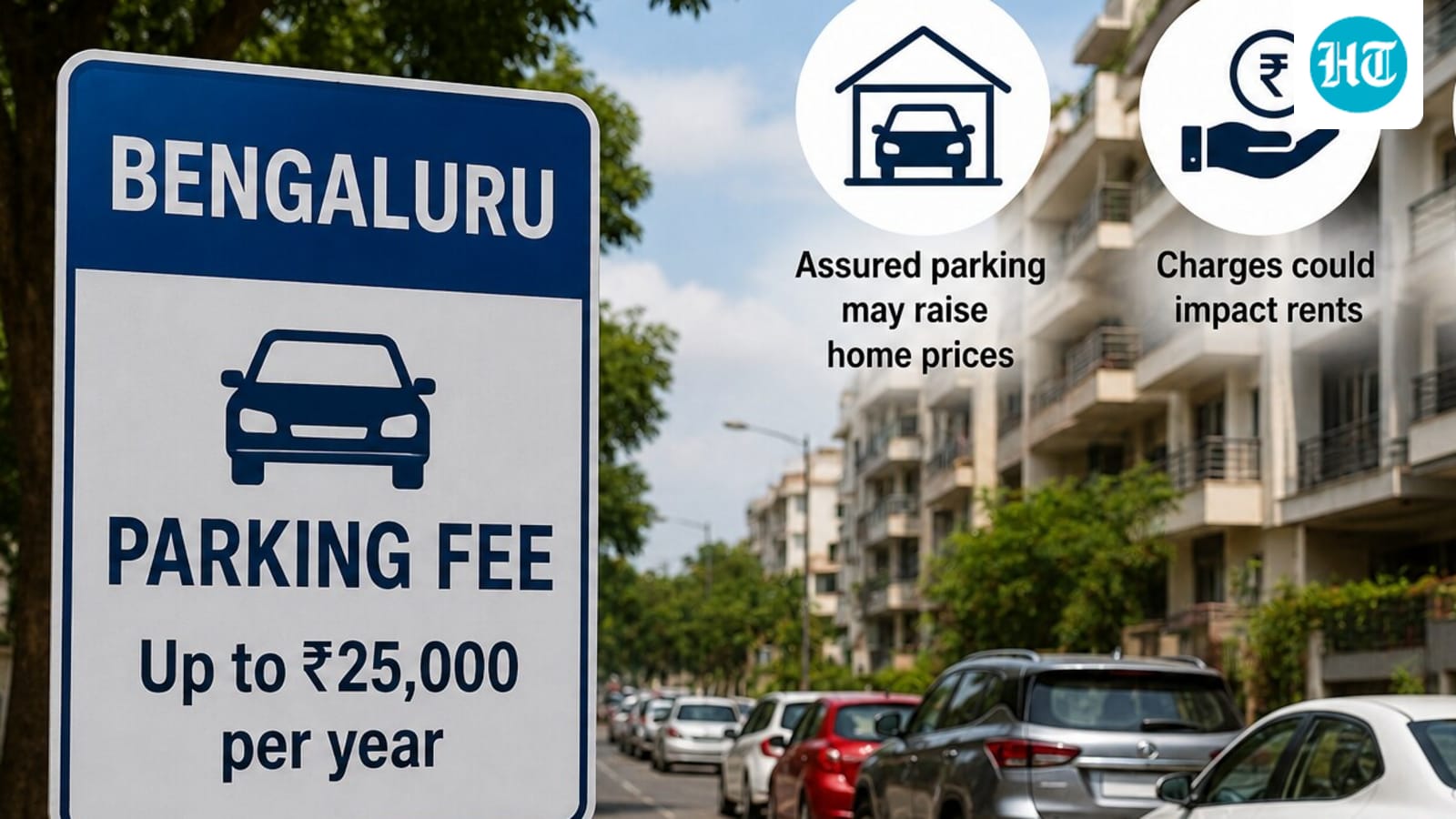
Bengaluru's proposed annual residential parking fee of up to ₹25,000 aims to regulate road usage but may significantly alter local real estate dynamics. Experts anticipate that homes with dedicated, assured parking will see increased demand and higher rental premiums.
The Financial Shift in Bengaluru's Urban Planning
The Karnataka government’s introduction of the draft Greater Bengaluru Authority (GBA) (Parking) Rules, 2026, marks a pivotal moment in the city's urban management strategy. By proposing an annual residential parking fee of up to ₹25,000 for vehicles parked on public roads, the administration is signaling a shift toward curbing the encroachment of public thoroughfares. This policy aims to address the chronic congestion and space mismanagement that has long plagued Bengaluru’s rapidly densifying neighborhoods.
Impacts on Real Estate Valuations
Real estate experts are closely watching this development, as it introduces a new variable into the valuation of residential properties. Historically, the availability of street parking was often treated as a de facto utility by homeowners. With the potential imposition of significant annual costs for such usage, the market value of properties that offer dedicated, off-street parking is expected to rise. This creates a clear economic incentive for developers to prioritize parking infrastructure in future projects, effectively decoupling the cost of 'free' public road usage from private ownership.
The Rental Market Premium
Beyond property sales, the rental market is likely to undergo a significant recalibration. Landlords who can offer assured, private parking spots will likely leverage this as a premium feature, justifying higher monthly rents. For tenants, the choice between paying a high annual fee for public street parking or opting for a property with a dedicated garage will become a standard calculation in their cost-of-living assessment. This trend could lead to a widening gap in rental prices between older buildings with limited parking and modern complexes with sufficient designated spots.
Changing Buyer Preferences
Buyer preferences are set to shift as the cost of vehicle ownership in Bengaluru becomes more transparent. Potential homeowners are now likely to prioritize 'assured parking' as a non-negotiable requirement during property searches. This change in consumer behavior will force developers to rethink site planning, potentially leading to more efficient underground or multi-level parking solutions in new developments to remain competitive in a market where 'free' street space is no longer an option.
Broader Urban Implications
The proposed rules represent a broader, necessary evolution in how the city manages its public infrastructure. By assigning a monetary value to the use of public space, the GBA is essentially attempting to manage demand and encourage more sustainable transportation choices. While the policy faces the hurdle of public scrutiny during the current objection and suggestion phase, the underlying principle—that public road space is a finite, valuable asset—is a significant departure from previous urban planning norms in the region.
Conclusion
In summary, the draft GBA parking rules are set to reshape the economic landscape of Bengaluru’s residential sector. While the immediate focus is on individual vehicle expenses, the long-term ripple effects on real estate prices, rental trends, and developer strategies will be profound. As the city grows, the transition toward monetizing public parking space will likely serve as a blueprint for other Indian metros facing similar urbanization challenges.
Verification Required?