Bihar led 'second Independence movement' during Emergency: C.P. Radhakrishnan
Source Entity
India Latest News: Top National Headlines Today & Breaking News | The Hindu
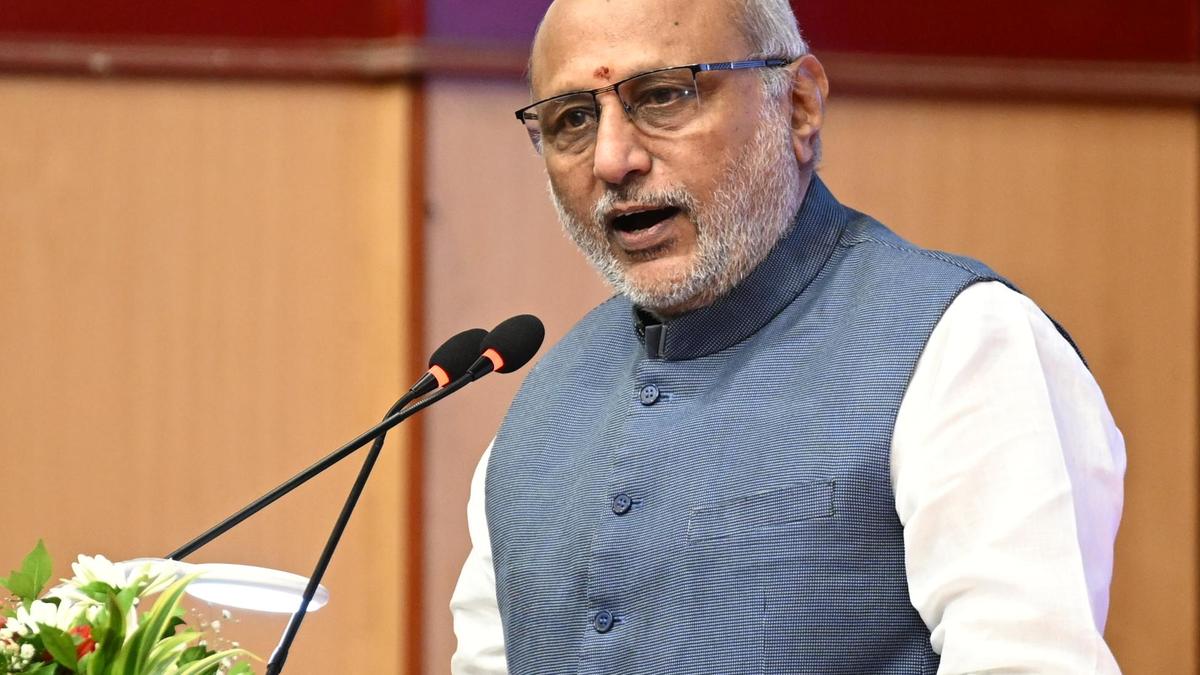
“Bihar had not only played a crucial role in the country’s freedom struggle but also led from the front to spearhead the second independence movement during the Emergency,” says C.P. Radhakrishnan
Bihar's Legacy: The Vanguard of Democratic Restoration
In a recent statement, C.P. Radhakrishnan highlighted the profound historical significance of Bihar, asserting that the state did not merely participate in India's initial struggle for freedom from British colonial rule but also served as the epicenter for a "second independence movement." This statement refers to the period of the Internal Emergency (1975–1977), a tumultuous era in Indian history where democratic norms were suspended, civil liberties were curtailed, and political opponents were imprisoned. By framing the resistance in Bihar as a second independence movement, Radhakrishnan elevates the state's role from a regional participant to a national leader in the fight against authoritarianism.
The Crucible of the Emergency
To understand the weight of Radhakrishnan's claim, one must examine the climate of the Emergency declared by Prime Minister Indira Gandhi. During this time, the Indian state witnessed an unprecedented centralization of power, characterized by press censorship and the suspension of habeas corpus. The "second independence" narrative stems from the fact that the movement to restore democracy was not a top-down administrative change, but a grassroots uprising. Bihar became the primary stage for this defiance, transforming into a hub for activists, students, and political leaders who refused to submit to the suspension of constitutional rights.
The JP Movement: The Heart of Resistance
Central to this narrative is the leadership of Jayaprakash Narayan (JP), a towering figure in Indian politics who emerged from retirement to lead the movement in Bihar. The "JP Movement" began as a student-led protest against corruption and unemployment in Bihar but rapidly evolved into a total revolution (Sampoorna Kranti) calling for the restoration of democracy. The mobilization in Bihar was unique because it bridged the gap between various ideological spectrums—bringing together socialists, right-wing activists, and common citizens. This unity in Bihar provided the blueprint for the national opposition, proving that a coordinated grassroots effort could challenge a powerful central government.
Broader Political Implications and Historical Context
The implications of Bihar's leadership during the Emergency extended far beyond the state's borders. The resistance spearheaded in Bihar directly contributed to the formation of the Janata Party, a coalition of disparate political entities that sought to defeat the Congress party in the 1977 general elections. This victory marked the first time since independence that a non-Congress government took power at the center, fundamentally altering the trajectory of Indian politics by introducing a genuine multi-party competitive system. Therefore, the "second independence" refers to the liberation of the Indian democratic process from a period of monolithic control.
Future Trends and the Narrative of Democratic Resilience
Looking forward, the emphasis on Bihar's role in the Emergency serves as a reminder of the fragility of democratic institutions and the power of civil society. In the current political landscape, invoking the memory of the JP movement is often used to underscore the importance of dissent and political accountability. As India continues to navigate its democratic journey, the legacy of Bihar's resistance remains a touchstone for those advocating for the protection of civil liberties. The recognition of these historical events ensures that the lessons of the 1970s—specifically the dangers of unchecked executive power—remain integrated into the national political consciousness.
Summary
C.P. Radhakrishnan's assertion underscores a critical chapter of Indian history where Bihar acted as the catalyst for democratic revival. By linking the freedom struggle of 1947 with the anti-Emergency protests of the 1970s, he frames Bihar as a perennial guardian of Indian liberty. The "second independence movement" was not just a political campaign but a systemic reclamation of the Indian Constitution's spirit, ensuring that the country's democratic foundations remained intact for future generations.
Verification Required?