India News Live Updates, 15 September 2026: EVM glitches delay Kota civic poll results, re-poll tomorrow
Source Entity
The Indian Express
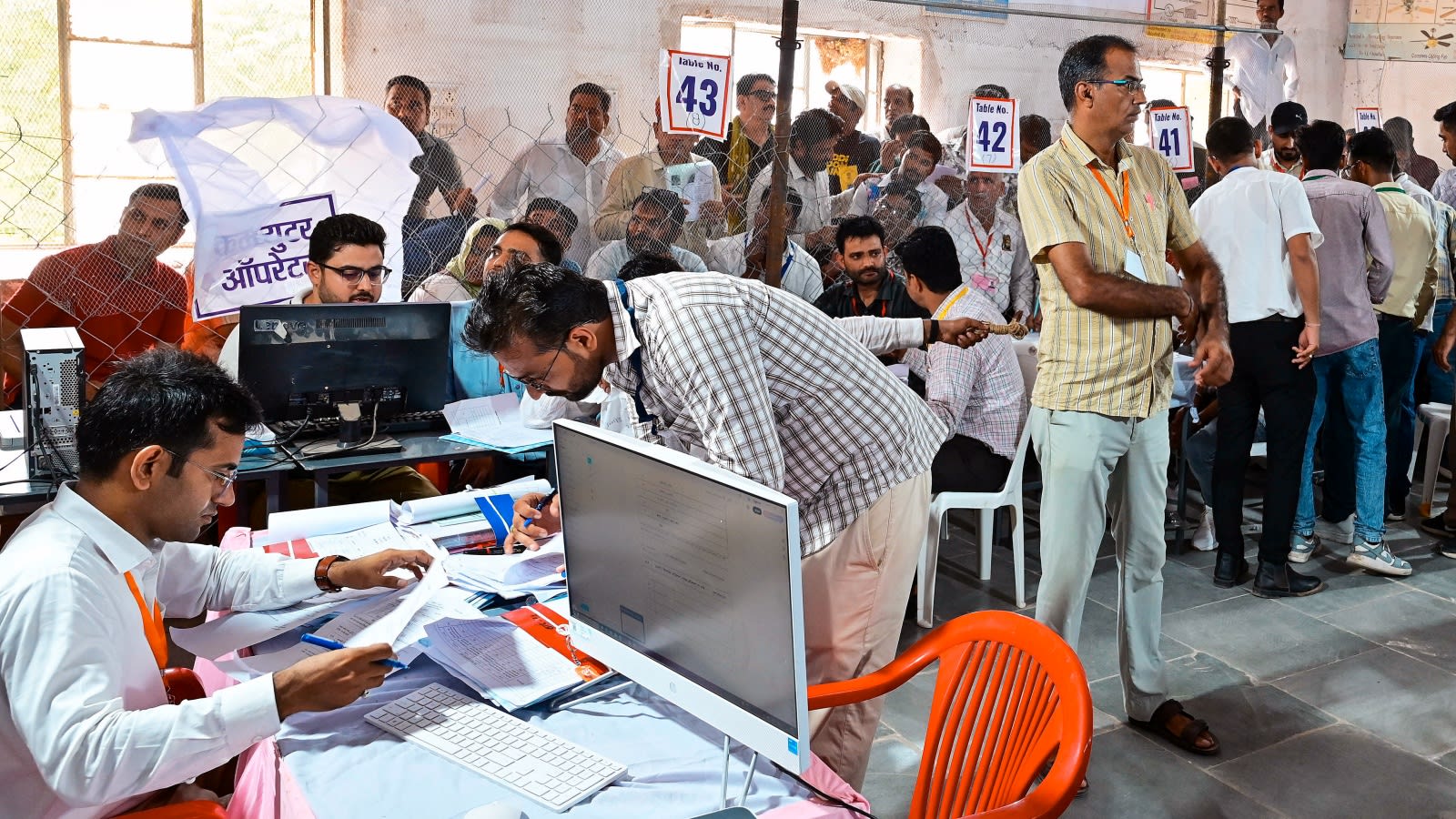
The BJP has secured a majority in the majority of Rajasthan's urban local body elections despite a notable embarrassment in Ward 13 of Parbatsar. While the party maintains state-level momentum, candidate Kailashchand's single-vote result highlights the risks of local candidate selection.
Rajasthan Local Body Polls: A Mixed Bag for the BJP
On September 14, 2026, the political landscape of Rajasthan witnessed a significant electoral exercise as results for 309 Urban Local Bodies (ULBs) were announced. While the overarching narrative of the election is a victory for the ruling Bharatiya Janata Party (BJP), which is set to form boards in a majority of these bodies, the process was punctuated by peculiar individual outcomes that underscore the complexities of local-level campaigning.
The Parbatsar Anomaly
A striking example of the unpredictability of local politics occurred in Ward 13 of the Parbatsar municipality, located in the Didwana-Kuchaman district. BJP candidate Kailashchand faced a crushing defeat, securing only a single vote. The candidate later clarified that he was not even a registered voter in the ward he contested, as his own vote is cast in the neighboring Ward 12. This logistical discrepancy serves as a cautionary tale regarding candidate selection and the importance of localized grassroots connection in municipal elections.
Strategic Context of the Election
The election results arrived at a critical juncture for the administration led by first-time MLA Bhajan Lal Sharma. Prior to the counting, the government faced intense scrutiny, with the opposition Congress party leveraging the High Court’s criticisms regarding the delay in conducting these polls to portray the government as ineffective. By securing a lead in the majority of urban local bodies, the BJP has effectively countered these narratives, providing a much-needed morale boost halfway through its tenure.
Broader Electoral Trends
Data from the State Election Commission indicates a competitive landscape across the 10,245 total wards. By mid-day on September 14, the BJP had secured 1,937 wards compared to the Congress party's 1,646. The presence of a significant number of independent candidates—who claimed 1,040 wards—and regional players like the Rashtriya Loktantrik Party (RLP) and the Bharat Adivasi Party (BAP) suggests that local issues remain highly fragmented and dependent on specific candidate profiles rather than party branding alone.
Implications for 2028
These urban local body elections are widely viewed as a bellwether for the upcoming 2028 Assembly polls. For the BJP, the ability to form boards in a majority of ULBs provides a platform to consolidate influence at the grassroots level. Conversely, the Congress party’s strong showing in specific wards, such as Hina Khanam’s victory in Parbatsar Ward 13 with 376 votes, proves that the opposition remains a potent force capable of capitalizing on local dissatisfaction.
Conclusion
While the BJP has successfully navigated the challenges of incumbency to maintain a dominant position in the state’s urban governance, the case of Kailashchand serves as a reminder that electoral success is never guaranteed. As the state moves toward the 2028 cycle, both major parties will need to refine their candidate selection processes to ensure that political strategy aligns more closely with the local voter base, ensuring that candidates are not only present but also deeply rooted in the wards they seek to represent.
Multiple Citing Sources