Tejashwi targets Centre, says ‘no money for flood-hit, but lamps for PM’s birthday’
Source Entity
PRIYANKA JAISWAL
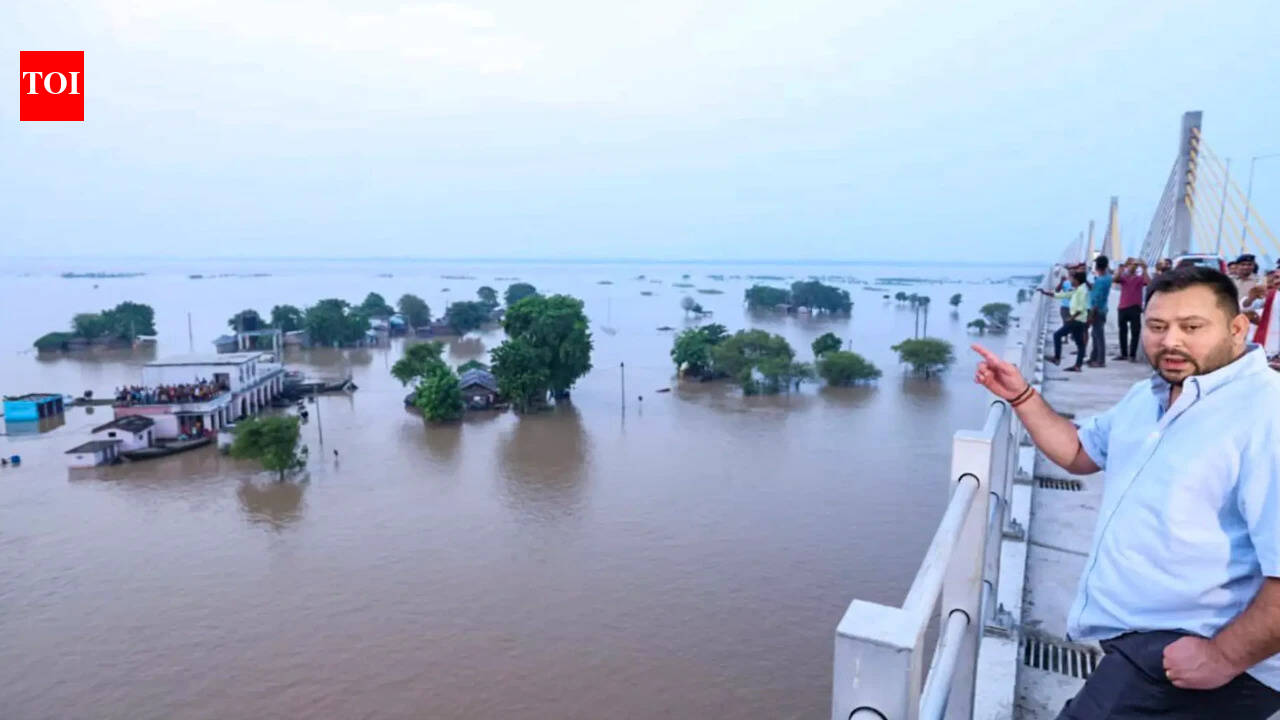
RJD leader Tejashwi Yadav has criticized the Central government for allegedly prioritizing celebrations for the Prime Minister's birthday over providing financial relief to flood-affected regions. The statement highlights ongoing political tensions regarding disaster management and resource allocation.
Political Friction Over Disaster Relief
Recent statements made by RJD leader Tejashwi Yadav have ignited a fresh political debate concerning the federal government's approach to disaster management. By contrasting the lack of central financial assistance for flood-hit regions with the elaborate preparations for the Prime Minister’s birthday, Yadav has sought to frame the narrative around governmental priorities and the perceived indifference of the center toward states in crisis.
The Politics of Resource Allocation
At the heart of this controversy lies the perennial issue of how federal funds are disbursed during natural calamities. In India’s cooperative federalism structure, state governments often rely on the National Disaster Response Fund (NDRF) to mitigate the economic impact of floods. When state leaders like Tejashwi Yadav criticize the delay or absence of these funds, it underlines a fundamental friction between regional needs and central bureaucratic processes, often turning natural disasters into leverage for political mobilization.
Symbolism and Public Perception
Tejashwi’s specific critique regarding the 'lamps' for the Prime Minister's birthday serves as a potent piece of political symbolism. By juxtaposing the imagery of celebratory lighting with the grim reality of flood-affected populations, the opposition aims to influence public sentiment by highlighting a perceived disconnect between the ruling leadership and the ground-level struggles of citizens. This rhetorical strategy is a staple in Indian political discourse, designed to hold the incumbent government accountable for its optics as much as its policy outcomes.
Historical Context of Flood Management
Bihar, the state central to Yadav’s political base, has historically faced severe flooding due to its unique geography and river systems. The recurring nature of these floods means that the demand for central aid is a constant theme in Bihar's political landscape. Historically, this has frequently led to accusations that the central government uses financial assistance as a bargaining chip, a claim that opposition figures consistently highlight to challenge the incumbent's mandate.
Broader Implications for Governance
This incident reflects the broader challenge of transparency in disaster relief distribution. As climate patterns become more erratic, the frequency and intensity of floods are likely to increase, making the debate over central-state fiscal relations more urgent. If the current friction continues, it could lead to deeper polarization, where disaster relief becomes increasingly contingent on political alignment rather than objective assessment of need.
Future Trends in Political Accountability
Moving forward, we can expect opposition leaders to utilize digital platforms to amplify such critiques, putting more pressure on the central government to standardize the timeline for disaster relief. The effectiveness of this strategy will depend on whether the public perceives the lack of aid as a systemic failure or a temporary administrative delay. Ultimately, the discourse initiated by Yadav underscores the growing necessity for a depoliticized framework for disaster management in India.