'Provide evidence or apologise': BJP on Omar Abdullah's 'Operation Lotus' claim
Source Entity
TOI NEWS DESK
Tired of too many ads?...
Political Friction in Jammu and Kashmir: The 'Operation Lotus' Controversy
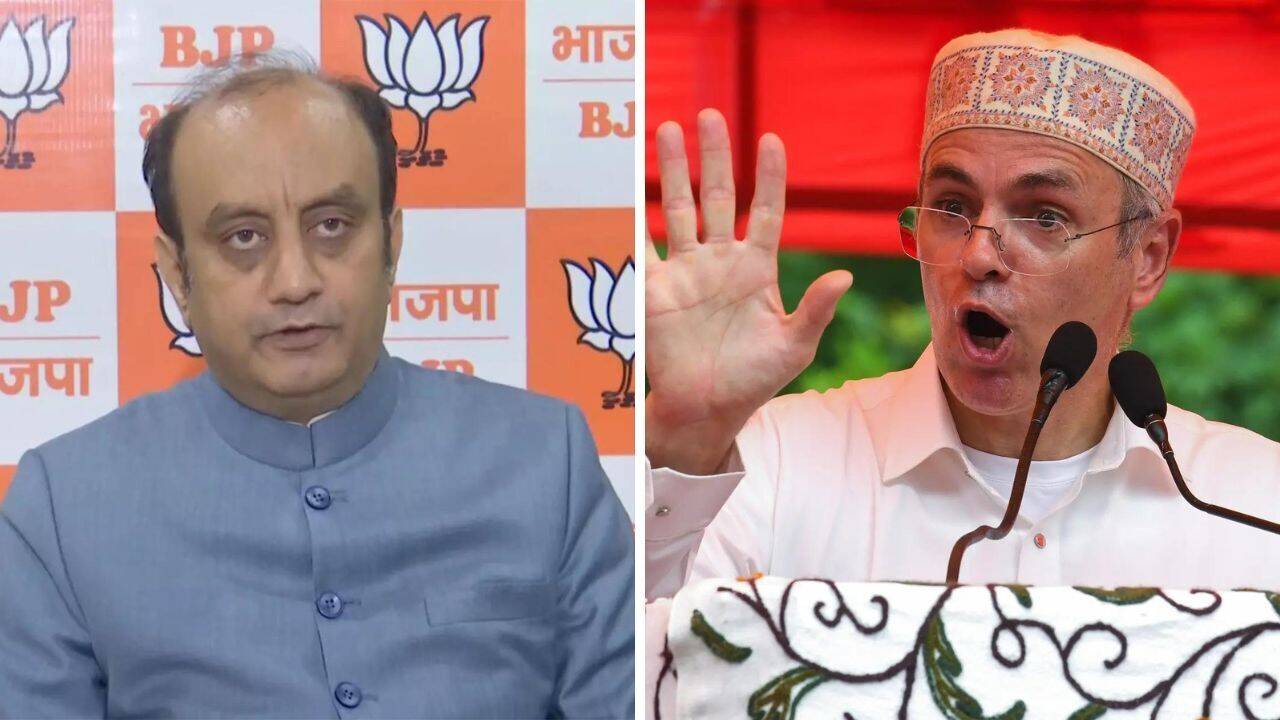
The recent exchange between the Bharatiya Janata Party (BJP) and Omar Abdullah has once again brought the contentious term "Operation Lotus" into the public discourse. Omar Abdullah, a prominent leader of the National Conference, alleged that the BJP was employing strategic maneuvers to destabilize political opponents—a claim that the BJP has swiftly countered by demanding concrete evidence or a formal apology. This confrontation is not merely a war of words but a reflection of the high-stakes political environment in the Union Territory of Jammu and Kashmir, where every political move is scrutinized through the lens of regional stability and central influence.
Understanding 'Operation Lotus' in the Indian Context
To understand the gravity of this clash, one must analyze the term "Operation Lotus." In Indian political parlance, this phrase is frequently used by opposition parties to describe the BJP's alleged strategy of inducing legislators from other parties to defect and join the BJP, thereby toppling state governments or securing a majority where one was not originally won through the popular vote. By invoking this term, Omar Abdullah is suggesting that the central government is attempting to undermine the democratic mandate in Jammu and Kashmir through unethical political engineering, echoing similar accusations made in other Indian states over the last decade.
The BJP's Counter-Narrative and Demand for Accountability
The BJP's reaction—demanding evidence or an apology—is a strategic move to shift the burden of proof onto the accuser. By framing the issue as a lack of evidence, the BJP aims to paint Abdullah's claims as baseless political rhetoric intended to mislead the public and incite instability. This approach serves to protect the party's image as a proponent of democratic legitimacy, while simultaneously putting the National Conference on the defensive. The insistence on an apology indicates that the BJP views these allegations not as political criticism, but as a direct attack on its institutional integrity.
The Broader Implications for J&K Politics
This dispute occurs against the backdrop of a complex political transition in Jammu and Kashmir. Following the reorganization of the state into a Union Territory and the abrogation of Article 370, the region has been navigating a precarious path toward political normalization. The rhetoric surrounding "Operation Lotus" highlights the deep-seated mistrust between regional power centers and the central administration. If such allegations persist without resolution, it could further polarize the electorate and create a perception that political outcomes are decided by back-channel negotiations rather than the will of the voters.
Historical Context and Future Trends
Historically, Jammu and Kashmir has seen numerous shifts in power and coalition instabilities, often influenced by the prevailing relationship between Srinagar and New Delhi. The current tension is a continuation of a long-standing struggle for regional autonomy versus central integration. Looking forward, this trend of aggressive rhetoric suggests that the political space in J&K will remain volatile. As the region moves toward potential statehood restoration and further electoral cycles, the battle for narrative control will intensify. Parties will likely continue to use provocative terminology to mobilize their bases by framing the struggle as one of "regional identity" versus "central imposition."
Conclusion: A Test of Democratic Discourse
Ultimately, the standoff between the BJP and Omar Abdullah underscores the fragility of political trust in the region. While the demand for evidence is a standard political defense, the underlying tension reveals a deeper systemic conflict regarding how power is acquired and maintained in India's border territories. Whether this leads to a formal apology or further escalation, the episode serves as a critical reminder of the ongoing struggle to define democratic legitimacy and political ethics in the volatile landscape of Jammu and Kashmir.