'Not the way': BJP's Narottam Mishra after supporters turn violent over Datia poll ticket pick
Source Entity
Latest News: Today's Latest News Headlines from India & World | Hindustan Times | Hindustan Times
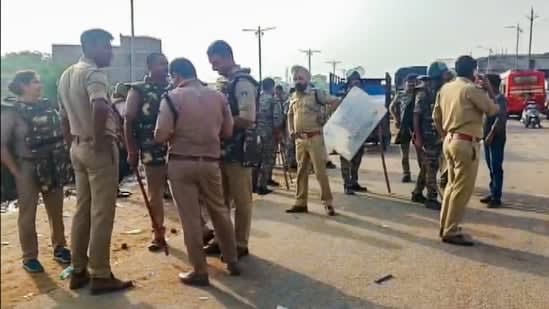
Narottam Mishra said the BJP's decision should be respected and differences should be raised through the party's internal forums.
Internal Friction and Party Discipline: Analyzing the Datia Poll Ticket Unrest
The announcement of candidates for upcoming elections is often the most volatile period for any political organization, and the recent events in Datia serve as a stark reminder of the fragility of local party cohesion. The reports indicate that supporters of the Bharatiya Janata Party (BJP) turned violent following the party's decision regarding the 'poll ticket pick'—the selection of the official candidate to represent the party in the constituency. This reaction underscores a deep-seated tension between local aspirations and the centralized decision-making processes typically employed by major political parties to ensure strategic alignment.
The Catalyst of Conflict: Ticket Distribution
At the heart of the unrest is the process of candidate selection, a high-stakes game where loyalty, caste equations, and local influence collide. When a preferred local leader is overlooked in favor of another, it often creates a vacuum of trust, leading to the kind of volatility seen in Datia. The transition from political disappointment to physical violence suggests a breakdown in communication between the grassroots workers and the party leadership. In many regional contexts, the 'ticket' is not just a path to office but a symbol of prestige and power within the community, making any perceived slight a catalyst for public aggression.
Leadership Intervention: The Role of Narottam Mishra
Narottam Mishra's immediate response—stating that such behavior is "not the way"—is a critical exercise in damage control. As a senior leader, Mishra's role is to pivot the narrative from one of internal chaos to one of disciplined resolution. By explicitly condemning the violence, he is attempting to decouple the party's official image from the actions of its agitated supporters. His insistence that differences be raised through "internal forums" is a strategic move to move the conflict from the streets into controlled environments where the party hierarchy can manage dissent without public scrutiny or opposition exploitation.
The Importance of Internal Dispute Resolution
Political parties maintain internal forums specifically to prevent 'rebellions' or the emergence of independent candidates who might split the vote. The mechanism Mishra referred to is designed to allow disgruntled members to present their case, argue their merits, or negotiate alternative roles within the campaign. When these channels are bypassed or perceived as ineffective, the result is often the kind of street-level volatility witnessed in Datia. The success of the BJP in this region will depend on whether these internal forums can genuinely address the grievances of the supporters or if they are viewed merely as a tool for silencing dissent.
Strategic Implications for the Election
From a strategic standpoint, internal strife is a gift to opposition parties, who can use such incidents to paint the ruling party as fractured and unstable. The violence in Datia creates a narrative of instability that could alienate neutral voters who prioritize order and governance. Furthermore, if the supporters of the rejected candidate decide to sabotage the official nominee's campaign from within, the BJP faces a significant risk of electoral loss in that specific constituency. The party must now work doubly hard to reconcile the warring factions to ensure a unified front during the polling phase.
Regional Political Dynamics and Future Trends
Looking at the broader landscape of Madhya Pradesh politics, where Datia is situated, the trend of 'ticket rebellion' is a recurring theme. As parties move toward more data-driven or centralized selection processes, the clash with traditional local power brokers is likely to increase. This event suggests that while the BJP has a strong organizational structure, the human element of political ambition remains a volatile variable. Future trends indicate that parties may need to implement more transparent, pre-announced criteria for ticket distribution to mitigate the shock and subsequent anger of overlooked candidates.
Conclusion
The incident in Datia is a microcosm of the challenges inherent in managing a mass-based political party. While Narottam Mishra's call for discipline is the correct institutional response, the underlying anger reveals a gap between the party's leadership and its ground-level executors. The ability of the BJP to transform this volatility into a disciplined campaign will be the deciding factor in their success in the Datia constituency. Ultimately, the event highlights that in the high-pressure environment of Indian elections, the management of internal dissent is just as important as the battle against the political opposition.
Verification Required?