BJP's Swipe At Rahul Gandhi After "Jhooth Ki Goonj" Fact-Checks Him
Source Entity
NDTV News Search Records Found 1000
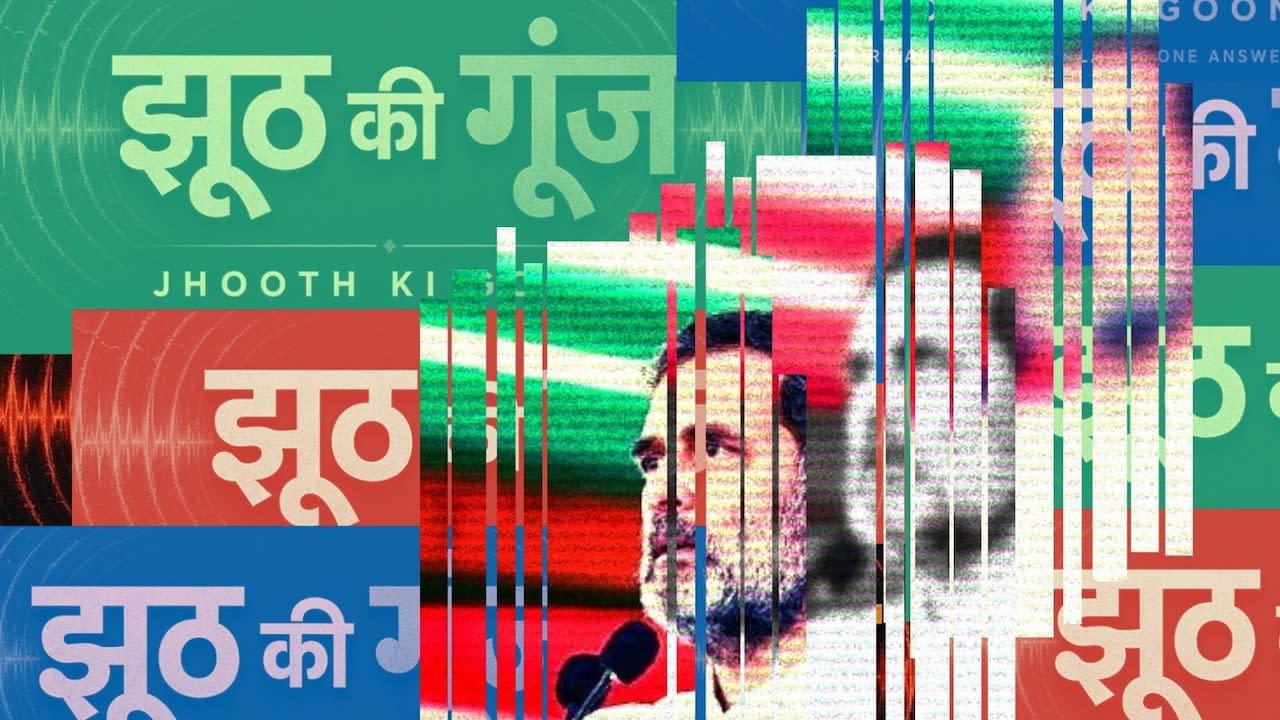
The BJP has launched a critique against Rahul Gandhi, citing a website called 'Jhooth Ki Goonj' that claims to have fact-checked 40 of his recent statements. This initiative marks a strategic escalation in political communication and digital discourse regarding accountability in Indian politics.
The Digital Battlefield: Fact-Checking in Indian Politics
The recent emergence of the platform 'Jhooth Ki Goonj' has introduced a new layer of scrutiny into the Indian political landscape. By focusing its efforts on analyzing 40 specific statements made by Congress leader Rahul Gandhi, the platform has become a focal point for the Bharatiya Janata Party (BJP) to challenge the opposition's narrative. This development underscores the increasing reliance on digital fact-checking repositories as tools for political signaling and public discourse management.
Methodology and Political Implications
The claim that a repository has parsed 40 distinct statements suggests a systematic approach to monitoring political communication. In the hyper-connected era of Indian politics, the ability to rapidly archive and critique an opponent's public address is a potent strategic asset. By highlighting these statements, the BJP is not merely engaging in debate but is actively shaping the parameters of truth for the electorate, forcing the opposition to defend its claims in a public, digital forum.
The Evolution of Political Accountability
Historically, political disagreements were confined to parliamentary debates or traditional media interviews. Today, the rise of specialized portals like 'Jhooth Ki Goonj' represents a shift toward data-driven political warfare. This trend forces political figures to be more precise in their rhetoric, as every claim is now subject to immediate verification or refutation by partisan-aligned fact-checking entities. The objective here is to maintain a consistent narrative that resonates with the base while simultaneously eroding the credibility of the political adversary.
The Role of Digital Narratives
Digital platforms have fundamentally altered how political campaigns function. When a political party adopts a third-party fact-check as part of its official communication strategy, it amplifies the reach of that narrative significantly. By leveraging the findings of 'Jhooth Ki Goonj,' the BJP effectively delegates the labor of critique to an external source, allowing them to maintain an official distance while still reaping the benefits of the negative publicity generated against Rahul Gandhi.
Future Trends in Political Discourse
As India heads into future electoral cycles, we can expect this trend of 'counter-narrative fact-checking' to intensify. The reliance on curated data sets—such as the 40 statements cited here—will likely become a standard playbook for all major political parties. This creates a fragmented information ecosystem where voters are presented with competing sets of 'facts,' ultimately placing the burden of critical analysis on the citizenry to navigate between polarized digital archives.
Conclusion
In summary, the use of 'Jhooth Ki Goonj' to target Rahul Gandhi's statements serves as a clear illustration of modern political maneuvering. By institutionalizing the critique of opposition rhetoric, the BJP is reinforcing its digital presence and ensuring that the narrative surrounding the Congress leader's statements remains under constant observation. This development highlights the necessity for transparency and rigorous scrutiny in an age where digital information is the primary battleground for political supremacy.
Verification Required?