British chess prodigy, 11, becomes youngest woman grandmaster
Source Entity
BBC News
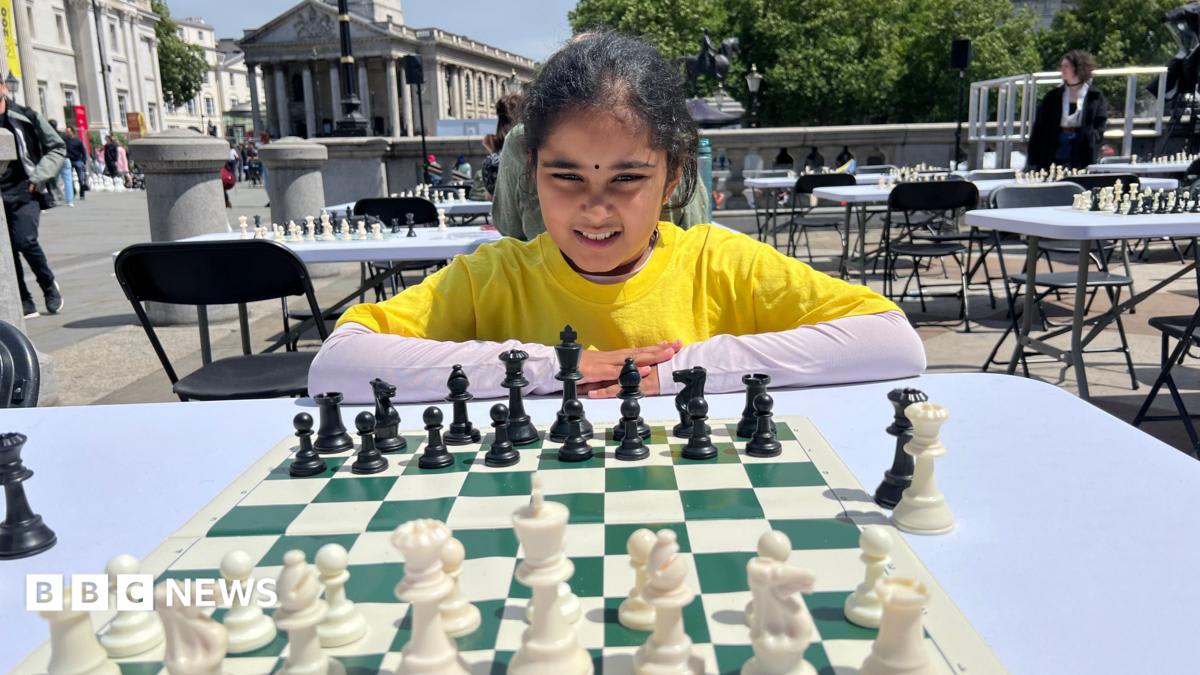
11-year-old British chess prodigy Bodhana Sivanandan has made history as the youngest woman to earn the Woman Grandmaster (WGM) title. She secured this milestone at the 46th Chess Olympiad in Uzbekistan while representing England.
A Historic Achievement in Chess
Bodhana Sivanandan, an 11-year-old chess prodigy from Harrow, north-west London, has etched her name into the annals of sporting history. By securing her third and final Woman Grandmaster (WGM) norm at the 46th Chess Olympiad in Samarkand, Uzbekistan, she has officially become the youngest player ever to achieve this prestigious title. This accomplishment marks a significant turning point in international chess, as Sivanandan continues to shatter long-standing age barriers that have defined the sport for decades.
Breaking the Record
For years, the record for the youngest WGM was held by Russian Grandmaster Kateryna Lagno, who achieved the feat at age 12. Sivanandan’s performance, which saw her complete the requirements—including crossing the necessary 2300 FIDE rating threshold—at just 11 years old, is a testament to her extraordinary strategic capability. By outperforming the benchmarks set by legends like Lagno and former world champion Hou Yifan, Sivanandan has signaled the arrival of a new generation of talent in the global chess arena.
Performance at the Olympiad
Representing England, Sivanandan was tasked with the immense pressure of playing on the top board throughout all 11 rounds of the Olympiad. Scoring an impressive 8.0/11, she not only secured her WGM title but also proved her merit against the world's elite players. This performance helped the England women's team secure a 15th-place finish, demonstrating that her inclusion was based on pure competitive capability rather than just her status as a prodigy.
A Legacy of Firsts
This achievement is merely the latest in a series of historic milestones for Sivanandan. Having previously been crowned Britain’s youngest women’s chess champion and recognized as the youngest person to represent England internationally in any sport, she is rapidly building a legacy that transcends traditional sporting boundaries. Her ability to handle the mental rigors of high-level competition at such a young age is rare, distinguishing her from her peers and placing her in a class of her own.
Broader Implications and Future Trends
Sivanandan's rise suggests a shifting landscape in chess, where specialized training and early exposure to elite competition are accelerating the development of young players. As she continues to compete on the world stage, the chess community will undoubtedly watch to see if she can target the full Grandmaster (GM) title, a distinction currently held by elite players like Hou Yifan, who achieved that status at 14. Her journey highlights the increasing importance of youth development programs and the global accessibility of high-level chess instruction.
Conclusion
Bodhana Sivanandan’s historic victory in Samarkand is more than just a record-breaking statistic; it is a profound display of skill and composure. As she continues to evolve as a player, her trajectory remains one of the most exciting stories in modern sports. With her stated goal to "keep making history," the chess world remains eager to see how this young prodigy will continue to challenge the limits of the game.