Bombay High Court bats for afforestation near Mumbai-Ahmedabad bullet train project
Source Entity
The Indian Express
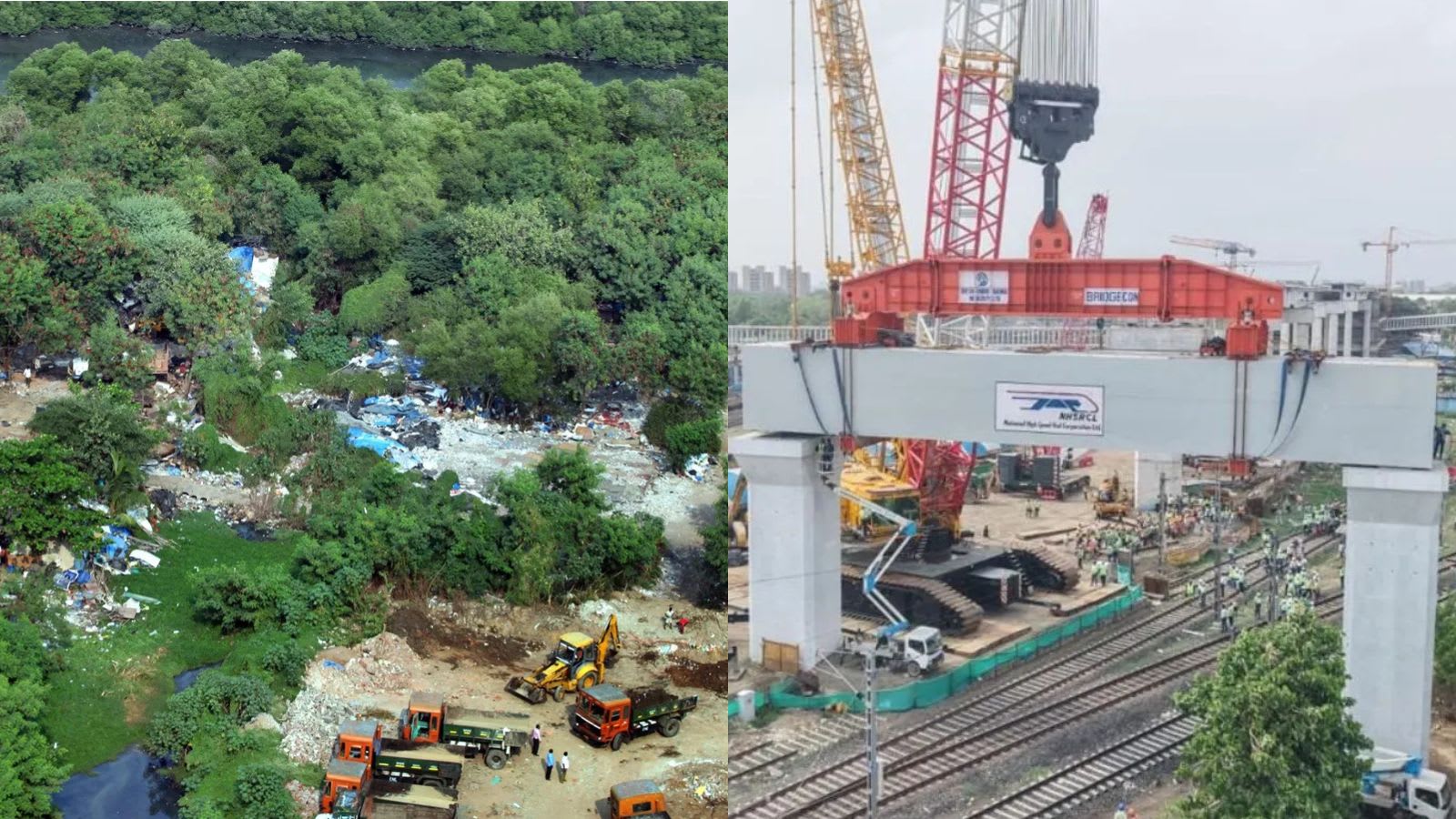
The Bombay High Court has issued a stern warning regarding the environmental impact of the Mumbai-Ahmedabad bullet train project, urging rigorous afforestation to prevent a future where urban air quality necessitates the use of oxygen cylinders by citizens.
Judicial Intervention for Ecological Balance
The Bombay High Court's recent observations regarding the Mumbai-Ahmedabad bullet train project underscore a critical tension in modern India: the struggle to balance ambitious, high-tech infrastructure development with the fundamental right to a healthy environment. By using the stark imagery of citizens carrying oxygen cylinders, the court has moved beyond mere legal technicalities to highlight a looming public health crisis. This intervention serves as a reminder that while high-speed rail represents progress and connectivity, such progress is hollow if it compromises the very air the population breathes.
The Gravity of the Court's Warning
The remark that "a day will not be far when Mumbaikars will have to carry oxygen cylinders" is a powerful piece of judicial rhetoric designed to shock the administration into action. This is not merely hyperbole; it reflects the growing anxiety over Mumbai's deteriorating air quality and the loss of green cover. In the context of the bullet train project, which requires significant land acquisition and the clearing of vast tracts of vegetation, the court is questioning whether the current afforestation efforts are sufficient or merely a bureaucratic box-ticking exercise. The focus here is on the quality and efficacy of the trees being planted, rather than just the number of saplings recorded on paper.
Contextualizing the Bullet Train Project
The Mumbai-Ahmedabad High-Speed Rail (MAHSR) project is one of India's most ambitious infrastructure undertakings, funded largely by Japan. While it promises to revolutionize travel between the two commercial hubs, it has faced numerous hurdles, including land acquisition disputes and environmental concerns. The project's path cuts through diverse ecosystems, and the removal of existing flora to make way for tracks and stations creates a vacuum in the local carbon sink. The court's insistence on afforestation is a direct response to the ecological debt created by this massive engineering feat.
The Role of Compensatory Afforestation
Historically, the Indian government has relied on 'compensatory afforestation'—the practice of planting trees elsewhere to make up for those cut down during a project. However, environmentalists and now the judiciary are increasingly skeptical of this model. Replacing an established, biodiverse urban forest or a mangrove patch with a monoculture plantation in a remote area does not provide the same immediate air-purification or cooling benefits to the local urban population. The Bombay High Court's insistence on afforestation near the project suggests a push for 'localized mitigation,' ensuring that the environment immediately surrounding the infrastructure remains breathable.
Broader Implications for Urban Planning
This case sets a significant precedent for other mega-projects across India. As the nation pursues 'Gati Shakti' (a national master plan for multi-modal connectivity), the judiciary is signaling that environmental sustainability cannot be an afterthought. The court is essentially advocating for 'Green Infrastructure,' where the environmental cost is integrated into the project's design from the outset. If the court continues to scrutinize the ecological impact of the bullet train, it will likely force the National High Speed Rail Corporation Limited (NHSRCL) and state governments to adopt more transparent and scientifically backed reforestation strategies.
Future Trends and Predictions
Looking forward, we can expect a shift toward more rigorous Environmental Impact Assessments (EIAs) that are subject to judicial review. The 'oxygen cylinder' comment suggests that the courts may begin to link infrastructure projects directly to public health outcomes. We may see the emergence of mandatory 'green belts' along high-speed corridors, where afforestation is not just a compensatory measure but a permanent part of the project's operational footprint. This shift will likely lead to a more holistic approach to development, where the speed of travel is balanced by the sustainability of the landscape.
Summary
In conclusion, the Bombay High Court's stance on the Mumbai-Ahmedabad bullet train project is a vital check on unchecked industrialization. By prioritizing afforestation and warning of a dire atmospheric future, the court is championing the cause of urban ecology over mere engineering efficiency. The outcome of this judicial push will determine whether India's leap into high-speed transit is accompanied by a commitment to the environmental health of its citizens.