CBI court frames corruption charges against suspended Punjab DIG Bhullar, aide
Source Entity
Latest News: Today's Latest News Headlines from India & World | Hindustan Times | Hindustan Times
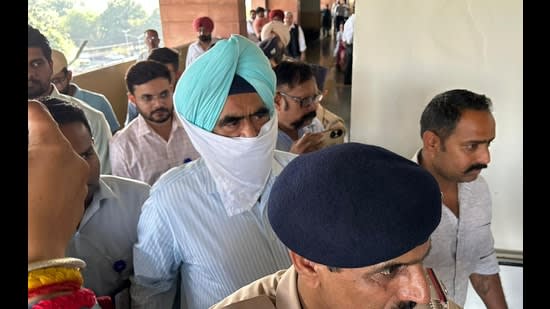
Special CBI judge Bhawna Jain said a prima facie case is made out against the accused after considering the CBI’s “final report and the material placed on record”
Judicial Accountability: CBI Court Frames Charges Against Punjab DIG
In a significant move toward administrative accountability, a Special CBI court has officially framed corruption charges against a suspended Deputy Inspector General (DIG) of the Punjab Police, identified as Bhullar, along with an aide. Special CBI Judge Bhawna Jain reached this decision after a thorough review of the final report submitted by the Central Bureau of Investigation (CBI) and the accompanying evidentiary materials. This legal milestone indicates that the judicial system has found sufficient ground to proceed with a full trial, marking a critical transition from the investigation phase to the adjudication phase of the legal process.
The Legal Significance of a Prima Facie Case
The court's determination that a "prima facie" case has been made out is a pivotal legal juncture. In the context of Indian criminal law, a prima facie finding does not constitute a final conviction; rather, it signifies that the evidence presented by the prosecution is sufficient to establish a reasonable suspicion that the accused committed the crime. By framing these charges, Judge Bhawna Jain has validated that the CBI's investigation provided enough material evidence to justify a trial. This prevents the premature dismissal of the case and ensures that the accused must now answer specific allegations in a court of law, reinforcing the principle that high-ranking officials are not immune to judicial scrutiny.
Institutional Oversight and the Role of the CBI
The involvement of the Central Bureau of Investigation (CBI) highlights the gravity of the allegations. As India's premier investigating agency, the CBI is often called upon to handle cases involving high-level corruption or systemic failures within state apparatuses to ensure an impartial probe. The transition from a CBI investigation to the framing of charges in a special court underscores the rigorous process of vetting evidence. This case reflects the ongoing effort to purge corruption from the upper echelons of state police forces, where the concentration of power can often lead to the misuse of authority for personal gain.
Implications for Law Enforcement Integrity in Punjab
The suspension and subsequent charging of a DIG—a high-ranking officer in the police hierarchy—send a powerful signal to the entire Punjab Police force. Corruption at the leadership level can erode public trust in law enforcement and compromise the integrity of the justice system. When a senior officer is held accountable, it serves as a deterrent to other officials who might consider leveraging their position for illicit benefits. Moreover, the fact that an aide was also charged suggests a systemic or networked nature of the corruption, indicating that the investigation sought to uncover not just a single bad actor, but the supporting infrastructure that enabled the alleged misconduct.
Systemic Challenges and Administrative Consequences
Beyond the immediate legal proceedings, this event brings to light the systemic challenges of maintaining transparency within state police departments. The process of suspending an officer pending investigation is a standard administrative safeguard, but the framing of charges moves the matter from an administrative issue to a criminal one. This shift often triggers a series of internal reviews within the department to identify gaps in oversight that allowed such corruption to occur. It prompts a necessary conversation regarding the checks and balances required to monitor the financial and professional conduct of senior police leadership.
Future Legal Trajectory and Precedent
Looking forward, the case will now move into the trial stage, where the CBI must prove the charges beyond a reasonable doubt. The outcome of this trial will likely set a precedent for how corruption cases involving senior Punjab police officials are handled in the future. If a conviction is secured, it will reinforce the narrative of 'zero tolerance' for corruption in public service. Conversely, the trial will also provide the accused with the opportunity to challenge the CBI's findings, ensuring that the legal process remains fair and balanced. The conclusion of this case will be closely watched as a litmus test for the efficacy of the CBI's anti-corruption mandates in state-level governance.
Summary: The framing of corruption charges against suspended DIG Bhullar and his aide by Special CBI Judge Bhawna Jain represents a critical step in upholding the rule of law. By establishing a prima facie case, the court has ensured that allegations of high-level corruption are met with formal legal proceedings, emphasizing accountability and the necessity of integrity within the Punjab Police force.
Verification Required?