CDS may soon present theaterisation strategy to defence minister Rajnath Singh
Source Entity
Latest News: Today's Latest News Headlines from India & World | Hindustan Times | Hindustan Times
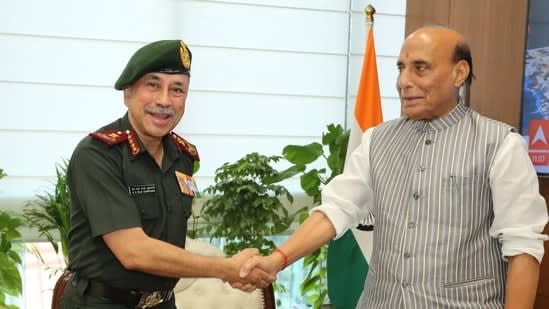
Under the proposal, four new posts of four star commands, equivalent to the current service chiefs, will be created, including that of the VCDS.
Strategic Overhaul: The Road to Integrated Theatre Commands
India is currently navigating one of the most significant structural transformations in its military history. The impending presentation of a theaterisation strategy by the Chief of Defence Staff (CDS) to Defence Minister Rajnath Singh represents a pivotal move toward "jointness"—the seamless integration of the Army, Navy, and Air Force. For decades, the Indian Armed Forces have operated largely in silos, with each service maintaining its own command structure and operational philosophy. Theaterisation aims to dismantle these silos, replacing service-specific commands with unified, geographically-based commands that can deploy assets from all three wings under a single operational head.
The Architecture of Command: Four-Star Integration
Central to the CDS's proposal is the creation of four new four-star command posts. This is a critical administrative and strategic detail; by making these commanders equivalent in rank to the current service chiefs, the government ensures that theater commanders possess the necessary authority to direct multi-domain operations without being hindered by inter-service hierarchy or bureaucratic friction. The inclusion of the Vice Chief of Defence Staff (VCDS) in this high-level restructuring suggests a desire to create a robust chain of command that can translate strategic directives from the Ministry of Defence into tactical execution on the ground, at sea, and in the air.
Enhancing Operational Synergy and Resource Optimization
From a strategic standpoint, the shift toward integrated theatre commands is designed to optimize resource allocation and response times. In a traditional setup, coordinating a joint operation requires extensive liaison between the Army, Navy, and Air Force headquarters, which can lead to delays in high-pressure combat scenarios. Under a theaterised model, a single commander overseeing a specific geographic region (such as the northern border or the Indian Ocean Region) can mobilize assets based on the immediate need rather than service-specific mandates. This ensures that the most effective tool—whether it be a fighter jet, a naval destroyer, or an infantry division—is deployed based on the objective rather than the branch of service.
Historical Context and Global Benchmarking
This move mirrors global military trends, most notably the United States' Combatant Command (COCOM) model, where unified commands manage specific global regions regardless of the service branch. India's journey toward this model began in earnest with the creation of the CDS position in 2019, which was designed to provide single-point military advice to the government and act as the catalyst for jointness. The current proposal is the logical evolution of that mandate, moving from the conceptual stage of "jointness" to the practical implementation of integrated operational commands.
Navigating Institutional Challenges
Despite the clear strategic advantages, the transition to theaterisation is likely to face institutional headwinds. The primary challenge lies in the preservation of "service identity." The Army, Navy, and Air Force each have distinct cultures, training doctrines, and internal hierarchies. Merging these into a unified command structure requires a fundamental shift in organizational psychology. Furthermore, the logistical challenge of integrating disparate communication systems and procurement cycles into a unified theater framework will require significant investment and meticulous planning to avoid operational gaps during the transition.
Future Outlook: A Multi-Domain Fighting Force
Looking ahead, the successful implementation of this strategy will transform India into a more agile and lethal fighting force. As modern warfare evolves to include cyber, space, and electronic warfare, the ability to integrate these domains under a unified command becomes a necessity rather than a luxury. The creation of these four-star posts will likely be the first step in a broader rollout of theater commands that will redefine India's defense posture against multi-front threats, ensuring that the nation can project power more efficiently and react with greater speed and precision.
Summary of Strategic Impact
In conclusion, the CDS's proposal to create four-star theater commands marks a transition from a service-centric military to a capability-centric one. By empowering theater commanders and streamlining the hierarchy, India is positioning itself to better handle the complexities of 21st-century warfare, provided it can successfully navigate the internal cultural shifts required for such a massive reorganization.
Verification Required?