Ludhiana: Traffic hit for over 2 hrs as protesters block NH seeking arrest of influencer
Source Entity
Latest News: Today's Latest News Headlines from India & World | Hindustan Times | Hindustan Times
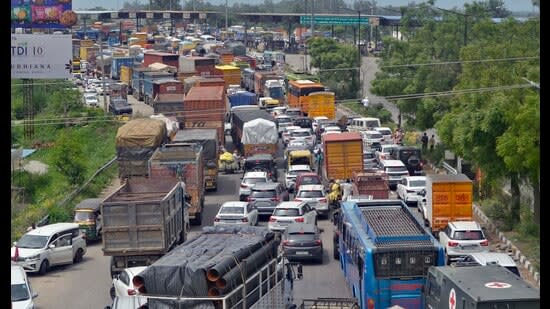
Over 2-km traffic jam leaves commuters stranded for hours amid protest over the delayed arrest of the influencer booked for hurting religious sentiments
Public Unrest in Ludhiana: Infrastructure Paralysis Over Digital Content
In a stark demonstration of how digital content can trigger real-world volatility, the city of Ludhiana recently witnessed significant civil disruption. Protesters took to the streets, blocking a critical stretch of the National Highway (NH) for over two hours. The primary catalyst for this mobilization was the perceived delay in the arrest of a social media influencer who had been booked for allegedly hurting religious sentiments. The resulting chaos led to a massive traffic jam extending over two kilometers, leaving hundreds of commuters stranded and paralyzing a vital artery of regional transport.
The Logistics of Disruption in an Industrial Hub
Ludhiana serves as one of India's most significant industrial hubs, making its National Highway connections critical for the movement of goods and labor. When a primary highway is blocked, the ripple effect is felt immediately across the local economy. The two-kilometer jam reported in this incident is not merely a commuter inconvenience but a disruption of the supply chain. Such protests highlight a growing trend where critical infrastructure is leveraged as a bargaining chip to pressure law enforcement agencies into taking faster punitive action against individuals.
The Digital-Physical Nexus and Religious Sensitivity
The core of this conflict lies in the intersection of social media influence and deep-seated religious sentiments. In the current digital era, influencers possess the reach to disseminate content to millions instantaneously. When such content is perceived as blasphemous or offensive to a religious group, the reaction is often swift and physical. This event underscores the volatile nature of 'digital grievances,' where an online post transitions into a street protest within a short timeframe. The demand for an arrest indicates a lack of trust in the pace of the legal process, leading citizens to seek 'justice' through public disruption.
Legal Framework and Law Enforcement Challenges
From a legal standpoint, the influencer in question was already 'booked,' implying that a First Information Report (FIR) had likely been filed under sections related to promoting enmity between different groups or hurting religious feelings (historically under Section 295A of the IPC, now reflected in the Bharatiya Nyaya Sanhita). The protest erupted specifically because the arrest was delayed. This places the Ludhiana police in a precarious position: they must balance the due process of law—which may involve verifying evidence or providing legal recourse to the accused—against the immediate pressure of an angry mob threatening public order.
Broader Social Implications and Future Trends
This incident is symptomatic of a broader trend across India where social media is increasingly becoming a flashpoint for communal tension. The transition from a digital offense to a physical blockade suggests that the 'court of public opinion' is moving faster than the judicial system. As influencer culture grows, we can predict an increase in these types of hyper-local protests. There is a growing risk that the disruption of essential services, such as highways, will become the default method for groups to signal their dissatisfaction with the speed of police interventions in cases of online hate speech or religious offense.
Conclusion: The Need for Rapid Resolution
Ultimately, the Ludhiana traffic crisis is a reminder of the fragility of urban order in the face of emotional and religious triggers. While the right to protest is fundamental, the blockage of a National Highway creates a conflict between the rights of the protesters and the rights of the general public to freedom of movement. To prevent such occurrences in the future, there is an urgent need for law enforcement to implement more transparent communication regarding the status of high-profile arrests and for a more robust framework to handle digital content disputes before they escalate into infrastructure-threatening protests.
Verification Required?