Government colleges being developed as Model Sanskriti Colleges: Haryana CM
Source Entity
Latest News: Today's Latest News Headlines from India & World | Hindustan Times | Hindustan Times
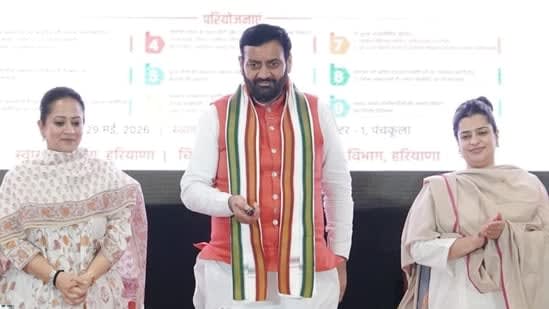
The Government's objective is to ensure that every youth in the state has access to quality higher education close to home.
Transforming Higher Education: The Rise of Model Sanskriti Colleges in Haryana
In a significant move to overhaul the state's educational landscape, the Chief Minister of Haryana has announced the development of government colleges into Model Sanskriti Colleges. This initiative is designed to bridge the gap between urban and rural education, ensuring that quality higher education is not a privilege reserved for those who can migrate to major cities, but is instead available to every youth close to their home. By rebranding and upgrading these institutions, the state government aims to create centers of excellence that blend academic rigor with cultural values.
Decentralizing Quality Education
The core philosophy behind the 'Model Sanskriti' initiative is the decentralization of academic resources. Historically, students in rural Haryana have faced significant hurdles, including high transportation costs and housing challenges, when pursuing degrees from premier institutions. By establishing 'Model' colleges locally, the government is effectively lowering the barrier to entry for higher education. This is particularly critical for female students and marginalized communities, for whom proximity to home is often a decisive factor in whether they continue their studies beyond the secondary level.
Integrating Culture with Modern Pedagogy
The term 'Sanskriti' (meaning culture or heritage) suggests that these colleges will not merely be centers for vocational or academic training, but will also focus on the holistic development of students. In the context of Indian education, this often implies a synthesis of modern scientific inquiry and traditional values. By integrating cultural awareness into the curriculum of these model colleges, the Haryana government is likely attempting to foster a generation of professionals who are globally competitive yet deeply rooted in their local identity and ethics.
Infrastructure and Academic Upgradation
To transition a standard government college into a 'Model' institution, substantial investments in infrastructure and human capital are required. This process likely involves the modernization of laboratories, the digitalization of libraries, and the recruitment of highly qualified faculty. The 'Model' designation serves as a benchmark for quality, suggesting that these colleges will be subject to stricter performance metrics and higher standards of governance than traditional state colleges. This move signals a shift toward a more competitive and quality-driven public education system in the state.
Alignment with National Educational Goals
This state-level initiative aligns closely with the broader objectives of the National Education Policy (NEP) 2020, which emphasizes multidisciplinary education and the increase of the Gross Enrolment Ratio (GER) in higher education. By making colleges more accessible and improving their quality, Haryana is positioning itself to meet these national targets. The focus on 'local access' mirrors the NEP's goal of creating a more inclusive educational ecosystem that reaches the farthest corners of the country.
Long-term Socio-Economic Implications
Looking forward, the success of the Model Sanskriti Colleges could lead to a significant socio-economic ripple effect across Haryana. As local youth acquire higher qualifications without leaving their hometowns, there is a higher probability of 'brain gain' for rural areas, where educated youth may start local enterprises or improve community governance. Furthermore, reducing the financial burden of migration for education can lead to increased disposable income for rural families, stimulating local economies.
Conclusion
The transformation of government colleges into Model Sanskriti Colleges represents a strategic effort by the Haryana government to democratize quality education. By focusing on accessibility, cultural integration, and infrastructure upgrades, the state is attempting to create a sustainable model for higher education that empowers its youth while preserving its cultural fabric. If executed effectively, this initiative could serve as a blueprint for other Indian states seeking to balance modernization with accessibility.
Verification Required?