West Asia dust storm wipes out Delhi’s monsoon air gains, AQI nears ‘very poor’
Source Entity
Sophiya Mathew
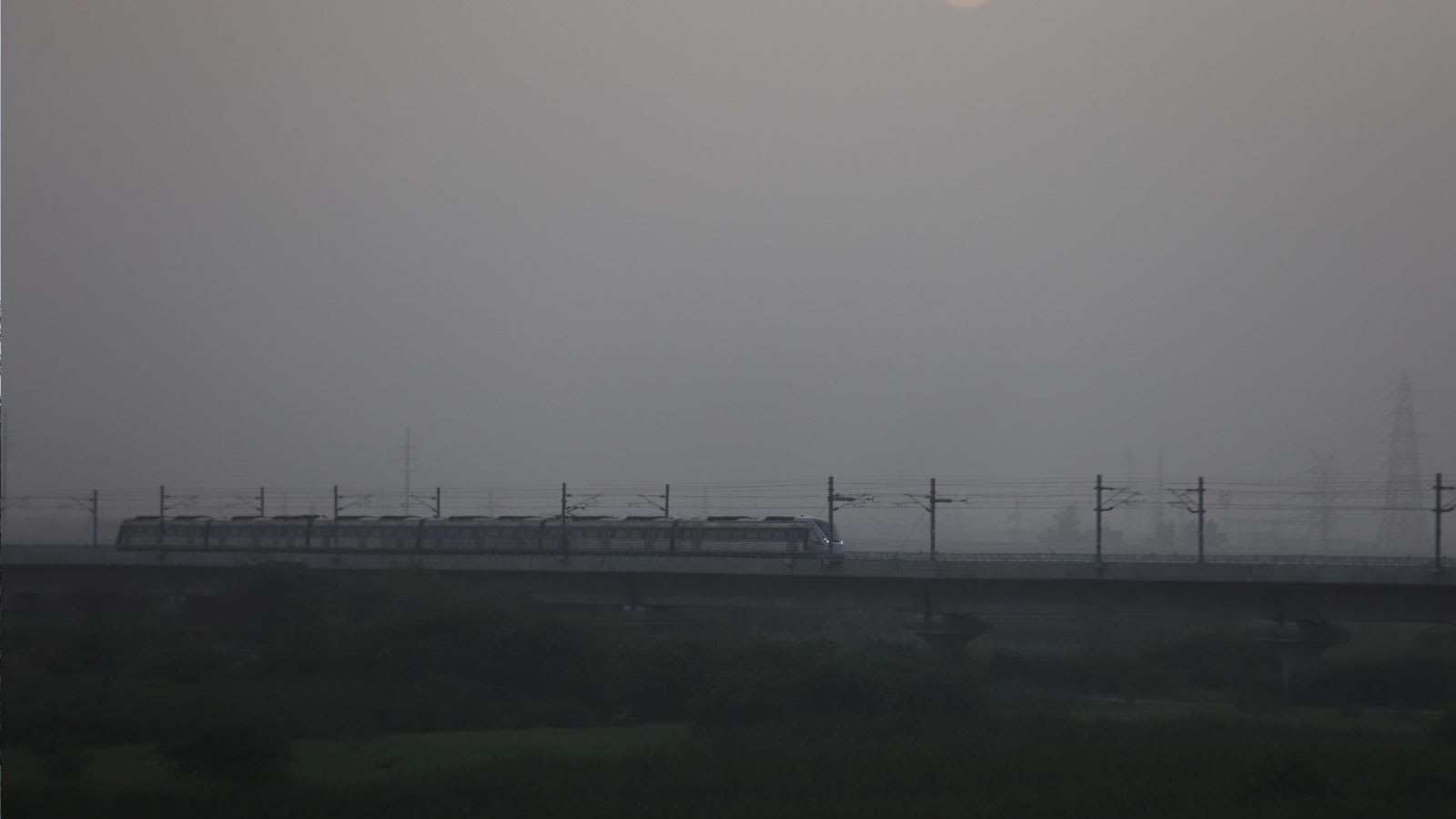
A Namo Bharat train runs on a hazy day as Delhi's air quality slipped into the 'poor' category on Sunday. The Commission for Air Quality Management (CAQM) said the decline was caused by transnational ...
The Fragility of Urban Air: West Asian Dust Storms and Delhi's AQI
Delhi's battle with air pollution is often framed as a local struggle against crop residue burning and vehicular emissions. However, the recent surge in particulate matter, which has pushed the Air Quality Index (AQI) into the 'poor' category and is threatening to reach 'very poor' levels, highlights a more complex, transnational dimension. A massive dust storm originating in West Asia has traveled thousands of kilometers to blanket the National Capital Region (NCR), effectively wiping out the atmospheric cleaning effects provided by the recent monsoon rains.
The Mechanism of Transnational Dust Transport
The phenomenon described by the Commission for Air Quality Management (CAQM) involves the transport of mineral dust from the arid regions of West Asia and the Arabian Peninsula. These dust plumes are carried by high-altitude winds across the Arabian Sea and into the Indo-Gangetic Plain. Unlike the smog typically seen in winter, which is composed of organic carbon and nitrates, this pollution spike is dominated by PM10 (coarse particulate matter). This event underscores that Delhi's air quality is not merely a product of local governance or regional farming practices but is susceptible to large-scale meteorological shifts and geological events occurring far beyond India's borders.
Reversing the Monsoon Advantage
Typically, the monsoon season acts as a natural scrubber for Delhi's atmosphere. Heavy rainfall facilitates 'wet deposition,' where water droplets bind with pollutants and pull them to the ground, significantly lowering the AQI. The sudden influx of West Asian dust is particularly disruptive because it occurs just as the city was experiencing a rare period of breathable air. This reversal demonstrates the volatility of the region's environment; the 'monsoon gains' are fragile and can be neutralized rapidly by external environmental shocks, leaving the city's most vulnerable populations exposed to respiratory distress once again.
Impact on Infrastructure and Public Health
The visible haze accompanying this dust storm has already begun to impact daily operations, as evidenced by the reduced visibility around key infrastructure like the Namo Bharat trains. Beyond visibility, the health implications of mineral dust are significant. While different from the chemical toxicity of industrial smog, high concentrations of coarse dust can trigger asthma attacks, irritate the upper respiratory tract, and exacerbate chronic obstructive pulmonary disease (COPD). The sudden transition from clean monsoon air to 'poor' air quality often catches the public off-guard, leading to a spike in emergency clinic visits for respiratory ailments.
Broader Environmental Implications and Future Trends
From a broader ecological perspective, the increasing frequency and intensity of these transnational dust events may be linked to global climate change and desertification in the Middle East and North Africa (MENA) region. As these areas become more arid, the volume of loose topsoil available for wind transport increases. If this trend continues, Delhi may face a new seasonal challenge: 'dust seasons' that bridge the gap between the monsoon and the winter smog. This necessitates a shift in urban planning and public health warnings to include meteorological alerts for dust transport, rather than focusing solely on local emission sources.
Conclusion
The current air quality crisis in Delhi serves as a stark reminder that the city exists within a global atmospheric system. While local efforts to curb pollution are essential, the influence of West Asian dust storms proves that the NCR is vulnerable to transnational environmental events. To maintain the gains of the monsoon and protect public health, there is an urgent need for integrated regional monitoring and a deeper understanding of how global desertification patterns are impacting the air quality of South Asian megacities.