CPI(M) leader arrested in lynching, vandalism case linked to Baruipur rape-murder in Bengal
Source Entity
Latest News: Today's Latest News Headlines from India & World | Hindustan Times | Hindustan Times
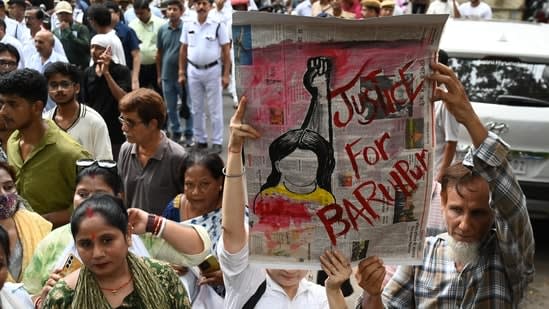
The minor girl went missing on July 4. Her body was recovered from a pond a day later. Investigation and autopsy report showed that she was raped and murdered.
Justice and Chaos: The Baruipur Rape-Murder Tragedy
The recovery of a minor girl's body in Baruipur, West Bengal, has ignited a volatile mixture of grief and rage, culminating in a breakdown of law and order. The timeline of events is harrowing: the child went missing on July 4, only for her lifeless body to be discovered in a pond the following day. The subsequent autopsy and investigation confirmed the worst fears of the community—that the girl had been subjected to sexual assault before being murdered. Such heinous crimes against children often act as a catalyst for extreme social unrest, as the perceived vulnerability of the victim clashes with the perceived inadequacy of immediate institutional protection.
The Descent into Vigilante Justice
In the immediate aftermath of the discovery, the community's shock rapidly evolved into violent retribution. The reports of lynching and vandalism indicate a dangerous shift from seeking legal justice to exercising vigilante justice. When a community feels that the legal system is too slow or that the crime is too monstrous for standard judicial processes, mob violence often erupts. In this instance, the anger directed toward suspected perpetrators or those perceived as complicit led to widespread vandalism, reflecting a systemic failure in maintaining public order during times of high emotional distress.
Political Complications and the CPI(M) Arrest
Adding a complex layer to this tragedy is the arrest of a leader from the Communist Party of India (Marxist), or CPI(M). The involvement of a political figure in cases of lynching and vandalism suggests that political influence may have been used to mobilize crowds or lead the violent reactions. In the political landscape of West Bengal, where party affiliations often run deep into local administration and social structures, the intersection of political leadership and mob violence can exacerbate tensions. The arrest of a party leader signifies that the state authorities are attempting to decouple political identity from criminal liability, asserting that no individual is above the law regardless of their party rank.
Historical Context of Violence in West Bengal
To understand the gravity of this event, one must consider the broader historical context of West Bengal's socio-political environment. The state has a long history of intense political rivalry, which occasionally manifests as localized violence or 'party-society' dynamics where political cadres wield significant influence over local affairs. When a crime as visceral as the rape and murder of a minor occurs, it doesn't just trigger a criminal investigation; it triggers a social explosion that can be easily manipulated or amplified by political actors. This event underscores the persistent challenge of transitioning from a culture of political mobilization to one of civic adherence to the rule of law.
The Legal Duality of the Case
Law enforcement now faces a dual challenge: solving the primary crime of rape and murder while simultaneously prosecuting the secondary crimes of lynching and vandalism. The primary case is a matter of urgent criminal justice for a deceased child, requiring forensic precision and swift apprehension of the rapists and murderers. Simultaneously, the state must address the lynching—an act that, while born of rage, is a fundamental violation of human rights and legal procedure. The arrest of the CPI(M) leader serves as a critical juncture in this process, indicating that the state is unwilling to overlook the role of leadership in inciting violence.
Future Trends and Social Implications
Looking forward, this incident is likely to spark renewed debates regarding the safety of minors in rural and semi-urban Bengal and the necessity of stricter policing to prevent mob violence. There will likely be increased pressure on the government to implement faster-track courts for crimes against children to diminish the public's perceived need for vigilante justice. Furthermore, the political fallout from the arrest of a CPI(M) leader may lead to internal party scrutiny or further friction between opposing political factions in the Baruipur region.
Conclusion
The Baruipur incident is a grim reminder of the fragility of social order in the face of extreme cruelty. While the rape and murder of the minor girl is the root cause of the tragedy, the subsequent lynching and vandalism represent a separate, systemic failure. The arrest of a political leader in this context is a necessary step toward ensuring that justice is served through the courts rather than through the streets, emphasizing that the pursuit of justice for one victim must not lead to the commission of further crimes.
Verification Required?