Union minister Gadkari to open Lucknow-Kanpur Expressway, review NH projects
Source Entity
Latest News: Today's Latest News Headlines from India & World | Hindustan Times | Hindustan Times
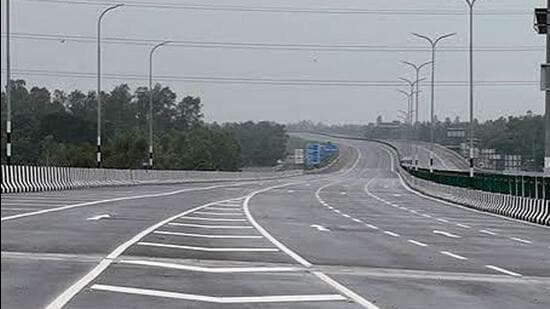
The fully access-controlled expressway, which will be opened to traffic from July 14, is expected to cut travel time between Lucknow and Kanpur from nearly three hours during peak traffic to about 45 minutes. Defence minister Rajnath Singh and chief minister Yogi Adityanath are also scheduled to attend the inaugural ceremony.
Infrastructure Revolution: The Lucknow-Kanpur Expressway
The upcoming inauguration of the Lucknow-Kanpur Expressway on July 14 marks a significant milestone in India's ongoing infrastructure overhaul. Union Minister for Road Transport and Highways, Nitin Gadkari, will lead the opening ceremony, joined by high-profile dignitaries including Defence Minister Rajnath Singh and Uttar Pradesh Chief Minister Yogi Adityanath. This project is not merely a road expansion but a strategic intervention designed to optimize the movement of people and goods between two of Uttar Pradesh's most critical urban centers.
Drastic Reduction in Transit Times
One of the most striking features of this project is the projected efficiency gain. By implementing a fully access-controlled design, the expressway is expected to slash travel time from nearly three hours—often exacerbated by peak-hour congestion on existing routes—to approximately 45 minutes. Access-controlled highways eliminate traditional intersections and local traffic intrusions, allowing for higher sustained speeds and a significant reduction in accidents. This efficiency is crucial for a region where the existing road network has long struggled to keep pace with the rapid growth of vehicular density.
Economic Synergy between Lucknow and Kanpur
The connectivity between Lucknow, the administrative capital, and Kanpur, a primary industrial hub, creates a powerful economic corridor. By effectively bringing these two cities closer, the expressway facilitates a more seamless exchange of services and industrial output. For businesses in Kanpur, the reduced transit time to the state capital means faster access to government regulatory bodies and administrative offices. Conversely, Lucknow gains more efficient access to Kanpur's manufacturing and leather industries, potentially fostering a 'twin-city' economic dynamic that can attract further foreign and domestic investment into the region.
Political Coordination and Governance
The presence of both Union Ministers and the State Chief Minister at the inaugural event underscores the high level of synergy between the Central Government and the Uttar Pradesh state administration. Such projects are often the result of complex coordination between the Ministry of Road Transport and Highways (MoRTH) and state land acquisition agencies. The joint attendance signals a unified political front in pursuing the 'Expressway State' vision for Uttar Pradesh, demonstrating how aligned policy goals at the center and state levels can accelerate the delivery of large-scale public works.
Contextualizing the 'Expressway State' Ambition
This project does not exist in isolation but is part of a broader trend of aggressive highway development across Uttar Pradesh. From the Purvanchal Expressway to the Ganga Expressway, the state is attempting to create a grid of high-speed corridors to decentralize development away from saturated urban cores. The Lucknow-Kanpur stretch serves as a critical link in this network, ensuring that the heart of the state is connected with the same efficiency as the periphery, thereby promoting balanced regional growth and reducing the pressure on legacy national highways.
Integration with National Logistics Goals
Beyond regional benefits, the review of other National Highway (NH) projects by Minister Gadkari during this visit suggests a wider strategic audit of connectivity. This aligns with the national 'PM Gati Shakti' National Master Plan, which aims to break departmental silos and integrate multimodal transport. By optimizing the Lucknow-Kanpur link, the government is reducing the overall logistics cost for freight moving through North India, which is a key component in making Indian exports more competitive on a global scale.
Conclusion and Future Outlook
In summary, the Lucknow-Kanpur Expressway is a catalyst for both economic acceleration and urban modernization. While the immediate benefit is the dramatic reduction in commute time, the long-term impact will be seen in the growth of satellite towns and industrial clusters along the corridor. As the government continues to review and upgrade other NH projects, this expressway will likely serve as a blueprint for future high-speed connectivity projects aimed at linking industrial hubs with administrative centers across India.
Verification Required?