Chandigarh’s new 4-bin waste rule: Bin colours, waste categories, fine
Source Entity
Hina Rohtaki
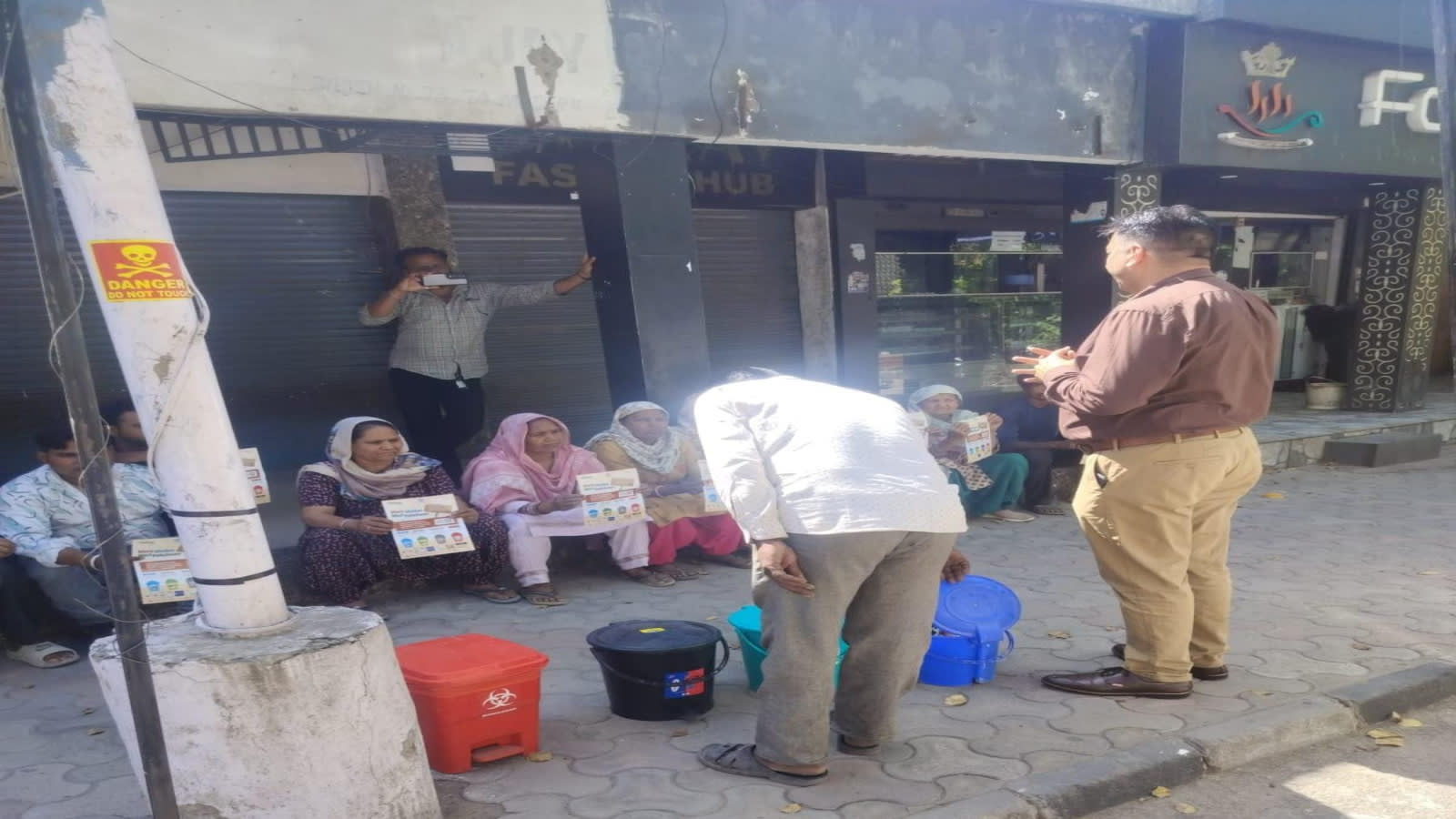
An official during an awareness drive about the new waste segregation system in Chandigarh. (Photo by special arrangement) The Chandigarh municipal corporation has mandated that every household in th...
Transforming Urban Waste Management: Chandigarh's New 4-Bin Mandate
In a significant move toward enhancing urban sustainability and environmental health, the Chandigarh Municipal Corporation (MCC) has introduced a mandatory four-bin waste segregation system for all households. This initiative represents a strategic shift from traditional waste collection to a more nuanced, source-segregated approach. By requiring residents to categorize their waste into four distinct streams, the city aims to drastically reduce the volume of mixed waste that ends up in landfills, thereby mitigating soil and groundwater pollution.
The Mechanics of the 4-Bin System
While the transition to a multi-bin system may seem like a minor logistical change for residents, it is a critical component of a circular economy. The four-bin system is designed to separate organic waste, recyclable plastics and metals, paper, and hazardous domestic waste. This granular level of segregation ensures that organic matter can be efficiently composted, recyclables can be processed without contamination, and hazardous materials—such as batteries or chemicals—are handled with the necessary safety protocols. The use of specific colors for each bin serves as a visual cue to standardize disposal habits across the city's diverse residential sectors.
Enforcement, Awareness, and the Role of Penalties
To ensure the success of this mandate, the MCC is employing a dual strategy of education and enforcement. The ongoing awareness drives are essential for bridging the knowledge gap, ensuring that citizens understand exactly which item belongs in which bin. However, the introduction of fines for non-compliance indicates that the administration is moving beyond voluntary participation toward a regulatory framework. This 'carrot-and-stick' approach is often necessary in large-scale urban shifts to instill a sense of civic responsibility and to ensure that a small minority of non-compliant households do not undermine the efforts of the majority.
Alignment with National Sustainability Goals
This local initiative is deeply anchored in India's broader national agenda, specifically the Swachh Bharat Mission (Clean India Mission). By focusing on source segregation, Chandigarh is aligning itself with the national goal of creating 'Garbage Free Cities.' The systemic shift toward segregation is a prerequisite for the implementation of Waste-to-Energy (WtE) plants and large-scale composting facilities, as contaminated waste often renders these technologies inefficient or economically unviable. Chandigarh's planned nature makes it an ideal testing ground for such structured environmental policies.
Environmental Implications and Landfill Reduction
The long-term environmental implications of this rule are profound. Landfills in and around urban centers have become ticking time bombs of methane emissions and leachate seepage. By diverting organic waste toward composting and recyclables toward processing units, the MCC can significantly extend the lifespan of existing landfill sites. Furthermore, reducing the amount of mixed waste reduces the reliance on manual scavenging and improves the working conditions for sanitation workers, who previously had to sort through hazardous mixed waste by hand.
Future Trends in Urban Sanitation
Looking forward, it is likely that Chandigarh will evolve this system by integrating smart waste management technologies, such as sensor-based bins or RFID-tracked collection vehicles, to monitor compliance in real-time. If this four-bin model proves successful in terms of recovery rates and citizen adherence, it could serve as a scalable blueprint for other Tier-1 and Tier-2 cities across India. The transition from a 'collect-and-dump' model to a 'segregate-and-recover' model is the only viable path for sustainable urban growth in the face of rapidly increasing municipal solid waste.
Summary
Chandigarh's new waste segregation rule is more than a bureaucratic requirement; it is a necessary evolution in urban governance. By combining clear categorization, public education, and strict penalties, the city is positioning itself as a leader in sustainable waste management, aiming to protect its environment while contributing to India's larger ecological goals.