Prototype of Chandrayaan-5/LUPEX rover unveiled
Source Entity
India Latest News: Top National Headlines Today & Breaking News | The Hindu
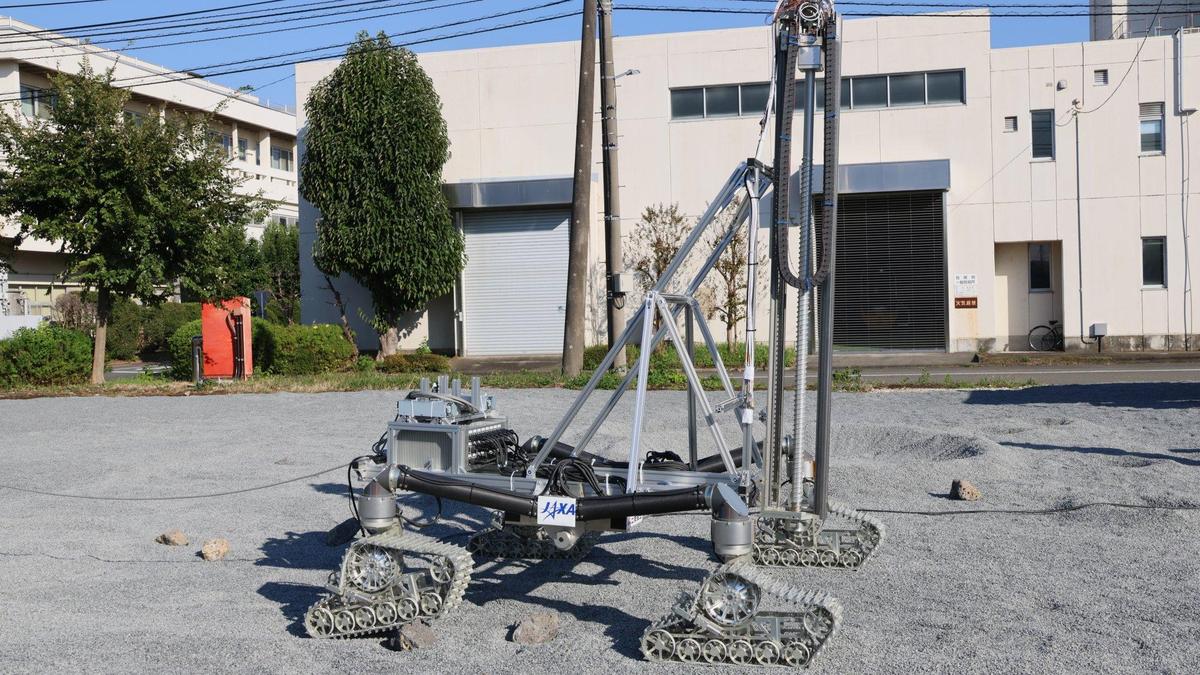
JAXA has unveiled the prototype rover for the Chandrayaan-5/LUPEX mission, a collaborative lunar exploration project with ISRO. Scheduled for 2028, the mission aims to study lunar water and volatiles at the Moon's South Pole.
Advancing Lunar Exploration: The Chandrayaan-5/LUPEX Mission
The unveiling of the prototype rover by the Japan Aerospace Exploration Agency (JAXA) at the Chofu Aerospace Centre on November 25 marks a significant milestone in international space cooperation. As the fifth iteration of India’s Chandrayaan series, the Chandrayaan-5/LUPEX (LUnar Polar EXploration) mission represents a sophisticated evolution in lunar surface science, moving beyond mere orbital observation to granular, in-situ analysis of the lunar South Pole.
A Synergistic Collaboration
This mission is a testament to the strategic partnership between the Indian Space Research Organisation (ISRO) and JAXA. By combining the strengths of both agencies—ISRO’s proven expertise in lunar lander technology and JAXA’s advanced robotics and rover engineering—the project aims to achieve what neither agency could efficiently accomplish alone. The division of labor, where JAXA provides the rover and ISRO constructs the landing module, underscores a highly efficient model of space diplomacy that optimizes technical resources and financial capital.
Targeting the South Pole
The primary scientific objective of the LUPEX mission is the investigation of lunar volatile materials, specifically water ice, located near the Permanently Shadowed Regions (PSRs) of the lunar South Pole. These regions are critical for future human exploration, as water ice could potentially be harvested to support life-support systems or converted into propellant for deep-space travel. By deploying a rover directly into these precarious, low-light environments, the mission seeks to unlock data that could change our understanding of lunar history and its potential as a gateway for interplanetary travel.
Technical Milestones and Launch Outlook
The prototype demonstration held in Japan serves as a vital validation step before the mission's scheduled launch in 2028. The mission will utilize Japan’s H3-24L launch vehicle, a heavy-lift rocket designed to handle the complexities of lunar transfer. The integration of ISRO’s lander with the H3 launch system represents a complex logistical and engineering challenge that, if successful, will establish a new benchmark for international lunar mission architecture.
Future Implications for Space Exploration
Looking ahead, the Chandrayaan-5/LUPEX mission is expected to yield insights that will dictate the placement of future lunar bases. As global space agencies shift their focus toward sustainable lunar presence, the data regarding volatile distribution gathered by this rover will be foundational. This mission not only honors the legacy of previous Chandrayaan endeavors but also sets a precedent for how collaborative, multi-national missions will dominate the next decade of lunar science, ensuring that the exploration of the Moon remains a shared, global endeavor.
Verification Required?