China close to cracking code of tech that controls the world - all about EUV machine
Source Entity
AASHISH SAXENA
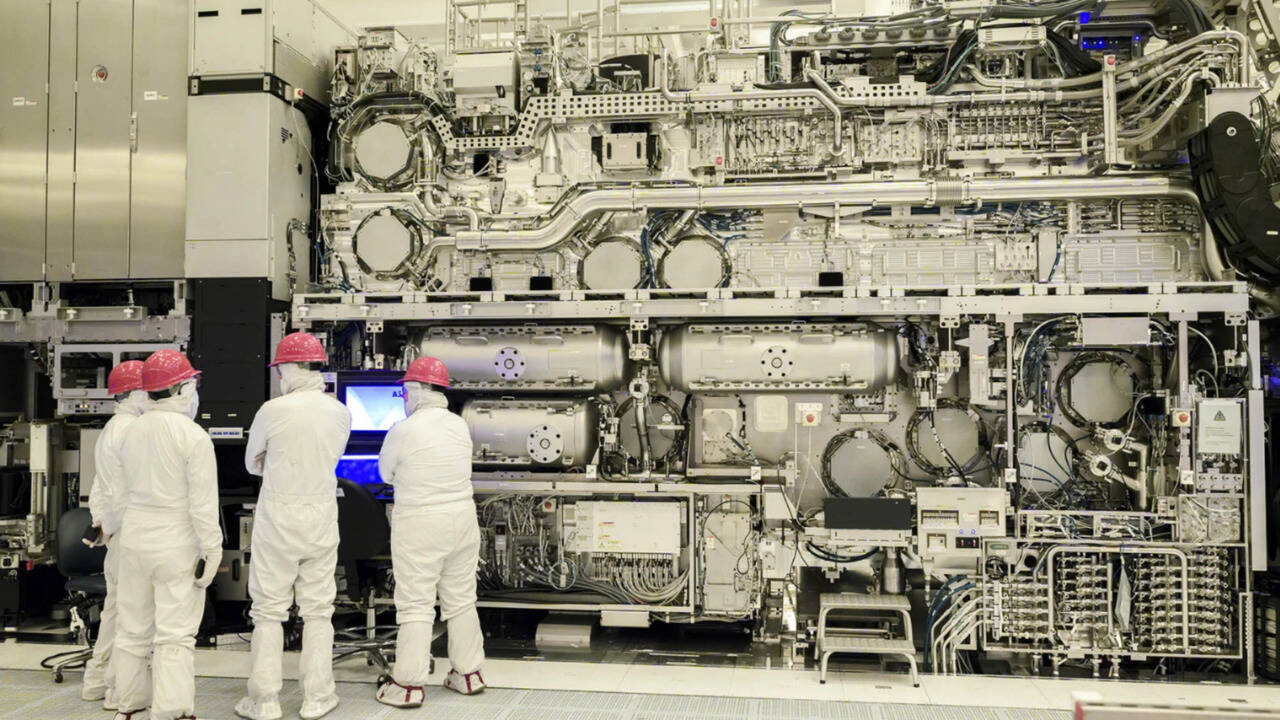
China has reportedly developed a functional prototype of an EUV lithography system. This development challenges Western assumptions about China's chip manufacturing capabilities. The system utilizes a mix of indigenous breakthroughs and shadow procurement networks. Experts suggest mass production could be achieved by 2030. This marks a significant shift in the global semiconductor landscape.
China's EUV Breakthrough: A Seismic Shift in the Global Chip War
For years, the global semiconductor industry has been defined by a singular, critical bottleneck: Extreme Ultraviolet (EUV) lithography. This technology, currently monopolized by the Dutch firm ASML, is the only method capable of etching the nanometer-scale circuits required for the world's most advanced chips, including those used in high-end AI, 5G infrastructure, and advanced military hardware. The report that China has developed a functional prototype of its own EUV system represents a potential paradigm shift, signaling that the strategic blockade imposed by Western export controls may be failing to stifle China's long-term ambitions.
The Technical Hurdle and the Prototype
EUV lithography is widely considered one of the most complex engineering feats in human history. It requires the use of plasma-generated light with an extremely short wavelength, which is absorbed by almost all materials, including air, necessitating a vacuum environment and a complex system of mirrors. The development of a functional prototype suggests that China has overcome significant hurdles in light source stability and reflective optics. By utilizing a mix of indigenous breakthroughs and reported "shadow procurement networks" to acquire restricted components, China is attempting to reverse-engineer and optimize a process that Western powers assumed would take decades to replicate.
Breaking the ASML Monopoly
Until now, the West's primary leverage over China's tech sector has been the restriction of EUV machines. Without these tools, Chinese firms like SMIC have been forced to rely on older Deep Ultraviolet (DUV) machines and "multi-patterning" techniques to reach smaller nodes—a process that is inefficient, costly, and results in lower yields. A successful indigenous EUV system would decouple China's semiconductor roadmap from Western approval. If China can transition from a laboratory prototype to a commercially viable machine, the geopolitical utility of export bans on lithography equipment will effectively vanish.
Geopolitical Implications and the "Chip War"
This development is a direct response to the escalating "chip war" between the United States and China. The U.S. has implemented stringent controls to prevent China from accessing the hardware necessary for advanced AI development. However, these pressures appear to have accelerated China's drive for self-reliance. By framing this as a matter of national security, the Chinese government has likely poured unprecedented resources into this project. The success of this prototype indicates that the strategy of "containment" may inadvertently be fueling a faster cycle of indigenous innovation within China.
The Long Road to 2030: Prototype vs. Production
While a functional prototype is a landmark achievement, the gap between a laboratory success and mass production is vast. The report suggests a timeline of 2030 for mass production, which is a realistic assessment given the challenges of "yield"—the percentage of chips on a wafer that actually work. To compete with ASML, China must not only make the machine work once but ensure it can operate with extreme precision 24/7 in a factory setting. The next six years will be a critical race to see if China can scale this technology while maintaining the stability required for high-volume manufacturing.
Conclusion: A New Semiconductor Order
In summary, China's progress toward a functional EUV system marks the beginning of a new era in technology competition. While the West still holds a significant lead in current manufacturing capacity, the emergence of a viable Chinese alternative threatens the existing hierarchy. If China achieves mass production by 2030, the global semiconductor landscape will move from a centralized monopoly to a bipolar system, fundamentally altering the economics of AI and high-performance computing for the next generation.